Christian Attitudes toward War, Peace, and Revolution
It is a lifetime process to build up peace in the world. The family is at war, the societies also. The human being is losing the common points as race and each day enhancing the range of differences. So God created mankind in his own image, in the image of God he created them; male and female he created them God saw all that he had made, and it was very good. And there was evening, and there was morning ”the sixth day.[1]
The human being has forgotten these words, above all the statement all that he had made, and it was very good; by Creation, humankind has been made good and was given the most beautiful gift: Free Will. Freedom to be fruitful and increase in number; [to] fill the earth and subdue it. [To] Rule over the fish in the sea and the birds in the sky and over every living creature that moves on the ground.[2]
The Pilgrim, referring to Pope Francis in his message Nonviolence as a Style of Politics for Peace(January 1st, 2017), says that violence continues to abound in our hearts and in our world.[3] How far are human beings from that wonderful statement found in Genesis and it was very good? How are human beings understanding and putting into practice the expression fill the earth and subdue it? How is the human being using his/her free will? Here comes the main question: is it possible in the twenty-first century to have a peaceful world or is it simply a utopia, a dream that will never come true and that human beings will be the subjects and the objects of their destruction?
The panorama is as follows we live in a broken worldin a horrifying world where war is fought piecemeal. Pope Francis cries out that there is piecemeal violenceof different kinds and levels: war in different countries and continents; terrorism, organized crime and unforeseen acts of violence; and the devastation of the environment.[4]
In the author opinion, this worldview can change for good. God has given mankind the faculty of reasoning and the gift of freedom; has endowed it with faith, hope, and charity; has put men to take over the whole of creation; has given a law Loves Law to follow as a guideline in every single action; has given men the faculty of re-think on their own acts in order to make amendments; has placed humanity within an environment that provides all the resources needed for nourishment, sheltering, reproduction and amusement. Knowing all this, once again, the author states that the horrifying world described by Pope Francis can become a joyful and fruitful place.
If one asks others which is the origin of violence, for sure the answer will be hatred. Nobody will act violently if in his heart and thoughts love abounds. The second cause may be revenge. A heart that loves and a mind that thinks rationally, know, and trust in justice (earthly and divine): under this principle, there is no space for revenge.
The Catechism of the Catholic Church(CCC) states that By recalling the commandment, You shall not kill, our Lord asked for peace of heart and denounced murderous anger and hatred as immoral.[5] Moreover, Anger is a desire for revenge. To desire vengeance in order to do evil to someone who should be punished is illicit,but it is praiseworthy to impose restitution to correct vices and maintain justice. If anger reaches the point of a deliberate desire to kill or seriously wound a neighbor, it is gravely against charity; it is a mortal sin. The Lord says, Everyone who is angry with his brother shall be liable to judgment.[6]
This article in the Catechism shows an important point in today society: someone who should be punished Who is the one in charge of giving punishment to the one who deserves it? The correct answer is a legitimated governmental entity holding power, and therefore the duty, to render justice to the affected party. Inputting the word governmental in this context, it is necessary to come to realize that the idea of Pope Francis is the most suitable of all: Nonviolence as a Style of Politics for Peace . As long as the entities of justice, throughout the world, be corrupt and misdirected, there will never be justice, and the path towards peace will be tortuous and even unachievable. Peace is the tranquillity of order. Peace is the work of justice[7]
The Compendium of the Social Doctrine of the Churches (CSDC) writes that peace is the fruit of justice, (cf. Is 32:17) understood in the broad sense as the respect for the equilibrium of every dimension of the human person. Peace is threatened when a man is not given all that is due to him as a human person, when his dignity is not respected, and when civil life is not directed to the common good. The defense and promotion of human rights are essential for the building up of a peaceful society and the integral development of individuals, peoples, and nations.[8] To give each one all that is due to him is the definition of justice. If, injustice is one of the threats against peace the first step in the way heading a peaceful world ought to be purified and reorganize all juridical systems worldwide. Once again is a matter of politics.
Linked as well to the political system of the countries in the development of the nation, the welfare of the people, and the harmony within the boundaries and out towards the neighboring countries. Respect for and development of human life requires peace. Peace is not merely the absence of war, and it is not limited to maintaining a balance of powers between adversaries. Peace cannot be attained on earth without safeguarding the goods of persons, free communication among men, respect for the dignity of persons and peoples, and the assiduous practice of fraternity.[9]
How can one understand this balance of power that the Catechism mentions, when only watching the TV news is easy to realize that the power nowadays is not balanced at all? One group, the minority, holding power almost up to the point of absolute power; the other group enduring the situation speechless or silenced by force. The power is twofold: political of course and economical. There are adversary groups, but there are also those who belong to the same group challenging each other to have more and more. Years ago adversaries could be understood as countries in war because of the motive. In these times, adversaries can be, for instance, big companies trying to dominate excessively the market or those who are exploiting the natural resources irresponsibly and even shamelessly.
Once that human beings give up this savage competition, the goods of persons and free communication among men will be safeguarded, and the dignity of persons and peoples will be respected.
Gaudium et Spes (GS) says that In the economic and social realms, too, the dignity and complete vocation of the human person and the welfare of society as a whole is to be respected and promoted. For man is the source, the center, and the purpose of all economic and social life.[10]
Fraternity, friendship, real community life, transparent relationships among human beings that live in a particular environment is only attainable through love. According to CSDC Peace is also the fruit of love. True and lasting peace is more a matter of love than of justice because the function of justice is merely to do away with obstacles to peace: the injury did or the damage caused. Peace itself, however, is an act and results only from love[11] Therefore the first value to be considered in this style of politics must be Love.
The words of Saint Paul are a reminder to all human beings We know that the whole creation has been groaning as in the pains of childbirth right up to the present time. Not only so, but we ourselves, who have the first fruits of the Spirit, groan inwardly as we wait eagerly for our adoption to sonship, the redemption of our bodies.[12] The whole creation is, at this moment, suffering and struggling to achieve means to survive in a more and more challenging historical moment. The earth and its resources are being exhausted, peoples fighting each other to possess such resources. If the style of politics is going to be love, human beings must learn how to love the earth and out of love to distribute the resources available in it.
As the earth is suffering so too the people; this suffering will finish, gradually, when human beings come to realize that a peaceful world is not a utopia but a reality that can be achieved through the effort and collaboration of all.
The way towards a peaceful world is marked in the Sermon on the Mount, the program that Jesus designed for human beings to achieve salvation while enjoying life on earth. The hard sayings of Jesus will be no longer hard because there will not be evildoers, nobody will strike the other cheek, people will be able to share and walk together, there will be no more persecutions and the word enemy may be erased from the dictionary.[13]
Since Jesus, it is possible to be gathered from the diaspora, to join together and to be disciples. The Church way is the way of communities. Even if they are small in comparison to the rest of society they can, through their example effect more in the world than anything else can imagine.[14]
References
Catechism of the Catholic Church.
Compendium of the Social Doctrine of the Church.
Gomez, Fausto OP. Mercy Love and Holiness. Manila, PHL: University of Saint Thomas Publishing House, 2017.
Lohfink, Norbert. Church dreams: The Road from Violence. North Richland Hills, TX: Bibal Press, 2000.
Pastoral Constitution on the Church in the Modern World Gaudium et Spes.
Servus servorum Dei ( The servant of the servant of God)
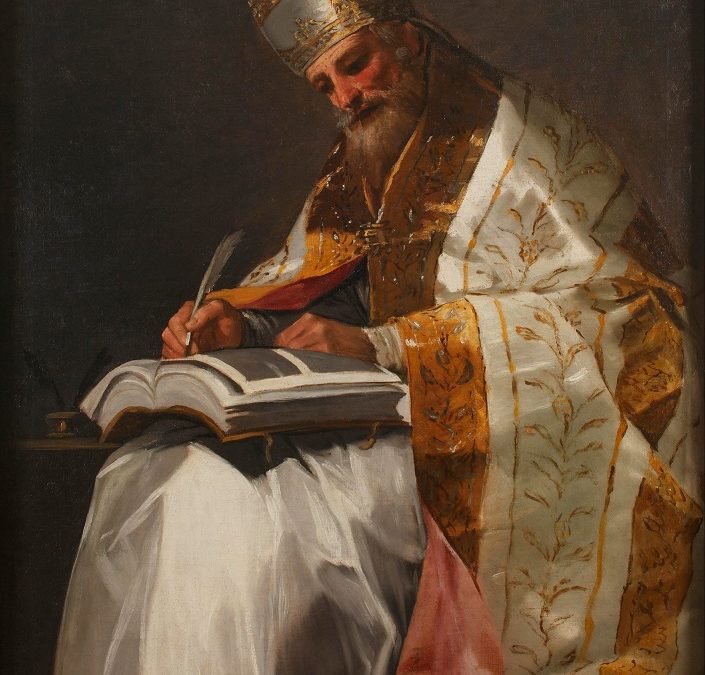
Saint Gregory the Great was born in Rome, in the year 540. He became mayor of his city; he was detached from his own interests and had a constant renunciation of himself. St. Gregory even sold everything he had to help the poor and the Church.
Saint Benedict strongly influenced Gregori’s life. For this reason, he helped to build many monasteries, also joining the religious life of “Ora et Labora”.
Gregory was someone with a sense of duty and balance. He had an intense interior life and wrote about the pastor’s ideal. In it, the saint affirms that the true shepherd of souls is pure in his thought. He knows how to approach everyone with true charity. He rises above all by contemplating God.
With the death of the pope, St. Gregory was chosen to succeed him in 590, in the transition from the Roman to the medieval world. St. Gregory the Great Pope and doctor of the Church died at the age of 65. One of its main marks is in the Liturgy, with the Gregorian chant. The epistolary and the homilies demonstrate involvement in various activities. Familiarity with the Word of God is evident in the explanations about Ezekiel and the Gospel.
Saint Gregory was a man truly an example for us Dominican as a preacher of the Word of God, and to bring the light of Christ to the People and to the world. Our lives combine both contemplative and active, that’s what makes our lives very unique and more fruitful because we are called the order of preachers our preaching must empower by the Holy Spirit, our motto says; preach what we contemplate, and contemplate what we preach.
Dominican motto is contemplare et contemplata aliis tradere.
St. Gregory the Great, pray for us!
Intercession
St. Gregory the Great intercedes that we may always be shepherded by the Holy Spirit and the word of God so that in Jesus all our thoughts, intentions, and actions begin and end.
St. Gregory the Great was a good shepherd, guided by the Holy Spirit, to lead the Church in difficult times that needed discernment and right decisions. He was a great contemplative, bringing beautiful reflections that taught the way of love to the people of God.
By the religious profession in an institute of consecrated life, one dedicates himself or herself to God freely, without any force or fear, following Christ willingly to live out the evangelical counsels in an institute of consecrated life of one’s own choice. In this way, the baptismal consecration becomes more fully effective.
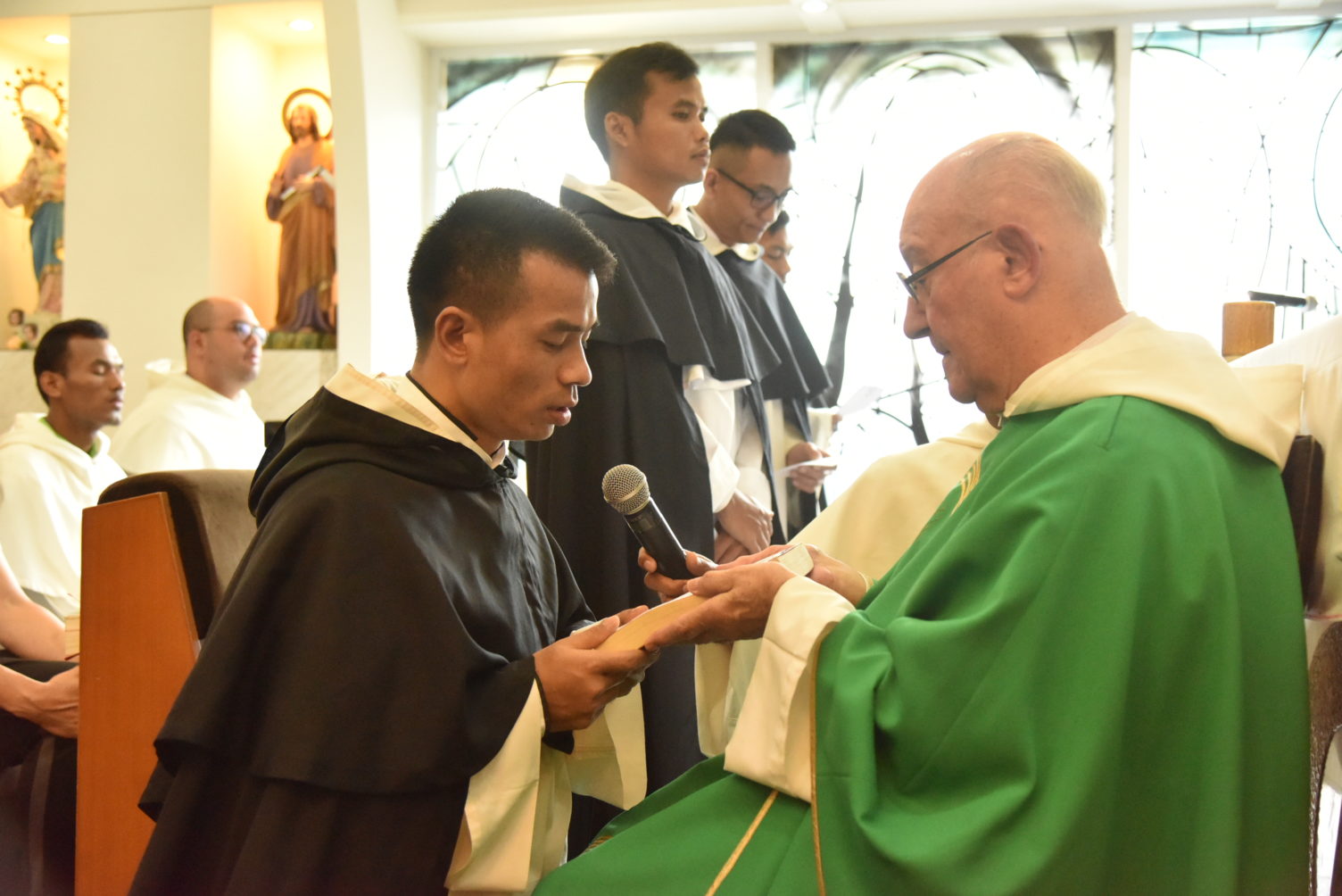
In every religious Order or Congregation, there are simple (temporary) profession and solemn (perpetual) profession. The former is made for one, two or three years, while the latter is made for life (until death). The length of the simple profession depends on each religious Order’s statutes and norms. For the Dominican Friars in the Province of Our Lady of the Rosary, the first profession is currently made for two years and then renewed either for one or two years until the solemn profession, which takes place within a maximum period of six years.
Saint Dominic’s Priory in Macau belongs to the Province of Our Lady of the Rosary, which welcomes brothers from the different countries or places where it is present: Japan, Korea, Taiwan, Philippines, Hong Kong, Macau, Singapore, Myanmar, East Timor, Spain, and Venezuela. The Province’s international Novitiate is in Hong Kong; and its main Studentate is here in Macao, where the student brothers course their institutional studies of Philosophy and Theology. We currently are 40 brothers, of which 29 are simple professed. This is why we witness every year either the renewal of profession or the solemn profession of some of its members.
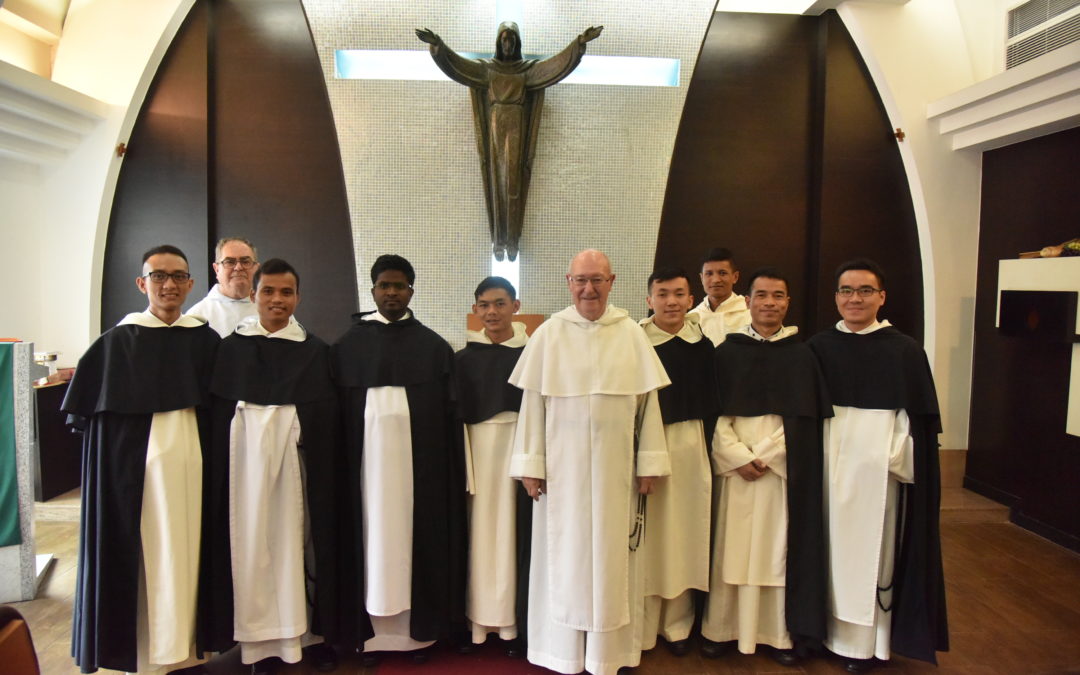
On the 21st of June of this year 2019, five Dominican Brothers, namely, Mannes John Kim, Gabriel Khun Ri, Benedito de Jesus, Francisco Sufa, and Luigi Yu Reh, renewed their profession for one year. Likewise, on the 8th of September, another group of seven, namely, Stephen Saw Lej, Marko Thoe Reh, Francis Bu Ling, Richard Htoo, Gabriel Ko Ko, Justin Saw Kaung, and Fermin Saw Simon, did the same for two years, that is, until 2021.
The Prior of the community, Fr Jose Luis de Miguel, OP, was the one who received the profession of both batches, during the conventual Mass presided over by him, concelebrated by the other member priests of the community, and witnessed by the student brothers and some lay faithful. In his homily, he congratulated the brothers who were about to renew their profession, and he also reminded them that “the renewal of the evangelical counsels is not mainly focused on the strict observance of the norms, but rather towards letting our hearts be opened to welcome Him whose love and mercy for his people we all are called to preach.”
After the Mass, there was picture-taking, and the brothers who had just renewed their vows signed the corresponding testimonial letter of renewal in the presence of the Prior, the Master of Students (Fr. Javier Gonzalez) and his Assistant (Fr. Lawrence The Reh). Our sincere congratulations to them all.
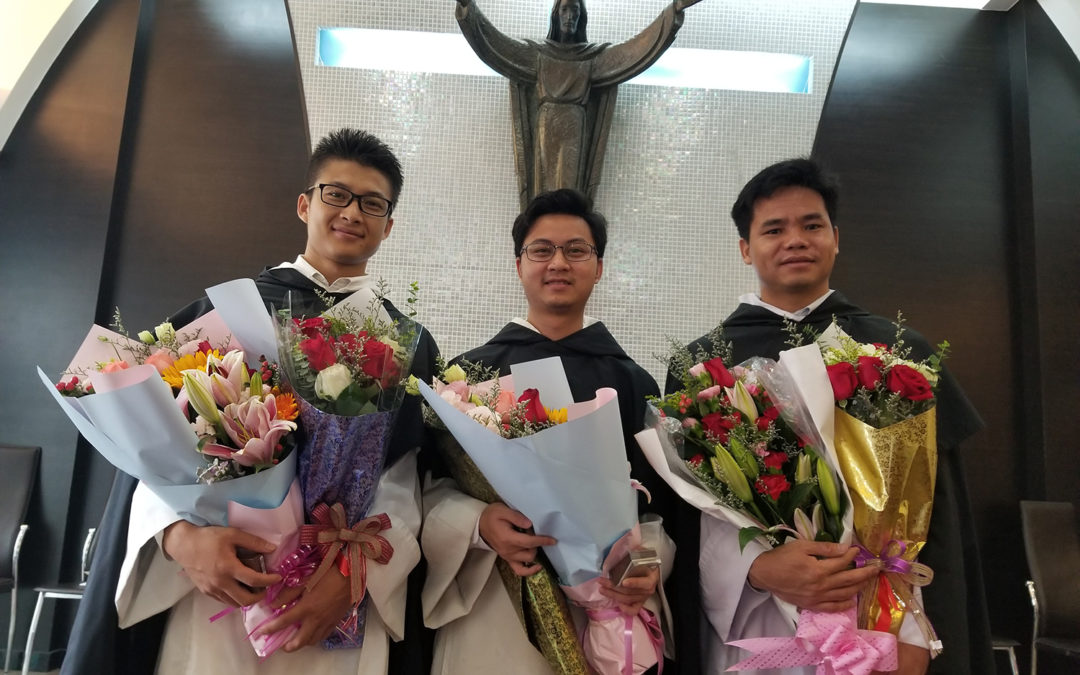
With joy we inform the members of the Province that today, Monday, 23 July 2018, at St. Dominic’s Priory, in Macau, three of our Dominican brothers: Ignatius Ngo Van (from Vietnam), Francis Nge Nge (from Myanmar) and Peter Zya Reh (from Myanmar) made their solemn profession in the Province. Thus they sealed their promise to dedicate themselves to the Lord until death.
The celebration was presided over by Fr Raymond M, OP who in his homily exalted the preaching work of St Mary Magdalene, Patroness of the Order and of the Province, and proposed her as a model to imitate in our life as preachers of the Gospel.
A welcome embrace and our warmest congratulations to the three Brothers Ignatius, Francis and Peter.
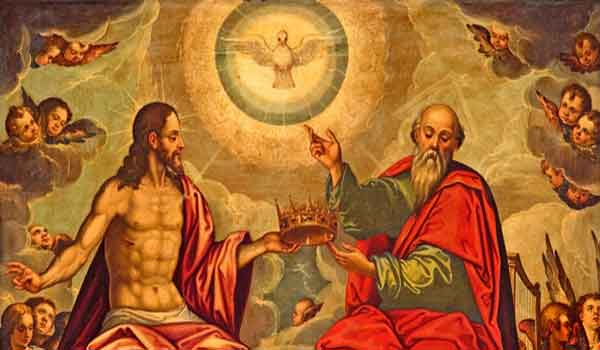
We celebrate today the Solemnity of the Most Blessed Trinity, or Trinity Sunday, which is the central mystery of our Christian faith. From the beginning of Christianity, the Trinity is always invoked very frequently – in prayer.
We have just proclaimed the Word of God, what does it tell us?
First Reading: Dt 4:32-34, 39-40. In the Old Testament God is not yet revealed explicitly as Trinity but as the One anima the One who is merciful and gracious! “The Lord, the Lord, a merciful and gracious God, slow to anger and rich in kindness and fidelity. Second Reading: Rom 8:14-17. Paul tells us that we are adopted children of God One and Triune. We remember what Jesus, with the power of the Holy Spirit, continues telling us: If you love me, you will keep my word, and my Father and I will come to you, and make our home in you.
The Holy Gospel: Mt 28:16-20. After his resurrection and just before his ascension into heaven, Jesus gives to his disciples a mission, a universal mission to which all the disciples are called to do: God therefore and make disciples of all nations baptizing them in the name of the Father, and of the Son and of the Holy Spirit, and teaching them to observe all that I have commended your.
The Mystery of the Blessed Trinity is revealed in – among other events – the Baptism of Jesus in the Jordan: the Father speaks, You are my beloved Son the Holy Spirit descends upon him in the form of a dove; the Son of God is baptized by John the Baptist (cf. Mk 1:7-11).
Our God is One and Triune. He is One God and Three different Persons (we say In the name of the Father and of the Son and of the Holy Spirit and not in the names of the Father, Son and Holy Spirit). One God: absolute unity and absolute equality. And Three Persons: real distinct relations among the Three: of the Father to the Son (paternity), and of the Son to the Father (filiation), and of the Father and the Son to the Holy Spirit (love). And Three different Persons, or three different faces of the same God; or three caresses of love; or one love and three lovers; or one fountain without beginning and end with three rivers in the same water.
Who is God? God for us Christians is Father, Son and Holy Spirit.
God theFather is the first divine Person of the Blessed Trinity. He is our Creator and our Father: the Father of the prodigal son and of the lost sheep who loves us, who forgives us. We are God children. Before ascending into heaven, Jesus tell his diciples: “I am going to my Father and your Father.
God theSon is the second divine Person of the Blessed Trinity. He reveals to us God as Father and sends to his disciples we are certainly included – the Holy Spirit, the Spirit of the Father and the Son. He is Jesus Christ, God and Man, our Savior and Redeemer. He is the Way we have to follow, the Truth we have to know and communicate to others, and the Life we have to live life centered on love of God, and of all neighbors, and of the poor and needy neighbors in particular. Christ is our brother, and in him we are each other brother and sister.
God theHoly Spirit is the third divine Person of the Blessed Trinity, the Love of the Father and the Son, God gift to us his divine Grace. The Holy Spirit is our advocate and consoler. He dwells in us with the Father and the Son (the incredible indwelling of the Blessed Trinity!).
Our God is not a solitary or lonely God. We proclaim: The true God is One in Trinity, and a Trinity in One.†Our dear God, One and Triune, is communion and a constant invitation to us to pray together, and to live in the communion of love.
The Holy Trinity is a constant presence in our life. We were baptized In the name of the Father and of the Son and of the Holy Spirit. We often make the Sign of the Cross In the name of the Father and of the Son and of the Holy Spirit. We end the recitation of the Psalms, of the Mysteries of the Rosary, and of our prayers with the Glory be to the Father and to the Son and to the Holy Spirit. The priest addresses all our community prayers to the Father, through the Son, in the Holy Spirit.
We are Christians, and happy to be so! Who is a Christian? He or she who is baptized in the name of the Father and of the Son and of the Holy Spirit, and is faithful to his or her baptism: a person who knows God as Father, confesses Jesus as the Son of God and the Man-for-Others, and experiences the Holy Spirit who tells women and men believers that Jesus is alive; that we are called to live in him, and that outside him there is darkness (O. Gonzalez de Cardedal).
As we Christians celebrate the great Solemnity of the Blessed Trinity after the season of Easter that ended with Pentecost, we are asked to examine our faith and devotion to the Blessed Trinity. We are urged to check up in our soul the primordial Trinitarian attitude in our life: the filial attitude – we are children of God; the fraternal attitude – we are brothers and sisters of Christ and in Christ of one another; and our charismatic attitude – we are people transformed by the grace and love of the Holy Spirit, and joyful and courageous witnesses of the death and resurrection of Christ, that tell the world of his love.
When all is said the little we may say on the Blessed Trinity -; when all is said, we have to conclude with what we all know: The mystery of the Blessed Trinity is theunfathomable, the awesome mysteryof the Blessed Trinity! Thanks to God gift of faith, we believe, that is, we see like through a glass darkly. We cannot understand, but we believe in God who reveals himself to us as One and Triune. The deep mystery may be unveiled little by little – always very imperfectly by living our faith in love. It is clearly so in the lives of the saints and the mystics. St. Columbanus says something beautiful: The invisible God is partly seen by a heart that is pure. Therefore the monk adds -, seek the supreme wisdom, not by verbal debate but by the perfection of a good life; not with the tongue, but with the faith which issues from singleness of heart (Instruction I, On Faith, 3-5).
Let me close with a lovely anecdote I heard to Cardinal Bo of Myanmar, when he pronounced the keynote lecture of the Theology Week of the University of Santo Tomas, Manila, last March 2018. There was a bishop who had to cross the seashore to go to his ministry. One day he saw three fishermen who rushed to him to tell him proudly and joyfully: Bishop, we are Catholics. The Bishop asked them: Do you pray? Yes, every day. How do you pray? With raised hands up to heaven, we say: You Three are there; we three are here, have mercy on us. The good Bishop loved them and told them that they should learn the Our Father, and taught it to them very patiently. Two weeks later, the bishop crossed the seashore again. He asked the three fishermen: Do you pray the Our Father? No, Bishop, we forgot it. The Bishop told them: Your prayer is fine; it is also my prayer. The four raised up their hands to heaven and prayed: You Three are there; we four are here, have mercy on us.
Father, Son and Holy Spirit: You Three are there, we all are here, have mercy on us. Amen
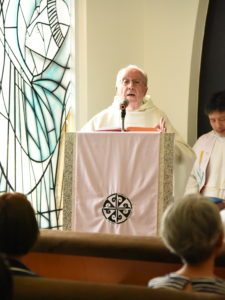
(Fausto Gomez OP. St. Dominic Priory. Macau, May 27, 2018)
-The Mass of the Lord Supper we are celebrating, plunges us into the drama of the final moments of Jesus earthly journey. You can feel the tension of this hour of which John speaks in his Gospel. It is a sobering, even frightening time when danger lurks on the horizon.
-Today gospel reading is all about love: love given, love received, love enjoined. On the solemn moment of the eve of his death, Jesus did what every human being does on the point of death: he centered on the essential.
On that night when he was going to be delivered, Jesus made an unusual gesture: he rose from the table, distancing himself from the place reserved for those who preside, and placed himself in the position of those who, then and now, belong to the category of “those who serve”, the place of one of many. The essential for Jesus was his love for all, especially those who needed Him most. From that place, that of “one of many”, he saw near and inside those whom others considered far and away and, on the other hand, those at the to turned out to be below. Because for him the most, thebiggest and the most importantwere those that in our eyes are less.
– The gesture of Jesus, washing the feet to his disciples task reserved exclusively for slaves- is the prelude of his passion and the key of interpretation: Jesus passion is essentially a service of love to the extreme: He loved his own in the world, and He loved them to the end (Jn 13, 1-15).
The washing the disciples feet symbolizes the ultimate service Jesus is about to give to them by giving up his life on the cross. It serves also as a model for how the disciples, you and I, are to love one another.
The action itself is startling, since Jesus is the Messiah and Son of God. It should be the disciples who wash Jesus feet as a sign of humility, faithfulness, and love. He reverses that process, and Peter immediately objects. His objection makes sense, and he probably was speaking for the whole group.
After Jesus has finished washing his disciples feet, he asks them directly if they realize what he has done for them. In fact, Jesus has given them a model for what it means to be one of his followers. It means to serve one another in radical forms of love. It means to wash one another feet.
Later on, Jesus will refer to this kind of love as a new commandment. It is new in that it demands radical equality among the disciples and the ones they serve. This was symbolized by Jesus when he came down from his chair, took off his robe, and tied a towel around his waist. He became one with the people he was about to serve. And what he did for them, they are, we are, to do for one another.
The Risen Christ, who shared this meal on the eve of his own passion, hosts us and serves us each time we gather to celebrate the Eucharist. As people of the Eucharist, you and I are also called to be people of the basin and towel. We are invited to emulate this Jesus through lives of loving service to others. We are called to wash the feet of one another.
Bread and wine, basin and towel. These symbols are at the very center of our identity as followers of Jesus. They represent an ongoing challenge. They are countercultural because they challenge the “Me First mentality that often prevails in our society.
One of the greatest gifts Jesus gave to us is dramatically evident in today Gospel. In the washing of feet, Jesus teaches us how to serve.
– Not satisfied with this, He still thinks on his disciples, on all of us, and institutes the Eucharist, for He wants to stay with them forever and offers himself not without a great scandal for many of his Jewish listeners, as food to eat, blood to quench their thirst of life, and as a guarantee of eternal life for those who truly believe in him.
-Jesus institutes, besides, the Priesthood, so that they will have always somebody who, in His name, will take, bless,break and distribute this bread and wine to them, wipe out their sins, and sometimes their tears, too, and remind them that, -as St. John of the Cross said-,at the sunset of life, you will be judged on love but, above all, we should not forget, we will be judged by Love Itself.
The washing of the feet is, then: 1) a revelation; it is not a queer occurrence of the moment, or a superficiality, but the supreme teaching of Jesus. It is love made servant and slave, ready to kneel down before humanity and give up life on the cross of every day for us.
It is also 2) a revolution: he cannot allow that any person, no matter how important she might be, lord it over the rest with injustice or strip him/her of their human dignity. The Eucharist, Jesus food and life for us, makes all of us equal in dignity, children of God.
It is, finally, 3) a challenge: his followers must follow this example, seeking, as He did, those who are most needy, and trying to become a Good Samaritan to them.
Do you realize, Jesus says, what I have done for you? I have given you a model to follow; so that as I have done for you, you should also do (Jn 13, 15). That is Christ final message to his followers…, and to us.
And so, my dear sisters, brothers and friends, in this day, confronted with this challenging Gospel reading, it is worth asking ourselves:
*What have I done for Jesus and for my neighbour?
*How many feet have I washed?
*Have I tried to imitate Christ?
*What am I ready to do, starting from this very moment?
 The Holy Gospel: Mt 28:16-20. After his resurrection and just before his ascension into heaven, Jesus gives to his disciples a mission, a universal mission to which all the disciples are called to do: God therefore and make disciples of all nations baptizing them in the name of the Father, and of the Son and of the Holy Spirit, and teaching them to observe all that I have commended your.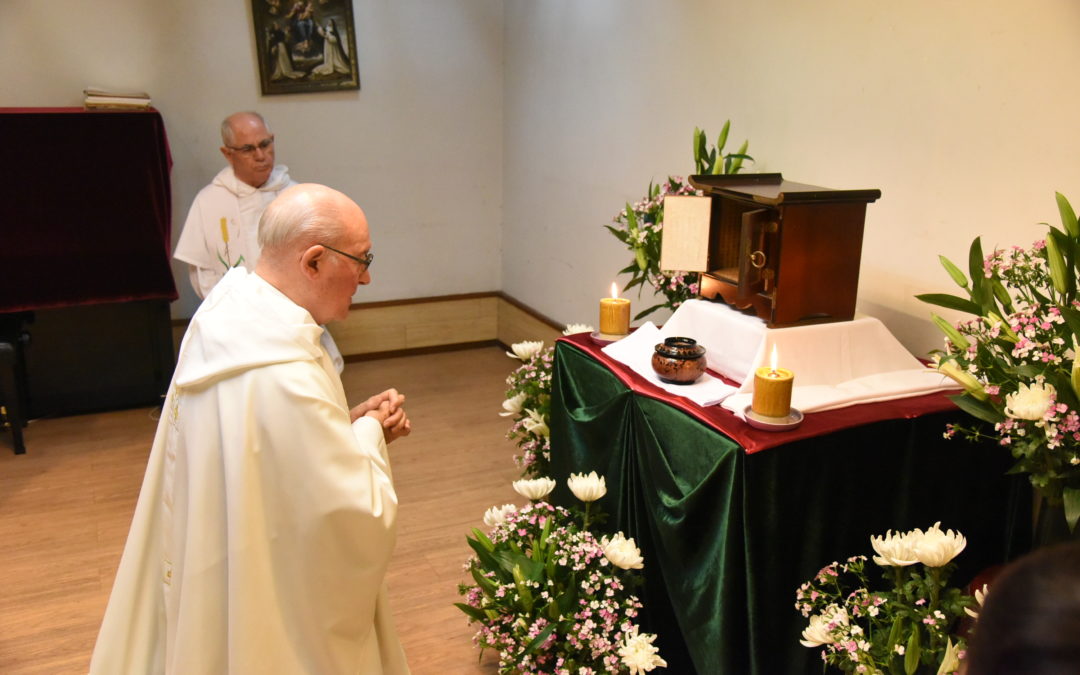
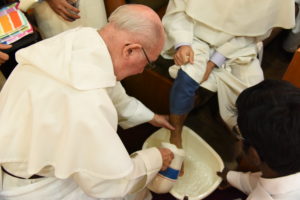 -Jesus institutes, besides, the Priesthood, so that they will have always somebody who, in His name, will take, bless, break and distribute this bread and wine to them, wipe out their sins, and sometimes their tears, too, and remind them that, -as St. John of the Cross said-,at the sunset of life, you will be judged on love but, above all, we should not forget, we will be judged by Love Itself.