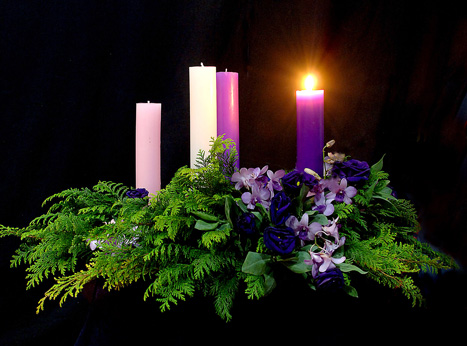
What is Advent?
The word Advent is derived from the Latin word advenire, meaning ‘to come’, referring to the coming of Christ.
In the Catholic Church, Advent refers to the four weeks preceding Christmas, a time of liturgical celebration that highlights the birth of Jesus Christ and, according to biblical prophecy, the Day of Judgment on which he returns.
Advent is a time of spiritual purification, as well as preparing for Jesus’ arrival. Purple is the color used in the vestments during celebrations, a symbol of the beginning of a new liturgical year, which occurs on the first Sunday of Advent.
Advent is a time for penance and spiritual cleansing, but for Christians, it is also a time of joy and rejoicing. This is because it nurtures the hope of the Messiah’s return through the celebration of his birth.
Advent represents Mary’s waiting for the birth of Jesus. This is announced by the Angel Gabriel in a vision in which he told her she was about to conceive the Son of God.
Advent always begins on the Sunday closest to the 30th of November and ends on the 24th of December, Christmas Eve.
The wreaths of candles has symbolic meanings tied to the Christmas season, and each of them has the meaning that the circle of wreath signifies the eternity of God with no beginning or end. And even each of the individual evergreen that makes up the wreath has the meaning that can be represented to our faith. We don’t mention each of them but the most important is that the wreath as a whole is meant to remind us of both immortality of our soul and God’s promises of everlasting life through our Lord Jesus Christ.
The four candles represent four weeks of Advent, and each candle represents each Sunday. Three candles are purple, the liturgical calendar color that represents the time of prayer, penance, and sacrifice.
The first purple candle symbolizes hope, Sometimes it is called the “Prophecy Candle” in memory of the prophets, especially Isaiah, who prophesied the birth of Christ. It symbolizes the expectation for the coming Messiah.
The second purple candle symbolizes faith. The candle is called the “Bethlehem Candle” as it symbolizes Mary and Joseph’s journey to Bethlehem.
The third candle is pink and symbolizes joy. It is the “Shepherd’s Candle”, and it is pink because rose is the liturgical color for joy. The third Sunday of Advent is Gaudete Sunday and is meant to remind us of the joy that the world experienced at the birth of Jesus, as well as the joy that the faithful have reached the midpoint of Advent.
The four and last purple candle, lighted on the four Sunday of Advent, symbolizes peace. It is the “Angel Candle,” as the angel’s message reminds us “Peace on earth, to the people of goodwill” (Luke 2:14 KJV). It is the final week of prayer, penance as we wait for the arrival of our Saviour.
In modern traditions, the Advent wreath we see does not include a white candle. But the white candle is in place in the middle of the wreath and on Christmas Eve. This candle is named “Christ candle” and it represents the life of Christ. The color white symbolizes purity because Christ is our sinless, pure Saviour.
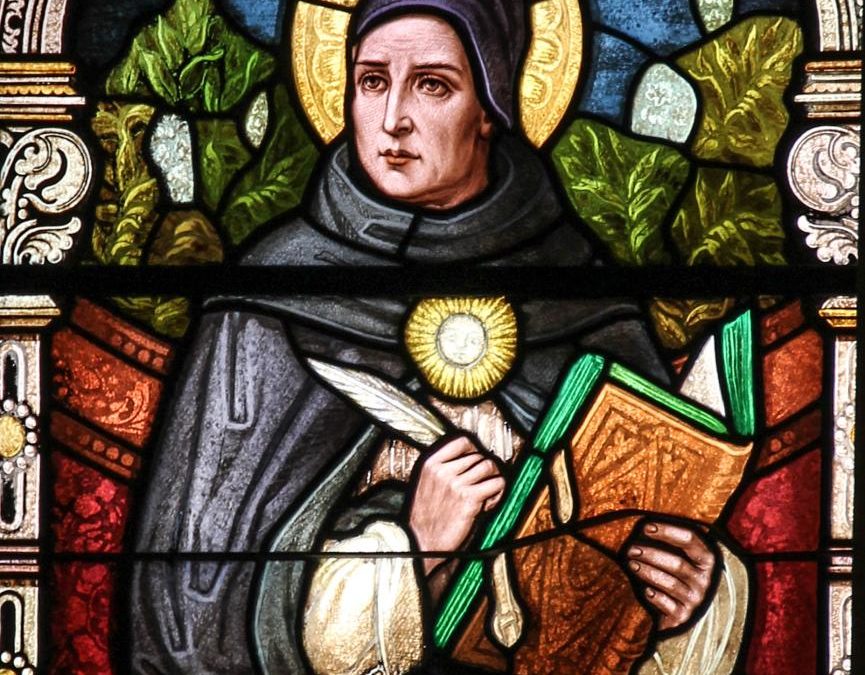
We all want good things. When we encounter something good, whether it be the type of food, or car, or smartphone, our first question is often: where can I get that?
Virtue is a good thing. A virtuous person possesses an undeniable appeal. A virtuous person can inspire us to pursue virtue ourselves, but this is where things become somewhat complex. Unlike food, a car, or a smartphone, the virtues are not external, material things that I can obtain and then place in my refrigerator, my garage, or my pocket. Virtues are things that inhere inside a person. Human persons do not have virtues so much as they are virtuous. And this is good news, although multiple persons cannot all have an individual smartphone at the same time and to the same degree, everyone has the potential to be truly virtuous and enjoy the happy freedom that virtue provides. But where do we get virtue? Where does virtue come from? What makes a person virtuous? Let us look at the causes of the virtues.
We recall that the virtues perfect the human person, and in that person’s actions good. A virtue is a kind of habit that is a stable disposition that profoundly qualifies (deeply ) that human powers of knowing, willing, and feeling.
A virtuous person performs good actions because he or she is a good person. The type of actions one performs is linked to the type of person one is. We also recall that there are two broad categories of virtue: there are, first of all, moral virtues or human virtues. These virtues perfect the human power of knowing, being willing, and feeling in a human way and on a human level. The most famous example of the virtuous is the habits of prudence, justice fortitude, and temperance.
These pivotal ( or cardinal ) virtues perfect the natural powers of knowing, being willing, and feeling in a way proportioned to natural human freedom and flourishing.
The second broad category of virtue is the theological or God’s virtues. These virtues perfect and extend the human powers of knowing and willing beyond the human person to God himself. These operate on a supernatural level. There are three theological virtues: faith, hope, and charity. Let us now turn to the causes of these two types of virtues. A natural cause of moral ( or human ) virtues is the performance of good actions. For example, take a man who interacts with others. Such a man encounters residential neighbors and works with colleagues on a regular basis. As a human being, this man of course has a will; and thus, he has the potential to exercise his will justly in his dealings with others. If he acts justly if he gives to others that which they are owed, that which is their due, he eventually becomes a just man. The man who acts justly with regularity eventually acquires the habit of justice in his will. Why? Because through the deliberate and repeated acts of justice he becomes accustomed. He becomes habituated to the form of justice. His will itself takes on the just shape of his just actions. He becomes what he does. And because his actions are just, he becomes a just person. Similarly, the man who acts temperately, the man who allows reason to guide his enjoyment of physical pleasure like food and drink eventually becomes a temperate man.
He is a man who desires to take on the virtuous shape, the liberating habit of temperance. Through deliberate and repeated eating healthy proportions ( pursuing the good and virtuous means between excess ( too much ) and defect (too little) the man becomes a temperate man.
In summary, the natural cause of moral virtue is the performance of good actions. Moral virtues can be acquired through virtuous activity. The more good that we do, the more virtuous we become. And the more virtuous we become, the more promptly, joyfully, and easily do we perform good actions, We become what we do.
There is another type of virtue that no human action can still in the soul of the person. And these are the infused virtues, the virtues that direct and unite us to God. God is the principal cause of the infused virtues. In the case of acquired virtues, repeated, good actions eventually yield a virtuous habit in the powers of the human soul. In this case of infused virtues, however, this order is reversed. God first imparts, He first infuses, supernatural virtue into the soul, and then the person is able to act according to these theological virtues.
Why do we need infused supernatural virtues? As discussed earlier, the acquired moral virtues are habits that are good in relation to human goodness. The moral virtues are good insofar as they perfect nature on a natural level. In contrast, the infused virtues are supernatural good. They are with goodness beyond the proportion of human goodness. God is the measure of supernatural goodness. And because the intimate life of God is beyond the natural reach of the human powers of knowing and willing, only God can cause the theological virtues in the power of the human soul. Take the infused (theological) virtue as faith, for example; no repeated acts of rigorous thought or even sympathetic judgment can engender or cause the supernatural virtue of faith in the human intellect. We do not come to faith in God after or because we have to judge what he says to be true. Rather, God first imparts the theological virtue of faith in the soul, and it is by this supernatural habit that we are enabled to make acts of faith.
The theological virtue of faith unites the human intellect to God. Through faith, we believe that what God reveals is true because it is God who reveals it. Our mind must first be raised to God in order for us to believe something because of God. This is what the infused virtue does.
In sum, the virtues perfect a human person, making both the person and the person actions good. But there are two kinds of goodness: There is natural (moral) goodness and there is supernatural (theological) goodness. We acquire moral virtues through repeated actions. In this way, good actions are the cause of moral virtue in the human powers of knowing, willing, and feeling.
With regard to supernatural goodness, the goodness of God, however, no human action can produce theologically proportioned virtues. Only God can cause, only God infuses his virtues: faith, hope, and charity. Therefore, repeated and deliberate good actions can cause moral virtue. But only God can cause the infused virtues in the soul of the human person.
Summa Theologiae I-II, q. 51, a,1-3
https://aquinas101.thomisticinstitute.org
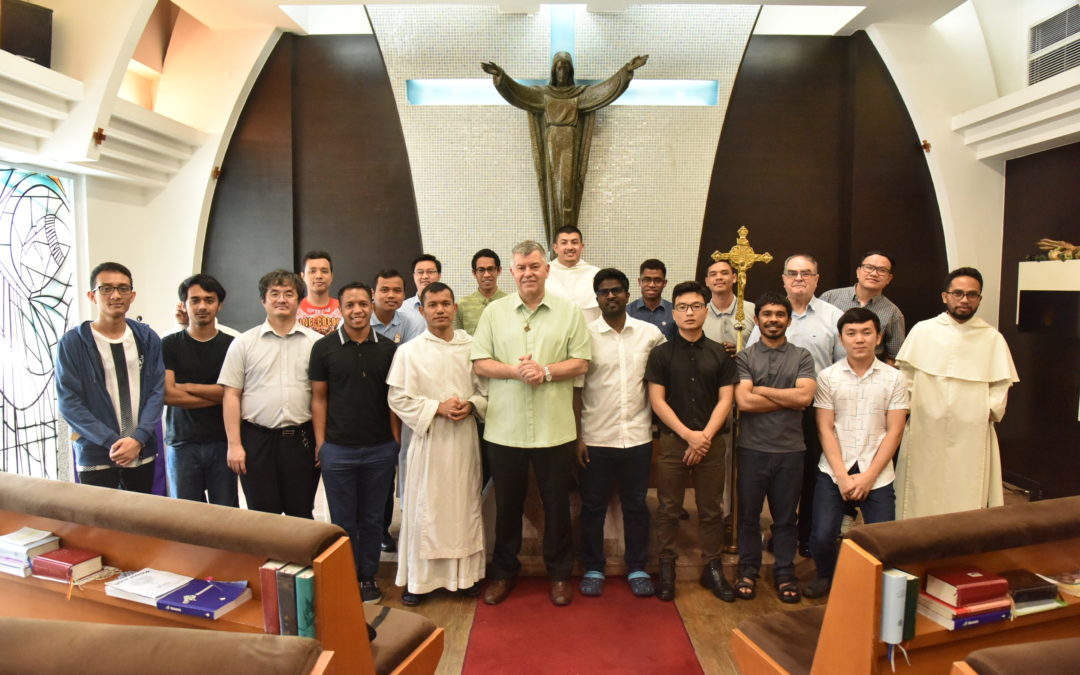
Easter is one of the most important festivities for Christianity, as it brings us to the crucifixion and resurrection of Jesus Christ. This is a moment that invites us to reflect on the victory of life over death, the victory of love over hatred. And also about our role in building a more just and fraternal society.
May this period be filled with renewal, love of neighbor, and reflection on our thoughts and actions. May we strengthen our mission and learn more and more, from each other, and be inspired by the Word of God.
May it also be an opportunity for freedom from suffering and confidence in love. Both in the love that God has for us, and in the love that we can dedicate to those around us and, mainly, to those who need it most. Whether they are in our communities or in places that are experiencing serious conflicts and appear on the news.
May the joy of the risen Jesus Christ comfort all hearts, those who are close to us and also those who are distant, needing hope to face difficulties.
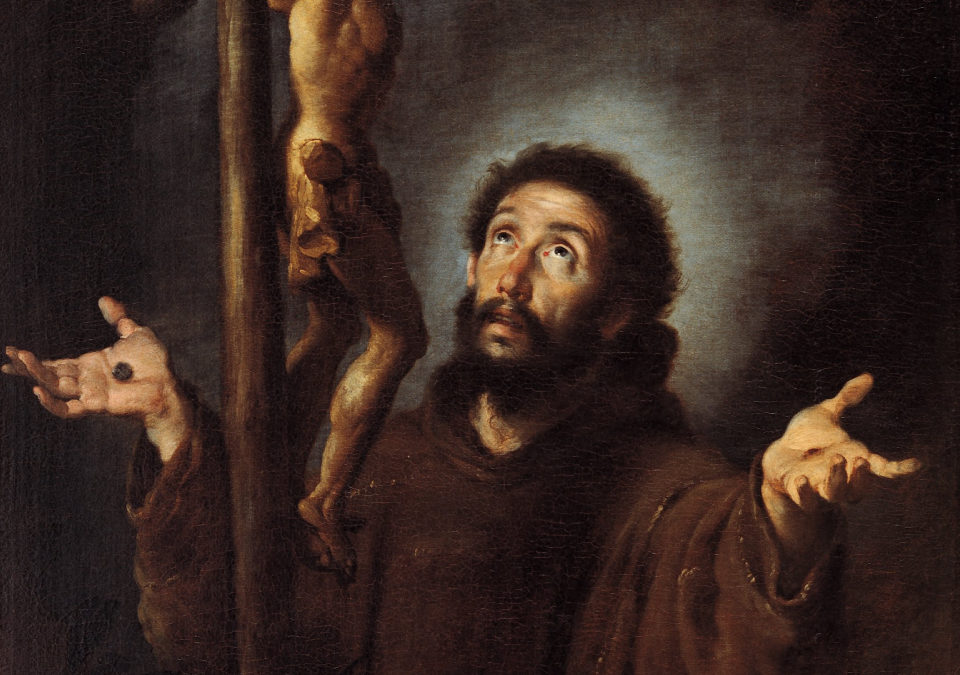
On October 4th is the date of honoring Saint Francis of Assisi, the patron saint of animals and nature, also known for being the saint of the poor.
Who is St. Francis of Assisi
Saint Francis of Assisi was born in Assisi, Italy, in 1182. He was the son of Pedro Bernardone, a wealthy merchant, and also, from a noble family in Provence. In his youth, Francis was very wealthy and wasted money on ostentations. However, his father’s business did not interest him, much less his studies. What he wanted was to have fun. However, St. Bonaventure, his contemporary, wrote about him: “But, with divine help, he never let himself be carried away by the ardor of the passions that dominated the young people of his company”.
In Francis’ youth, a war broke out between the Italian cities called Perugia and Assisi. He wanted to fight in Espoleto, between Assisi and Rome but fell ill. During his illness, Francis heard a supernatural voice. The latter asked him to “serve love and the Servant”. Little by little, with much prayer, Francis felt in his heart the need to sell his goods and buy the precious Once”, upon encountering a leper, despite his natural disgust, he overcame his will and kissed the sick.
It was a gesture moved by the Holy Spirit. From that moment on, he began to make visits and serve patients who were not in hospitals. He share his own clothes and money with the poor, Francis felt in his heart the need to sell his goods and buy the precious pearl that he had read about in the Gospel.
One day when Francis was praying alone in Saint Damian church, in Assisi, he felt that the crucifix was talking to him, repeating the famous phrase three times: “Francis, repair my house, for you look that it is in ruins“. He sold everything he had and took the money to the priest of the Church of Saint Damian, and asked for permission to live with him. Francis was twenty-five years old at that time.
Saint Francis and his followers traveled to many cities in Europe and Africa, such as Egypt, Cyprus, Rome, Syria, and other cities. To better meditate on the mystery of the birth of Christ, Saint Francis of Assisi would have made figures representing Saint Joseph, the Virgin Mary, and Jesus, building the first nativity scene, which became so popular at Christmas. In1224, while meditating on Mount Alverne, Saint Francis received the stigmata of Christ.
Francis had heard God’s calling. Thus, he began to live with joy in the life of poverty, humility, and obedience. He believed that for the Christian to live the real meaning of the Gospel, he should give up all comforts and follow the life of Jesus Christ.
He wrote the first rule of the Franciscan Order and obtained the oral approval of Pope Innocent III, in 1209, giving rise to the branch today known as Franciscan Conventual Friars. Also, he would receive the young Clara, who would be responsible for the female branch of the Franciscans, under the name of Poor Clares.
He died on October 3, 1226, under the age of 45, after listening to the reading of the Passion of the Lord. He was canonized by Pope Gregory IX (1145-1241) two years later after his death.
By Bro. Cesar OP
The World Health Organization (WHO) gives a clinical definition of infertility as a disease of the reproductive system deined by the failure to achieve a clinical pregnancy after 12 months or more of regular unprotected sexual intercourse.[1] This definition dates from 2009; however, in 2016, some information about the change in this definition came about.
WHO web page states clearly: WHO has not changed its use of this definition. It is important to note that this definition provides a clinical description of infertility. It does not make any recommendations about the provision of fertility care services. WHO is not planning to make any changes to the definition of infertility. WHO is currently developing guidelines on the diagnosis and management of infertility.
Interestingly, the current information points out some changes (proposal of) in the definition that, considering the number of web pages holding the same information, may appear sooner or later. For instance, Herjeet Marway and Gulzaar Barn, both lecturers at the University of Birmingham, state that the World Health Organization proposal is to change the definition of infertility. This would move it away from a clinical disease-based definition where it is viewed as a disability to a view that includes a more social definition, recognizing it as a right to reproduce. Moreover, they state that infertility would not be the failure to achieve a clinical pregnancy after 12 months or more of regular unprotected sexual intercourse. Rather, it would also be considered to include cases when single men and women without medical issues do not have children but want to become a parent.[3]
A recent article sustains that David Adamson, MD, one of the authors of the new guidelines, told The Telegraph the change is designed to reflect “the rights of all individuals to have a family, and that includes single men, single women, gay men, gay women.[4] David Adamson works as a Reproductive Medicine Expert to WHO. In the same article, this new definition of infertility has the potential to become a great equalizer of reproductive rights: It fundamentally alters who should be [classified as infertile] and who should have access to healthcare, said Dr. Adamson it sets an international legal standard.[5]
All this has a direct relation with the topic of study since surrogacy can be the means more suitable for these single men, single women, gay men, and gay women who, without medical issues, do not have children but want to become parents.
The society is a dynamic system, changing in all spheres of knowledge; the Church is part of this dynamic system; therefore it is interesting to give an account of the position of the Church regarding paternity, surrogacy and this probable change in the definition of infertility provided by the World Health Organization.
This research/reflection paper deals with de definition of infertility and its relation to surrogacy. Before going forward, it is interesting to trace, more or less, the usage of the word sterility. For this purpose, the author will quote some insights found in Infertility: Tracing the History of a Transformative Term written by Robin E. Jensen (2016). Choosing this work is because of its historical view and the use of the term mechanical regarding the human body. According to the text, there is a similarity between the human body and a piece of machinery, in moments of malfunction, it needs repairing. Even though this comparison seems to be metaphorically correct (and nave), the acceptance of comparing the human body with an engine, for instance, will lead to approach the woman womb, and therefore surrogacy, in a materialistic way, manipulable at the person will.
Early twentieth-century medical experts routinely described married women without children as fruitless and in need of repair barren and broken, thereby framing women inability to bear children through the conflicting lenses of the natural organic world and the world of machines.[6] With this affirmation, it is understandable that the condition of fertility/infertility has become an excellent mechanical process or one in need of repairing.
According to Jensen, in the context of contemporary women reproductive health, the term (in) fertility is as ubiquitous as it is fraught with seemingly endless uses and connotations. But it was not until 1868 that the obstetrician James Matthews Duncan first used the word fertile to reference women who gave birth (or had the potential to give birth) to numerous children.[7] As time goes on, Duncan metaphor had moved into the realm of the literal, as physicians routinely enlisted the term fertile to describe women with many spring (or the potential for many spring), just as they enlisted the term infertile to describe married women who remained childless (or who bore few children).[8]
Here in these definitions, both of fertile and infertile women, there is a common framework: married women; the author considers that, even in the field of medical research, the value of marriage is present while regarding the conception and birth of a child, putting out of the definition single persons.
The history of civilizations has documented the word infertility several times. Being Christianity an essential part of human history, it is not strange to find references to this condition in the Bible the story of Sarah, Abraham wife, for instance which will give a direct link with the divine. Extensive discourse about women reproductive problems and capabilities can be traced back as far as the writings of ancient Egyptians, Hebrews, and pre- Hippocratic Greeks. Over the past few centuries, the terms barren and then sterile have functioned as metaphorical predecessors to infertile serving as common denotations for women inability to become pregnant or bear healthy children.[9]
Jensen writes regarding fertility: Nineteenth-century rhetoric referred to sterile female bodies as machines in need of repair by a surgeon and, in this way, constituted women as somewhat outside the realm of culpability for their childlessness. This rhetoric, in contrast to earlier rhetoric that referred to women as barren and therefore unbalanced, unnatural, cored them few opportunities for self- help but much in the way of surgical hope (despite the relatively bleak success rates of surgical interventions at the time). Sterile bodies could be fixed by medical intervention.[10]
In this sense, the question about the right of having a child shows up in the ethical scenario. If the logic relation 1:1 is made upon the basis of the human body: machine, the idea of surrogacy is valid and fosterable, accepting the surrogated womb/mother just as a factory of babies; consequently, any person will be able to claim his/her right to have a child. This worldly way of thinking cannot be the answer to the question about surrogacy and its implications in society.
Moreover, if the case is to take the aforesaid idea literally, homosexual couples have to be discarded out of the possibility of making use of surrogacy, because it is the female body that needs to be repaired so as to function correctly. The union of male and female continues to be the conceptive way. It takes away the idea of the rights of all individuals to have a family, and that includes single men, single women, gay men, gay women, which is the implication of a future change in the definition of infertility given by WHO.
Jensen work ends with an interesting statement: The mixing of perceptual lenses from centuries past lenses with divergent assumptions about blame and responsibility, morality and science foretold an era in which articulating infertility involved a complicated, fraught balance of divergent appeals, as well as one in which the meaning of infertility was constantly reinvented according to the circulation and percolation of scientia coincindings, medical technologies, media depictions, and lay discourses.[11]
One of the scientific findings is that of infertility in men. The history of the word infertility has a female connotation, both in the scientific and religious fields. Jensen work is clear evidence of this, and for all those who are familiar with the Bible, they know that there is no even one account of male sterility/infertility. At knowing this, the author considers that there is a double disrespect towards women, namely, to have found only women unable to have a child because of countless reasons; and to consider now the surrogacy as an alternative for becoming parents.
As a final point, the author reflects on the so-called right to have a child which is a controversial issue if the definition of infertility changes. For this purpose, it is necessary to consider the United Nations Universal Declaration of Human Rights and the insights of Robert Spaedmann on Human dignity.
Now, the second main feature of the human being is his/her dignity. According to the United Nations (UN) all human beings are born free and equal in dignity and rights. They are endowed with reason and conscience and should act towards one another in a spirit of brotherhood.[12] This statement is taken from The Universal Declaration of Human Rights emphasizes two main concepts for this research, namely: dignity and rights. Reading the UN Declaration on Human Rights there is no mention at all of the right of having a child.
According to Spaedmann, quoted by Zaborowski, person is not the name of a species, but a general proper name for each member of a species this name says who we are, and this is evidently not simply identical with what we are.[13] If this definition can be applied to the topic in this research, it is clear that Marie, Anna, Laura, Peter, John, any person who may be infertile continue to be a human being, this is who she/he is therefore her/his dignity is not conferred by the fact of being parents.
Furthermore, Spaedmann writes that persons are in an unparalleled sense individuals, because of their freedom and their capacity to transcend themselves no longer mere parts, but a whole, which cannot be accounted for as a means to an end.[14] This statement is very important here because taking into account Duncan/Jensen metaphor of the body as a piece of machinery in need to be repaired, the human person/body is treated as parts instead of as a whole; moreover, this part in need of reparation is regarded as a means to have a child, to have a child is not the real transcendence of a person.
To complete this idea, Pope Francis in Amoris Laetitia (178) writes some couples are unable to have children. We know that this can be a cause of real suffering for them.[15] He acknowledges that there is an element of suffering within the condition of infertility, but he does not say that this is a cause for no transcendence. He continues: We know that marriage was not instituted solely for the procreation of children.[16] To consider infertility as a failure in the way towards transcendence is not to understand the definitions of human being given by UN and Spaedmann. In this same number, the Pope takes the concept of wholeness: even in cases where, despite the intense desire of the spouses, there are no children, marriage still retains its character of being a whole manner and communion of life.[17]
Finally, Spaedmann points out that to speak of person is to take cognizance of the fact that human nature as nature realizes itself only when it awakens when it transcends its centrality when it consciously grasps the self-transcendence which is essential to it and does not turn it back into an instrument of merely natural self-preservation.[18] Surrogacy and an eventual change in the definition of Infertility may put human beings and procreation into the role of instruments: the surrogate mother as a baby factory and the institution of marriage as self-preservation of the human species in the planet. To have a child will never be a right, it is a gift from God, and therefore the changes in definitions and policies regarding this controversial issue will never change this appreciation.
Bibliography
Francis Pope, Amoris Laetitia. 2016.
Jensen, Robin E. Infertility: Tracing the History of a Transformative Term. USA: Penn State University Press, 2016.
Marway, Herjeet, and Barn, Gulzaar. Surrogacy Laws: Why a Global Approach is Needed to Stop Exploitation of Women, The Conversation (2018), https://theconversation.com/surrogacy-laws-why-a-global-approach-is-needed-to-stop-exploitation-of-women-98966
Naftulin, Julia. The Definition of Infertility Is Changing. Here Why That Matters (2019), https://www.health.com/condition/infertility/infertility-definition-change
The World Health Organization (2020) https://www.who.int/reproductivehealth/topics/infertility/multiple-definitions/en/
United Nations, The Universal Declaration of Human Rights. Paris 1948. https://www.un.org/en/universal-declaration-human-rights/
Zaboroski, Holger. Robert Spaedmann Philosophy of the Human Person: Nature, Freedom, and the Critique of Modernity. New York, USA: Oxford University Press, 2010.
Zegers-Hochschild, F., et al, The International Committee for Monitoring Assisted Reproductive Technology (ICMART) and the World Health Organization (WHO) Revised Glossary on ART Terminology, 2009, Human Reproduction 24, No.11 (2009): 2683 2687.
References
[1] F. Zegers-Hochschild et al, The International Committee for Monitoring Assisted Reproductive Technology (ICMART) and the World Health Organization (WHO) Revised Glossary on ART Terminology, 2009, Human Reproduction 24, No.11 (2009): 2683 2687, here 2686.
[2] The World Health Organization (2020) https://www.who.int/reproductivehealth/topics/infertility/multiple-definitions/en/
[3] Herjeet Marway and Gulzaar Barn, Surrogacy laws: why a global approach is needed to stop the exploitation of women, (Australia: The Conversation, 2018), https://theconversation.com/surrogacy-laws-why-a-global-approach-is-needed-to-stop-exploitation-of-women-98966
[4] Julia Naftulin, The Definition of Infertility Is Changing. Here Why That Matters, (2019) https://www.health.com/condition/infertility/infertility-definition-change
[5] Ibid.
[6] Robin E. Jensen, Infertility: Tracing the History of a Transformative Term (USA: Penn State University Press, 2016), 17.
[7] Ibid., 18
[8] Ibid.
[9] Robin E. Jensen, Infertility: Tracing the History of a Transformative Term (USA: Penn State University Press, 2016), 18.
[10] Ibid. 19.
[11] Robin E. Jensen, Infertility: Tracing the History of a Transformative Term (USA: Penn State University Press, 2016), 37.
[12] United Nations, The Universal Declaration of Human Rights, article 1, Paris on 10 December 1948, https://www.un.org/en/universal-declaration-human-rights/
[13] Holger Zaboroski, Robert Spaedmann Philosophy of the Human Person: Nature, Freedom, and the Critique of Modernity (New York, USA: Oxford University Press, 2010), 222.
[14] Ibid.
[15] Francis Pope, Amoris Laetitia (2016). 178
[16] Ibid.
[17] Ibid.
[18]Holger Zaboroski, Robert Spaedmann Philosophy of the Human Person: Nature, Freedom, and the Critique of Modernity (New York, USA: Oxford University Press, 2010), 222.
By Br. Reynaldo Rafael Chang, OP.
The encyclical makes no concessions in asserting the moral responsibility of men who, with their behaviors, influence the environment, pollution, global warming, and, ultimately, how we can prevent all of this. The Holy Father, the Pope, calls on everyone for an ecological conversion. It instigates us to change our route: to strive to safeguard the environment, our common home. And he says that polluting, contributing to global warming, to deforestation, is, at heart, a sin.
When the Roman Pontiff, starting from the second chapter of the encyclical, introduces the aspects of faith, he does so with a very clear preamble: Why insert in this document, addressed to all people of goodwill, a chapter referring to the convictions of faith? I am aware that, in the field of politics and thought, some strongly refute the idea of a Creator, or consider it irrelevant, to the point of relegating to the scope of the irrational the wealth that religions can offer for an integral ecology and for the full development of mankind. Other times, they are supposed to constitute a subculture that should simply be tolerated. However, science and religion, which provide different approaches to reality, can enter into an intense and productive dialogue for both
There are some theological reflections and numerous acts of accusation directed at the powerful and developed nations. I have selected below those that I consider the main points: Preserving the natural world is the best legacy that we can leave for future generations:
Abandoning fossil fuels: Waiting for better solutions (renewable energy) it is better to prefer lesser evil. In the case of energy, the worst of all is fossil coal. We know that technology based on fossil fuels, all very polluting – especially coal, followed by oil and, to a lesser extent, by combustible gases – must be replaced progressively, however, without hesitation. In the expectation of a broad development of renewable energies, which should have already started, it is legitimate to choose the lesser evil or to resort to transitory solutions.
The failure of UN climate meetings: More than 20 years of summits have served little to control global warming. Noteworthy is the weakness of the international political reaction. The submission of politics to technology and finance is demonstrated by the failure of the world vertices on the environment. There are too many private interests and, very easily, the economic interest prevails over the common good and manipulates information.
Emission credits are useless negotiation: The strategy of buying and selling emission credits can result in a new form of speculation and does not serve to reduce the global emission of polluting gases. This system seems to be a quick and easy solution, with the appearance of a certain commitment to the environment, but it does not really imply a radical change in the circumstances.
Far from it, it can become an expedient that allows sustaining the overconsumption of some countries and sectors.
Importance of local initiatives: In some places cooperatives are developed for the exploitation of renewable energies that enable local self-sufficiency and even the sale of surplus production. This simple example indicates that, while the existing world order is powerless to take responsibility, the local authority can make a difference. It is here that greater responsibility can be born, a strong sense of community, a special capacity for good care and more generous creativity, a deep love for the land itself, as well as thinking about what will be left for children and grandchildren. These values have very deep roots in Aboriginal populations.
Transgenics? Neither in favor nor against: It is difficult to pass a general judgment regarding the development of genetically modified organisms (GMOs), plants or animals, for medical or agricultural purposes, as they can be very different from one another and require different considerations. On the other hand, the risks should not always be attributed to the technique itself, but to its inadequate or excessive application. In reality, genetic mutations have been and continue to be produced many times by nature itself. Not even those caused by humans are a modern phenomenon. The domestication of animals, the crossing of species, and other ancient and universally accepted practices can be the object of these considerations. It is worth remembering that the beginning of scientific work on transgenic cereals was the observation of bacteria that naturally and spontaneously produce changes in the genome of a vegetable. However, in nature, these processes have a slow pace, which cannot be compared to the speed imposed by current technological progress, even when such progress is based on multi-century scientific developments.
Consumption is the most serious problem for the world population: blooming demographic growth and not extreme and selective consumerism by some is a way of not facing problems. In this way, the intention is to legitimize the current distributive model, in which a minority believes in the right to consume in a proportion that would be impossible to generalize because the planet could not absorb the waste produced by such consumption.
Cell phones and other devices are ruining our relationship with nature: At the same time, real relationships with others, with all the challenges they imply, tend to be replaced by a type of communication mediated by the internet. This allows selecting or eliminating relationships according to our discretion and, in this way, a new type of artificial emotion is often generated, which has more to do with electronic devices and visual displays than with people and nature. The current means allow us to communicate and to share knowledge and affections. However, sometimes they prevent us from making direct contact with anguish, with fear, with the joy of others, and with the complexity of their personal experience. That is why it should not be surprising that, besides the oppressive supply of these products, a deep and melancholy dissatisfaction in interpersonal relationships, or harmful isolation, is growing.
The legacy for the new generation? Desolation: Catastrophic predictions can no longer be considered with contempt and irony. We will be able to leave for the next generations too many ruins, deserts, and garbage. The rhythms of consumption, waste, and changes in the environment have surpassed the planet’s possibilities, in such a way that the current lifestyle, being unsustainable, can only lead to catastrophes, as in fact, it is already happening periodically in several regions.
Polluting and extinguishing resources is a sin: The environment is a collective asset, the patrimony of all humanity and everyone’s responsibility. Whoever owns a part of it is only to manage it for the benefit of all. If we don’t, we will carry the burden of denying the existence of others in our conscience. That is why the bishops of New Zealand wondered what the command “you shall not kill means when about 20% of the world population consumes resources in order to rob the poor nations and future generations of what they need to survive.
Noise pollution is also reprehensible: to speak of authentic development, it will be necessary to have an integral improvement in the quality of human life, and that implies analyzing the space in which people’s existence is taking place. The environments in which we live influence our way of seeing life, feeling, and acting. In our bedroom, in our home, in our workplace, and in our neighborhood, we must make use of the environment to express our identity. We strive to adapt to the environment, but when it is disordered, chaotic, or saturated with visual and noise pollution, the excess of stimuli tests our attempts to develop an integrated and happy identity.
These are some interesting and controversial points of the encyclical that help us to reflect and take positions and that deserve studies from us to deepen. It is also a challenge for governments and technicians. A great advance in reflection and in taking positions regarding so many important situations for the world of today and tomorrow.
by Bro. Cesar. OP.