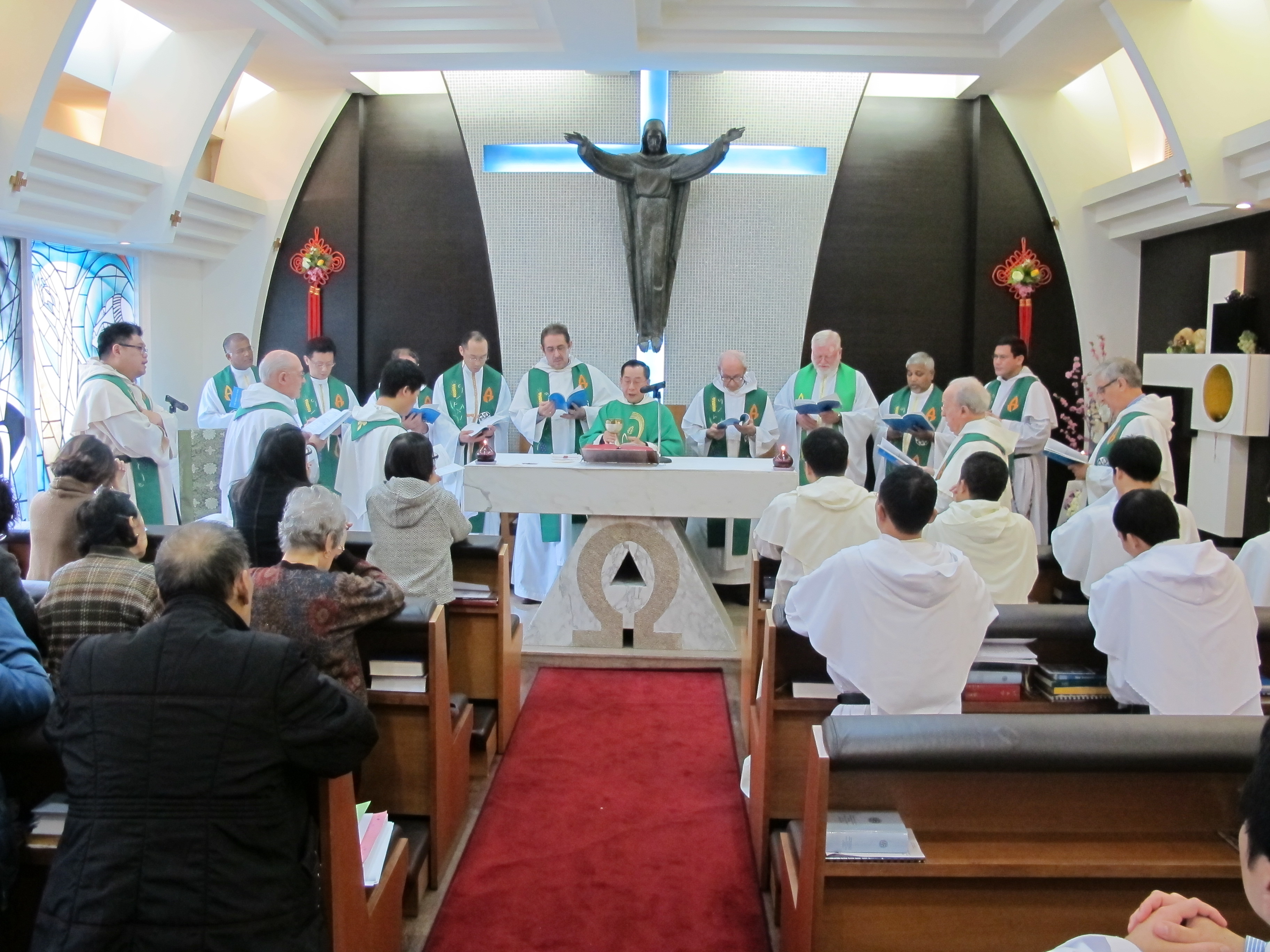
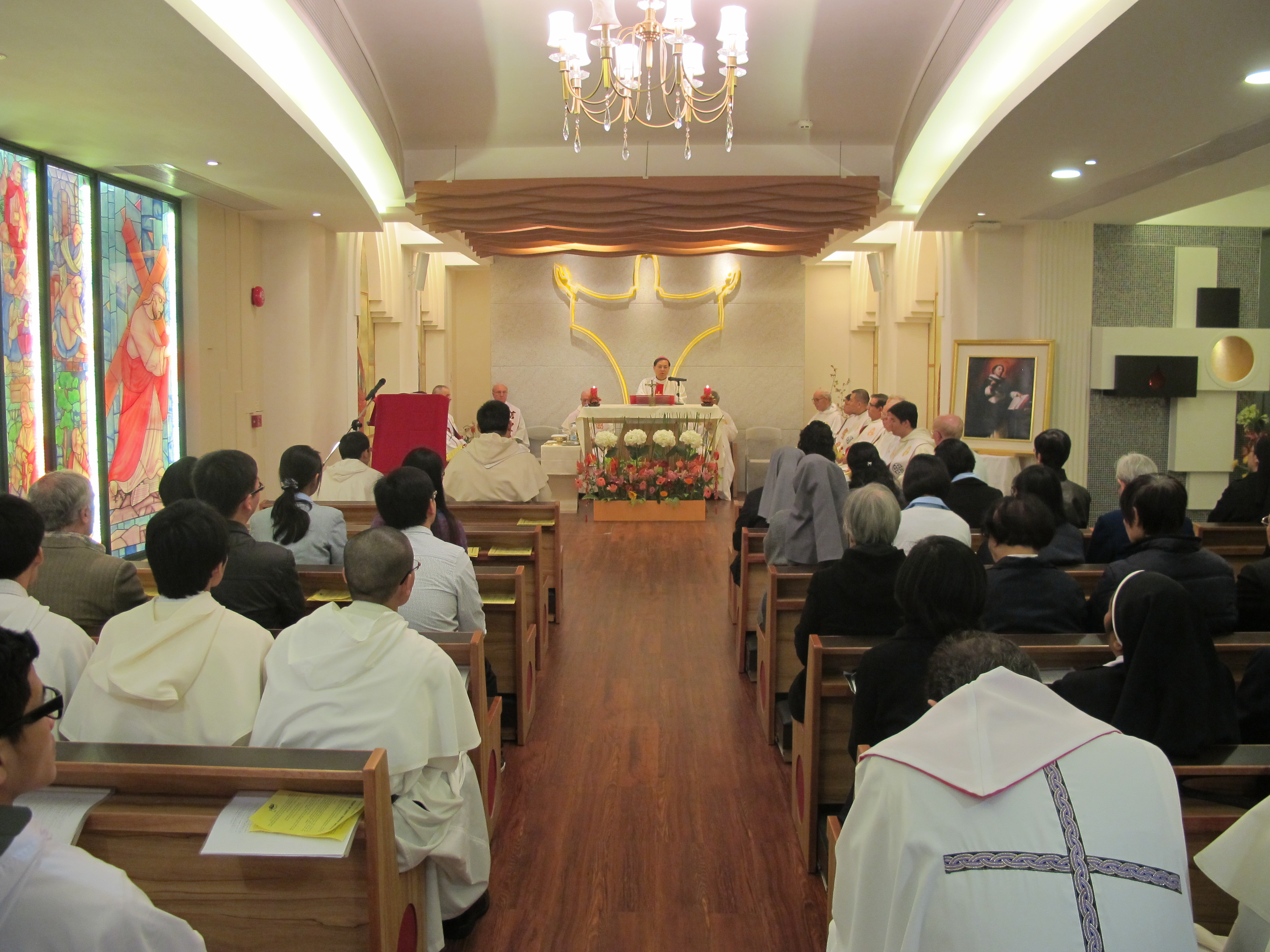
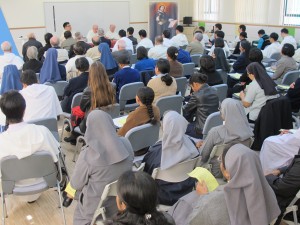
On February 3, 2013, Sunday, our Priory was graced by an unusual group of visitors: Provincials and Vicars of the Dominican Provinces and Vicariates of the Asia/Pacific Region, who were accompanied by the Assistant to the Master of the Order for this Region and the Assistant to the Master for the Apostolic Life.
Our brothers celebrated the Sunday Eucharist with us. The concelebrated Holy Mass was presided by Fr. Vincent Lu, who spoke in his homily of the exemplary life of the first missionaries to Asia and of our responsibility to follow in their footsteps by proclaiming God’s Kingdom and serving our peoples, especially the needy. After the celebration of the Eucharist, the brothers from the different Provinces and Vicariates conversed with us and then had lunch in a restaurant with some members of our Priory. After lunch, they visited the emblematic places of beautiful Macau. In the evening, they went back to Rosaryhill, Hong Kong, where their meeting continued for a few more days.
In their 2013 yearly encounter, the superiors of the Dominicans in this part of the world talked of the current situation of their respective Province or Vicariate, of other possibilities of collaboration among them, and of new challenges, including the New Evangelization. Fr. Jose Luis de Miguel, O. P., our Moderator of St. Dominic Center of Studies, spoke to them in Rosaryhill of the New Evangelization ant its challenges.
Our brother and major superior Fr. Javier Gonzalez, the gracious host of the gathering of Provincial and Vicars expressed his fraternal gratitude to our Priory for the generous and kind hospitality of the brothers. (FGB)
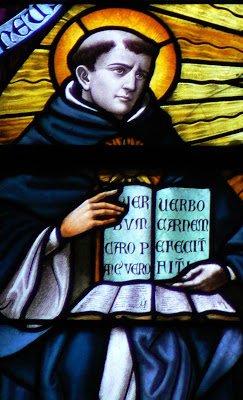
On January 28, 2013, the St. Dominic Center of Studies, Macau, celebrated the Feast of Saint Thomas Aquinas at St. Paul’s School. The morning celebration consisted of three consecutive parts: St. Thomas Lecture, Holy Eucharist and fraternal agape. About ninety people graced the celebration, including Dominican student brothers and priests of the Province of Our Lady of the Rosary, postulants and sisters of the Dominican Missionaries of the Rosary, professors and teachers from the University of Saint Joseph and St. Paul’s School, and religious men and women of different religious congregations.
The solemn academic program of the second St. Thomas Lecture began with a prayer-song followed by the Invocation delivered by Brother Mariano Maung, OP, coordinator of the students. Fr. Fausto Gomez, OP, Regent of Studies, delivered the Opening Address which focused on the continuing importance and relevance of St. Thomas Aquinas today. Fr. Jose Luis de Miguel, OP, Moderator of the St. Dominic Center of Studies pronounced the formal lecture on “The New Evangelization: Recent Developments and Challenges.†Fr. Jose Luis divided his excellent lecture in three parts: the teachings of the Church on evangelization and new evangelization; the new evangelization in the 2012 Synod of Bishops, and some serious challenges for the future. The speaker made pertinent references to the meeting of the Federation of Asian Bishops’ Conferences in Ho-chi-min, Vietnam in December 2012. Christ, the speaker stressed, continues to be the evangelizer and calls us today to be new evangelizers attuned to the world in which we live. An interesting open forum closed the event.
The Holy Mass was presided by the Most Rev Bishop of Macau Joseph Lai, DD, and concelebrated by about twenty priests. The Bishop underlined in his homily the significance of St. Thomas, the great teacher of truth, for the Church and as Patron of Catholic Schools. He pointed out the importance of inculturating the Christian faith in the cultures of Asia, in particular the Chinese cultures for we live in Macau, which is part of China. After communion, Fr. Alejandro Salcedo, OP, Principal of St. Paul’s School and Prior of St. Dominic’s Priory expressed the gratitude of the Dominicans of Macao and Hong Kong to Bishop Lai and all those who graciously accompanied us in this celebration of our Brother Thomas Aquinas.
After the celebration of the Eucharist, a simple agape followed. There was plenty of food and drinks and some bottles of excellent Portuguese wine. The participants were happy for having been invited and grateful for the singular academic and liturgical celebration they witnessed. The Dominican student brothers and the postulants of the Dominican Sisters animated the whole celebration with appropriate songs and prayers. Fr. Jarvis Sy, OP, acted as Master of Ceremonies.
In this Year of faith, may St. Thomas, the Angelic Doctor aid us to deepen our faith and practice it in love. (FG)
  After several months breaking the ice and building friendly relationships with the aged at the Nursing Home for the Mothers, our Brothers have now felt good to spare their Saturday afternoons visiting them and offering them some spiritual comforts. As of today, the weekly Mass celebrated by Fr. Lancelot will be even uplifted with some music and, afterwards, many more.
This Nursing Home for the Mothers offers services to approximately fifty residents, of whom the youngest is already over seventy years old and the eldest far exceeds a century. Most of them are already frail. About one-fifth of them are Catholics, who, though mainly speak Cantonese daily, say Mass in Portuguese. Different human languages seem to be a barrier that may not allow  the brothers communication with them.
Working with senior citizens, especially with those not sharing the same cultural background and language with them, is definitely a both challenging and rewarding experience. The brothers know that it requires them being generous, patient and, more importantly, “always listening, always understanding!†Yet, what could make the missionaries happier than the happiness of those who receive them and regard their presence as “glad tidings� Indeed, just with a piece of out-of-tune music already the brothers made them stand up and dance with their wheelchair; listening to their nostalgic memories, or simply sitting with them for a while in silence already the brothers brought some comfort or feeling released to them. “I have been living here for seventeen years,†gratefully said Mary Johnson – a 99-year-old lady who is simply known as “Lulu,†“but no one comes visit me.†Such moving words may have touched the brothers! More thrilling for them is Mimi – a 98-year-old Portuguese lady whose real name is Maria – who always looks forwards to seeing the brothers coming back and, of course, sadly says goodbye when they have to go home.
Language is any longer a barrier in our communication if we have a heart for each other. It is the language of the human heart rather than human language itself that communicates and connects common human concerns and unites human beings. If we realize that what we are given by God today is to give back those who have given back to God in their due time, our baptism into one body of Christ begins to take in us. If we are able to see the Word becoming flesh and dwelling among those lonely aged, it is the time when the Good News of our Lord becomes fulfilled. May this be true in our hearing today (cf. Luke 4:14-21)! Amen.
              Â
                                                   Bro. Peter Thoai, OP
Lord, You looked at me; smiling you have pronounced
my name; in the sand I have left my boat, at your side,
I will seek other shores (“Fisher of Menâ€)
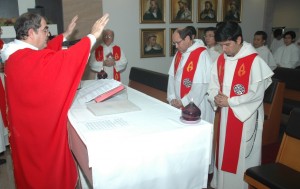
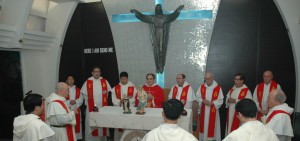
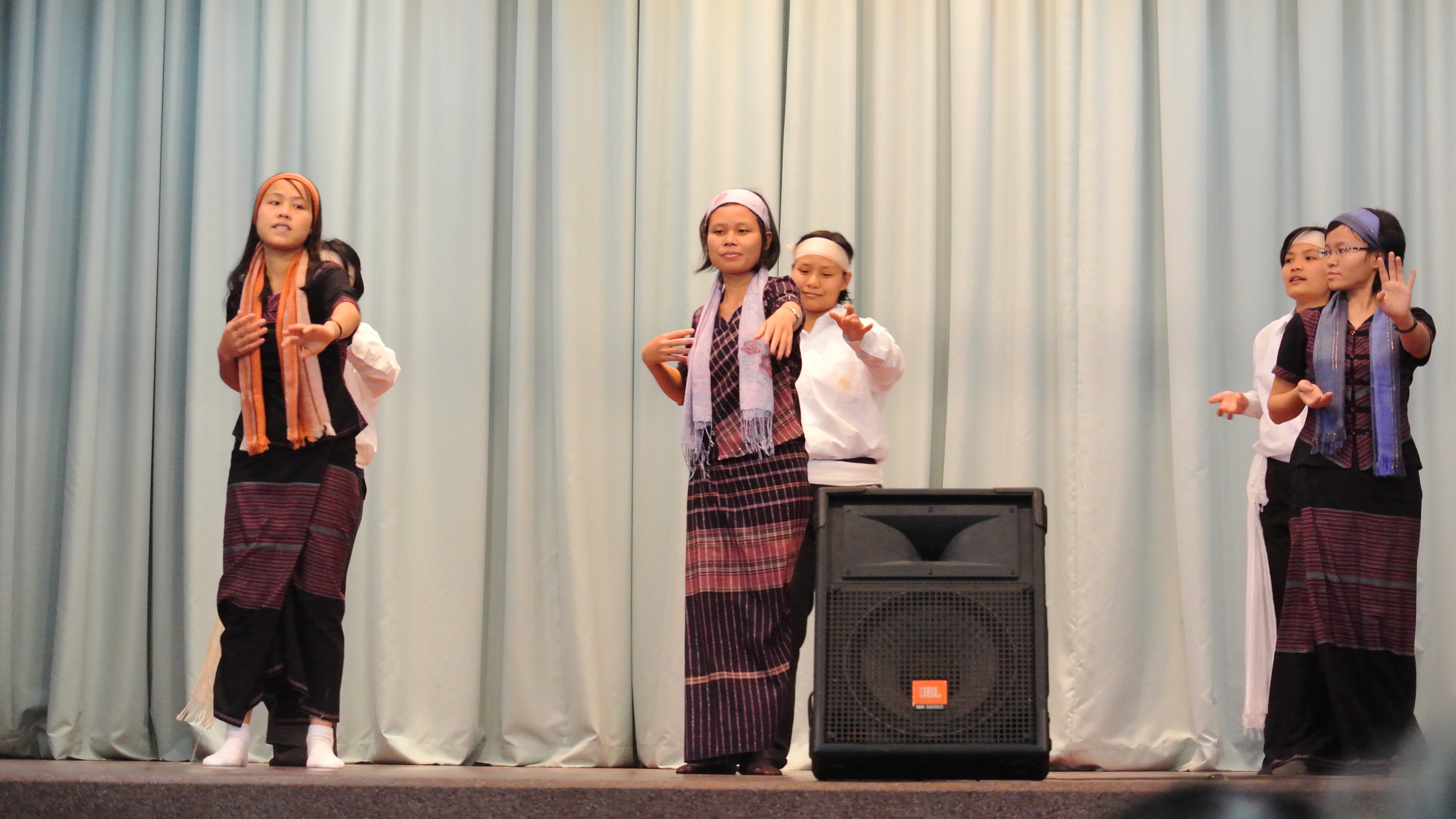
On January 16, 2013 the Dominican Province of Our Lady of the Rosary celebrated with solemn simplicity the traditional “Sending Off†of two missionaries to East Timor. The meaningful ceremony took place at St. Dominic’s Priory, Macau and was attended by the twenty three simply professed brothers of our Studentate, and twelve priests from the Priory St. Dominic and from our Dominican communities in Hong Kong, Zhu Hai and Myanmar. The Prior Provincial of the Province, Fr. Javier González, OP, led the concelebrated Eucharist and, within the Mass, the Order of Blessing and Sending of Missionaries.
The Eucharist began with the moving song Pescador de hombres (Fisher of Men). The Responsorial Psalm continued with another inspiring song, Here I Am Lord, which introduced us to the first reading. The first reading was taken from the prophet Jeremiah (1:4-10), and the second reading, from the Gospel of Matthew (28:16-20).
Before I formed you I knew you; before you came to birth I consecrated you… Lord, I said, ‘I do not know how to speak, I am only a child!’ Yahweh replied: You must go to all to whom I send you… Do not be afraid, for I am with you (Jr)
Jesus appeared to the disciples and spoke to them: ‘Go, make disciples of all nations; baptize them in the name of the Father and of the Son and of the Holy Spirit, and teach them to observe all the commands I gave you. I am with you always; yes, to the end of time’ (Mt)
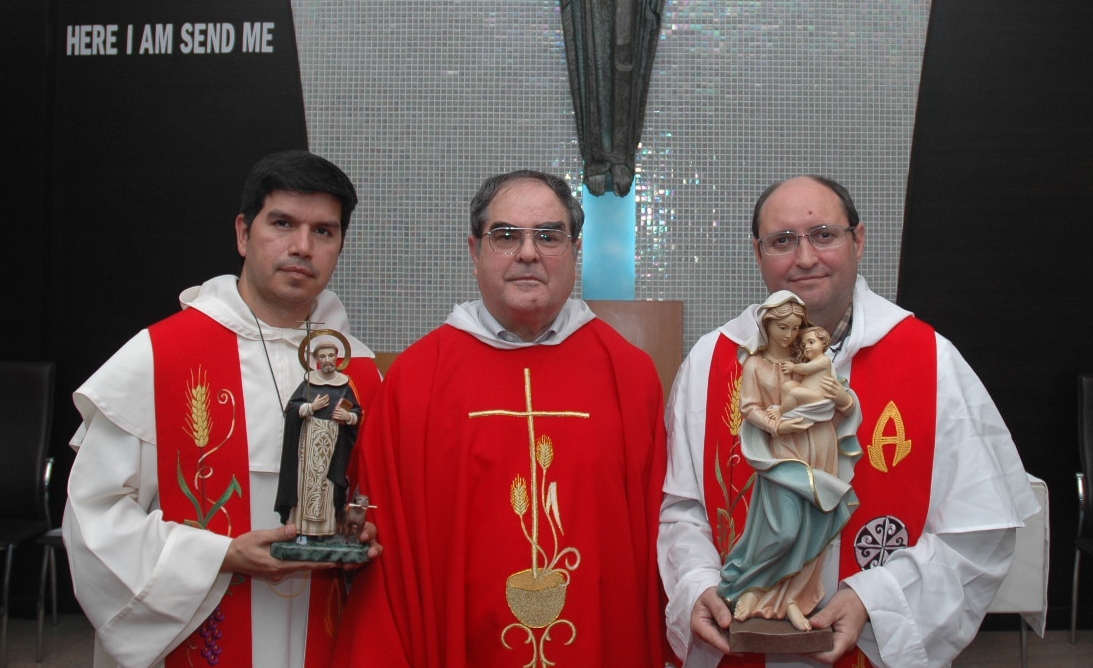
 Fr. Provincial expressed his deep gratitude to Frs. Ruben and Gerson Javier for accepting the invitation to start the mission in East Timor and assured them of the continuing prayers and help of the Province. In East Timor everybody knows that the Portuguese Dominicans were the first missionaries there. With the opening of this mission, the Dominican friars of our Province will re-open and renew our significant historical presence in that part of Southeast Asia. By the way, at Present two congregations of Dominican Sisters work for the Lord in East Timor: The Congregation of Dominican Missionaries of the Rosary and the Congregation of St. Catherine of Siena of Portugal. After the homily, the ceremony of the Blessing and Sending of Missionaries followed, and the Blessing and Imposition of the Missionary Cross. Our two brothers Ruben and Gerson Javier were blessed and prayed over and given the Missionary Cross.
After communion, the new missionaries of East Timor were given two special gifts: the statues of our Lady and of St. Dominic. On behalf of the two, Fr. Ruben expressed his gratitude to Fr. Provincial for choosing and trusting them. He spoke humbly of their new adventure for the Kingdom: “Certainly, we are not better than others who could have been chosen instead of us. Still, he added, “we believe that God is and will always be with us. This is not our mission but the mission of the Province and of the Order. I have to say candidly that God was with me in my previous missions – I felt his presence -, and He will be with us in East Timor. We are in his hands.â€
The joyful celebration was closed, following the old tradition of our Province, with the singing of the Salve Regina to Our Lady of the Rosary and the O Spem Miram to our Father St. Dominic. East Timor, or Timor Leste, the Democratic Republic of Timor Leste is a member of the United Nations, a developing country in Southeast Asia with great material and spiritual resources. With the Philippines, East Timor is the other predominantly Catholic country in Asia. The small country with nearly one million and two hundred thousand people has three dioceses: Dili, Baucau and Maliana. Our new Dominican mission is located in the Diocese of Dili. The main three languages spoken in East Timor are Portuguese, Tetum and Bahasa. Before coming here to Hong Kong and Macau, our brothers Ruben and Gerson Javier spent months in Lisbon learning Portuguese. Up to the present, there are strong historical links between East Timor and Macao – both former Portuguese colonies –, and between the Dioceses of Macao and East Timor.
Accompanied by Fr. Provincial, Frs. Ruben and Gerson Javier flew to Dili on January 18, 2013. From Dili the three will proceed to the parish of Hatudo, a town located in the region of Ainaro. In this town, south of East Timor, the Dominicans will start their pastoral work and serve the local Church and preach the Good News that is Jesus Christ.
East Timor is calling!May Our Lady of the Rosary and our Father Saint Dominic be always with the new missionaries in East Timor – and with us all!
Here I am, Lord. Is it I, Lord? I have heard you calling in the night.
I will go, Lord, if You lead me. I will hold your people in my heart
Hundreds of migrants – from all over the world and working in Macau – celebrated the 99th World Day of Migrants and Refugees on January 13, 2013, the Sunday of the Baptism of the Lord that closes the Christmas Season. The celebration began with a Solemn Mass at St. Augustine Church, a monumental Church, which is part of the great Macau Heritage. After the Eucharist, other activities, including lunch and program, were held at St. Joseph’s Auditorium. The theme for the 99th World Day of Migrants and Refugees is “Pilgrimage of Faith and Hopeâ€. Among those who fully packed the Church and the Auditorium were some of our students from Korea, Vietnam and Myanmar.
During the Eucharistic celebration, the Most Rev. Bishop of Macau Jose Lai encouraged in his homily the faithful to help strengthen the unity of all the migrants with their sole faith in Christ, in whom all humanity is saved. He said that we all are migrants in a certain sense, because we are all pilgrim on the way to the house of the Father. The Eucharistic celebration was very colorful: the prayer of the faithful was proclaimed by 15 different persons in their own language and dressed in their respective beautiful national dress. The contagious smile of all the participants was so meaningful that a visitor, Indian priest Fr. James interpreted it as the universal language of “LOVEâ€. He said in his short inspirational message: “I’ve found the meaning of the universal language “Loveâ€. We speak many different languages; in fact, however, there is only one language, that is, the language of Love. We react in many ways, but truly there is only one universal reaction: to smileâ€.
At St. Joseph’s Auditorium, a special guest delivered the main inspirational message to all the migrants and refugees in Macau: Prof. Arnold Monera from the University of Saint Joseph. Professor Monera said that migration is a right and the host governments must not use migrants as an object to develop their countries, but must respect the rights of all the migrants: the migrants are active co-workers for their countries’ development. He added that the migrants, in return, must respect the laws of the country in which they are currently living and must be law-abiding citizens. The whole crowd was pleased with his hope-filled message, and showed its appreciation with a loud and sustained applause. In the cultural program, many different groups performed their well-prepared numbers, which manifested the culture of their respective country; some migrants shared their experiences on the journey of migration. A Chinese group of the choir of St. Lawrence Church entertained the audience with lovely songs; a lady from the group shared her religious experience that changed her life totally and that made her proclaim joyfully: “I am Catholic; I’ll be a Catholic till I dieâ€. It was a touching moment for all the migrants and Catholics. Bishop Jose Lai gave the closing remarks centered on the motto “Pilgrimage of Faith and Hopeâ€. Again the good Bishop encouraged all the participants to stand firm on the Faith that leads us to the Hope which makes our life so meaningful and alive.
Finally one of the directors of the Migrants Day, a religious priest from the Society of Our Lady of the Most Holy Trinity (SOLT) expressed his thanksgiving to God, to the Church of Macau, to Bishop Jose Lai and to all the participants. He cheered all for the successful celebration of the 99th World Day of Migrants and Refugees and asked them all to look forward to next year’s celebration: the celebration of the 100th World Day of Migrants and Refugees in January 2014.
After 52 years, a theological project of dizzying magnitude has finally been completed. In September, the final volume of the Japanese translation of the Summa Theologica was published, the last of 45 volumes of the defining work of St Thomas Aquinas.
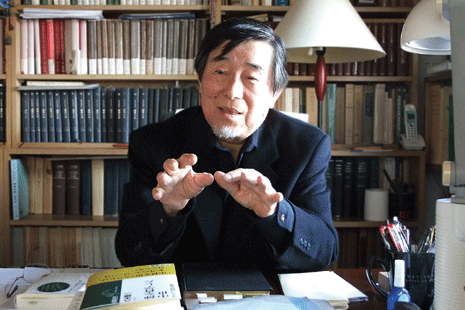
Ryosuke Inagaki, a professor emeritus of Kyushu University who translated 20 of the volumes and stuck with the project until the very end, says that despite the huge amount of time required he has not come away from the task with memories of having “worked hard.â€
“Thomas’ writing is like a piece by Bach, with a rhythm that makes it easy to approach. Once I got into the translation, it went pretty quickly,†says Inagaki. He tried to make progress each day, he adds, devoting the time between waking up and eating breakfast to this long series of books.
Written for novices of Christianity over a period of nine years from 1265, but never completed, the Summa Theologica tackles all the big questions confronting mankind, from creation to the existence of God, the latter summed up in five arguments known as the “five ways.†But according to Inagaki, “it would be a mistake to think it is supposed to be the answer to every question. Instead, the Summa Theologica is a roadmap for life.â€
Baptized during his time as a college student, 84-year-old Inagaki discovered St Thomas through some priests he met and a high-ranking American officer who was stationed in Japan after World War II.
Japan’s first introduction to the Summa Theologica came courtesy of the economist Tokuzo Fukuda who died a decade before the outbreak of the war.
While studying in the US, Inagaki later researched Thomas’ conception of natural law theory as well as the constitution of Japan. He joined the translation project when it was still in its 11th volume. Some 15 people had a hand in the recently-finished translation with more than half having died during the time it took to complete.
Two days after the completion of the galley proof of the final Japanese volume in May last year, the elderly founder of the publishing house responsible passed away. Pulling out a letter from the publisher written in 2011, Inagaki notes the emphatic words of support for the lengthy, time consuming translation process which was then in its final stages. Inagaki has held dear the writings of St Thomas for decades as the owner of an American, 1952-published copy of the pocket edition of the Summa for the mass market, My Way of Life.
 “This title really brings out the defining features of the Summa Theologica,†he says. “[St Thomas] wanted to write a roadmap for people who really and truly seek happiness.â€