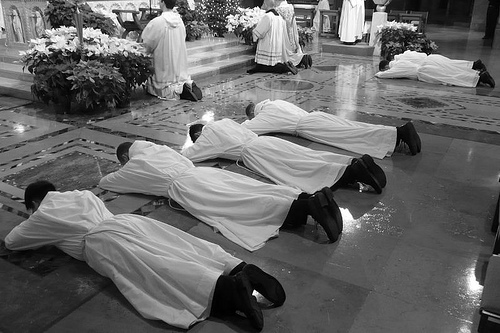
INVITATION TO THE DIACONATE ORDINATION

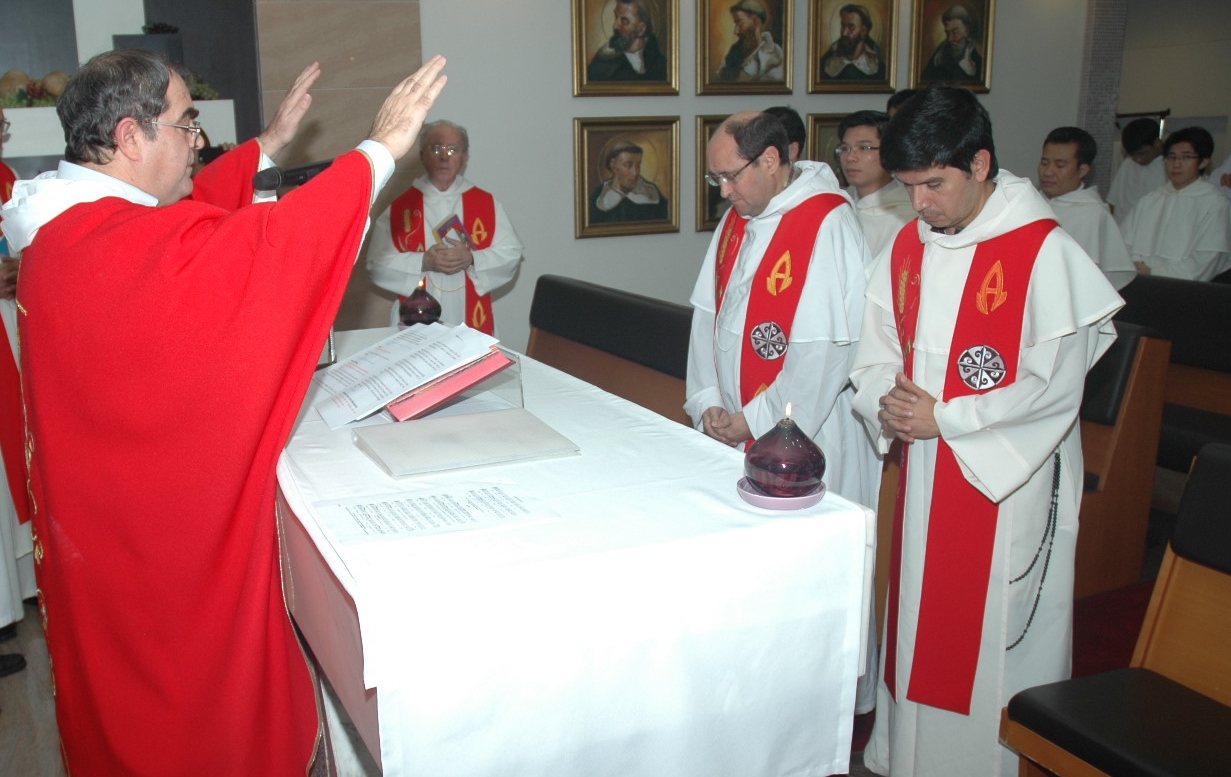
Our arrival at the capital Dili on 19 of January was with a greatreception by the Dominican Sisters in Timor and by the Secretary of the Bishop at the Airport. There were also some other priests and Sisters.
 On the same day of our arrival, the Bishop welcomed us in his residence and invited us to collaborate with the Diocese of Dili in the quasi-Parish of Hatudo, in the southern part of the Island, about 120 kilometers from Dili and a 5 hour trip by car. He provided us transportation (his own car and driver) to go and see the Mission for us to know firsthand about the people and the state of the Mission.
The Parish Priest of Same (the parish under which our Mission is) welcomed us into his home, where we stayed overnight, and gave us a presentation of our Mission of Hatudo; the following day he accompanied us personally there. It is a district with about 11,000 inhabitants, with a territory that is quite big and comprises 5 chapels. In the centre of the Mission (Leo Lima), beside the main chapel, there is a community of Timorese Canossian Sisters and a house for the priests, which is currently being remodeled to accommodate us.
We were told that by the end of the month, they will finish it and then we can enter to live in it. There is electricity but not running water. The Mission also has a new kindergarten, various primary and secondary schools. But some are in a very poor state.
 Mission in Hatudo received us well. They are very amiable, simple and they like to tell us what they do. They seem to be well dedicated to their ministry.On the roads one can see children walking kilometers every day (an average of 5 or 6) to go to schools, some of them of the government, which were recently built while others are still under construction. The landscape is beautiful but the land seems to be very poor as it is rocky thus being not apt for planting. The climate is very warm and many trees had just been cut down along the roads to give way to the light posts. It is a Mission that is in great need and it will demand much sacrifice and great apostolic zeal. The people are simple, happy and receptive. For them the priest is almost a “god†whom they respect and admire. The clergy of the mountainous places which we passed through in our trip towards theThe people live in small settlements not very dispersed but always beside the principal roads, which are all in bad state. There are many typical Timorese houses which are built over some tree logs, with the domestic animals living under them in the open; the houses are made of bamboo and of thatched straw roofs. The people principally dedicate themselves to agriculture and they work in the mountains which are about a few kilometers away from the villages. They all go to work on their feet.
During these 10 first days, aside from trying to get to know all the members of the Dominican Family in Timor Leste, which is composed of the Dominican Sisters of the Rosary and the Portuguese Dominican Sisters of Saint Catherine of Siena, we also took the opportunity toknow the other religious in Dili, the Major and Minor seminaries, the Nuncio and those in charge of the Spanish collaboration in Timor Leste. Everyone intimated to us their vision of the Church and of her concern for making Timor Leste a place that is more humane and moredignified.
We have only been here for a few days. The arrival always causes a great impact for the cultural change, but little by little we have already started to adjust ourselves to this new form of life and especially to its people. The good reception which we have received everywhere makes us feel more and more integrated in this country, where almost five hundred years ago, our Dominican Portuguese brethren sowed the seeds of faith.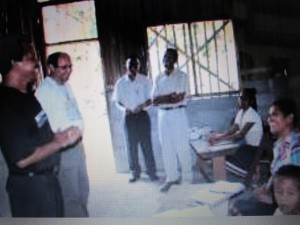
                                    Fr.Ruben

On February 9, 2013, St. Dominic’s Priory said ‘Good bye’ to the old Year of the Dragon with a dinner at home tastefully cooked by our brothers. We had then two special guests and friends of the community: Frs. Peter Stilwell, Rector of the University of St. Joseph and Joao Eleuterio, Dean of the Faculty of Christian Studies of the same university. After the sumptuous dinner, our student brothers went to the city to enjoy the colorfully lighted city of Macau, especially the Casino districts. (In case you do not know, there are at present forty four casinos in Macau)
The Chinese New Year, the Year of the Snake, was welcomed by the Priory with a Solemn Mass and a lunch of tasteful Chinese food. As the first day of the New Year (January 1, 2013) we celebrated the Feast of the Motherhood of Mary, the first day of the Chinese New year (this year February 10, 2013) we commemorated the Feast of Our Lady of China. After communion, a lovely touch: The giving of simple gifts (in red or yellow envelopes, of course!) to our faithful brothers and sisters who attend regularly our Sunday Mass. What was the simple gift? A five-mystery Rosary made by our brothers in China!
After the celebration of the Eucharist, all the members of the community, that is, thirty one (31) shared a good lunch with the usual kinds of Chinese dishes in a Macau restaurant. After the dessert, Fr. Prior Alex distributed the traditional red or yellow envelopes – this time with some money, as custom demands – to each member of the community. By the way, we were thirty, and a few days ago became thirty one: Brother Antoninus from China joined our community to pursue a master’s degree at the Catholic University of St. Joseph. Most welcomed, Brother!
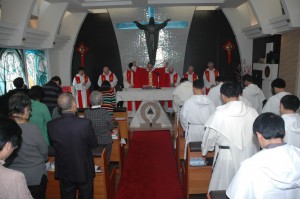
The Chinese families celebrate the New Lunar Year with great solemnity, exemplary harmony and serene joy – and at times with some accompanying fire crackers to keep the bad spirits away. On February 10, 2013, the Year of the Snake began. The Chinese Horoscope assigns the twelve Zodiac sings of the year to different months. The first month is given to the rat, and the last to the pig. The sixth month is the Month of the Snake. The snake in this case is a symbol of wealth, progress, courage and of finding solution to difficult problems. We Christians living in this part of the world add a deeply religious meaning: the year of Our Lady as Our Lady of China. May the Year of the Snake, the Year of Our Lady be for all a hopeful and happy year!
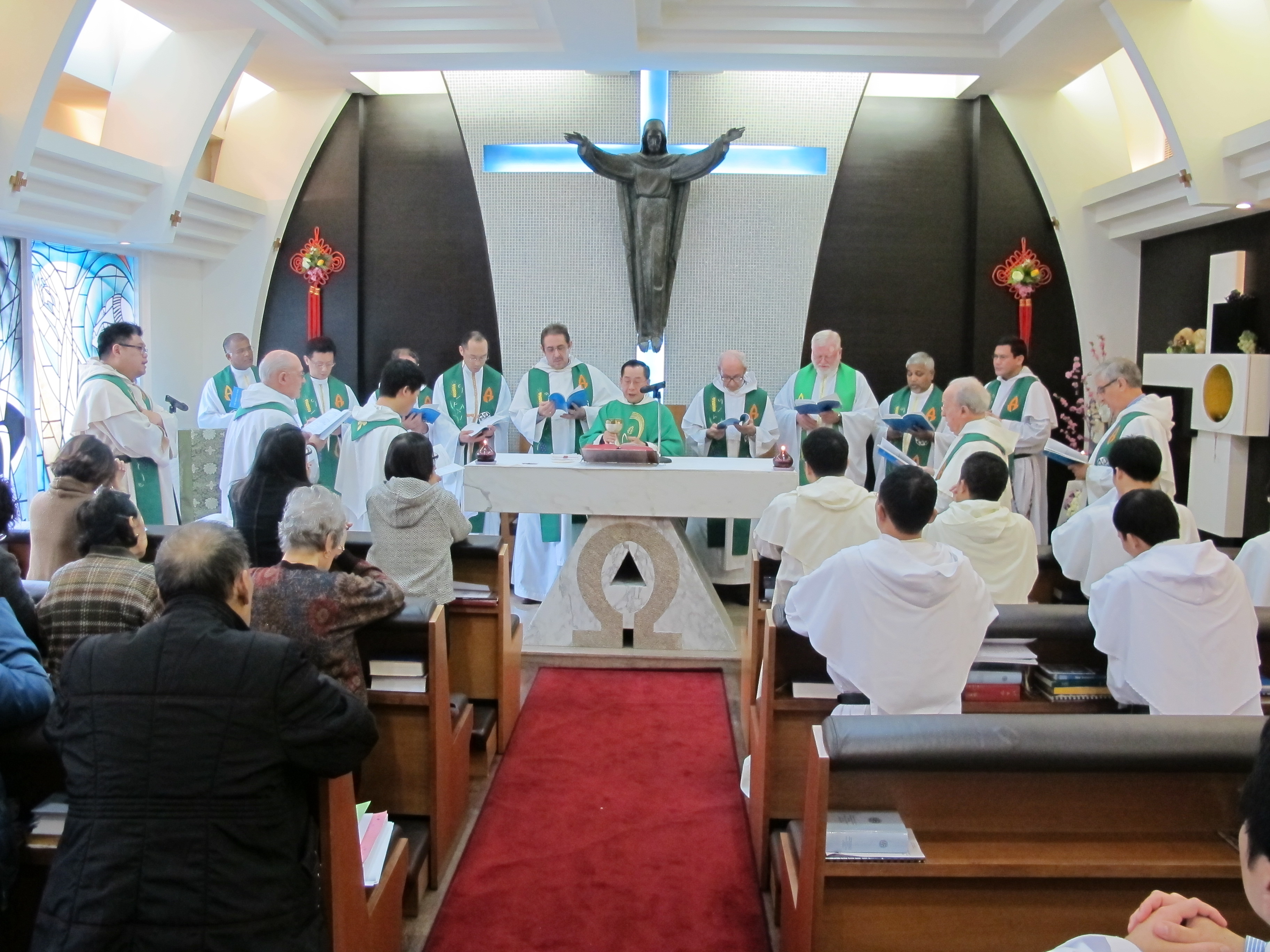
On February 3, 2013, Sunday, our Priory was graced by an unusual group of visitors: Provincials and Vicars of the Dominican Provinces and Vicariates of the Asia/Pacific Region, who were accompanied by the Assistant to the Master of the Order for this Region and the Assistant to the Master for the Apostolic Life.
The group of Dominican superiors, who are in Hong Kong for their annual meeting, was headed by Fr. Vincent Lu, O. P., Assistant to the Master of the Order Fr. Bruno Cadoré, O. P. The other members of the group were: Fr. Prakash Lohale, O. P., Assistant for the Apostolic Life; Fr. Kevin Saunders, O. P., Provincial of the Province of Australia and New Zealand; Fr. Gerard Timoner III, O. P., Provincial of the Philippine Province; Fr. John Kusumanalayan, O. P., Provincial of the Indian Province; Fr. Vincent Li, O. P., Vicar of the Chinese General Vicariate of Taiwan; Fr. Hiroshige Watanabe, O. P., representative of the Vicar of the Canadian Vicariate in Japan; and Fr. Javier Gonzalez, O. P., Provincial of Our Lady of the Rosary Province and host of the meeting. The Provincial of the Vietnamese Province, Fr. Ngo Si Dinh, O. P., was not able to make it to Macau while the Vice-Provincial of Pakistan Vice-Province, Fr. Paulus Pascal, O. P., could not make it to the meeting in Hong Kong.
Our brothers celebrated the Sunday Eucharist with us. The concelebrated Holy Mass was presided by Fr. Vincent Lu, who spoke in his homily of the exemplary life of the first missionaries to Asia and of our responsibility to follow in their footsteps by proclaiming God’s Kingdom and serving our peoples, especially the needy. After the celebration of the Eucharist, the brothers from the different Provinces and Vicariates conversed with us and then had lunch in a restaurant with some members of our Priory. After lunch, they visited the emblematic places of beautiful Macau. In the evening, they went back to Rosaryhill, Hong Kong, where their meeting continued for a few more days.
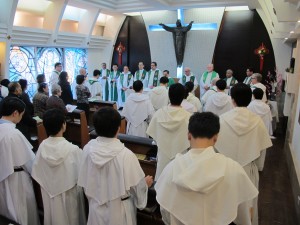
In their 2013 yearly encounter, the superiors of the Dominicans in this part of the world talked of the current situation of their respective Province or Vicariate, of other possibilities of collaboration among them, and of new challenges, including the New Evangelization. Fr. Jose Luis de Miguel, O. P., our Moderator of St. Dominic Center of Studies, spoke to them in Rosaryhill of the New Evangelization ant its challenges.
Our brother and major superior Fr. Javier Gonzalez, the gracious host of the gathering of Provincial and Vicars expressed his fraternal gratitude to our Priory for the generous and kind hospitality of the brothers. (FGB)
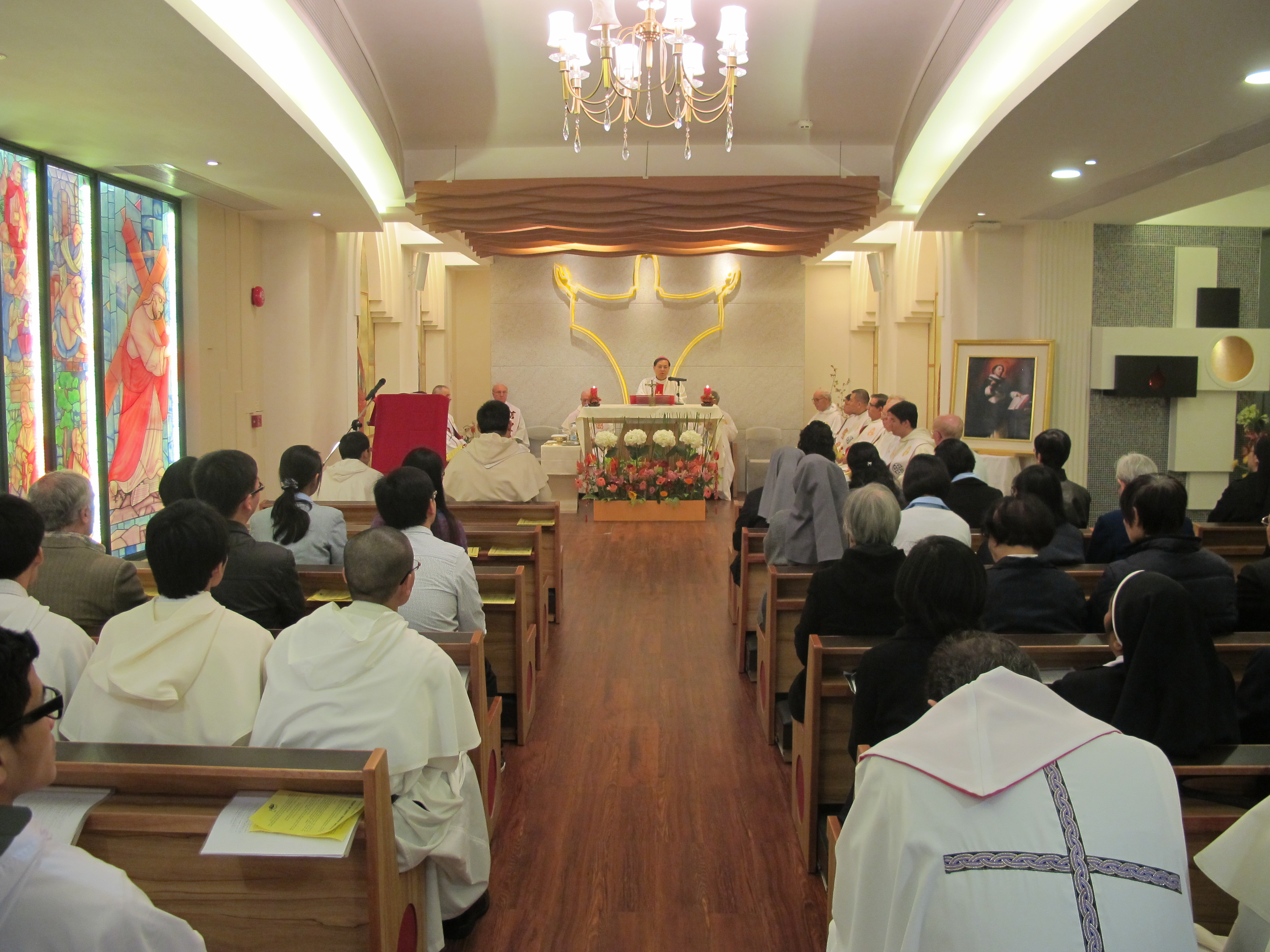
On January 28, 2013, the St. Dominic Center of Studies, Macau, celebrated the Feast of Saint Thomas Aquinas at St. Paul’s School. The morning celebration consisted of three consecutive parts: St. Thomas Lecture, Holy Eucharist and fraternal agape. About ninety people graced the celebration, including Dominican student brothers and priests of the Province of Our Lady of the Rosary, postulants and sisters of the Dominican Missionaries of the Rosary, professors and teachers from the University of Saint Joseph and St. Paul’s School, and religious men and women of different religious congregations.
The solemn academic program of the second St. Thomas Lecture began with a prayer-song followed by the Invocation delivered by Brother Mariano Maung, OP, coordinator of the students. Fr. Fausto Gomez, OP, Regent of Studies, delivered the Opening Address which focused on the continuing importance and relevance of St. Thomas Aquinas today. Fr. Jose Luis de Miguel, OP, Moderator of the St. Dominic Center of Studies pronounced the formal lecture on “The New Evangelization: Recent Developments and Challenges.†Fr. Jose Luis divided his excellent lecture in three parts: the teachings of the Church on evangelization and new evangelization; the new evangelization in the 2012 Synod of Bishops, and some serious challenges for the future. The speaker made pertinent references to the meeting of the Federation of Asian Bishops’ Conferences in Ho-chi-min, Vietnam in December 2012. Christ, the speaker stressed, continues to be the evangelizer and calls us today to be new evangelizers attuned to the world in which we live. An interesting open forum closed the event.
The Holy Mass was presided by the Most Rev Bishop of Macau Joseph Lai, DD, and concelebrated by about twenty priests. The Bishop underlined in his homily the significance of St. Thomas, the great teacher of truth, for the Church and as Patron of Catholic Schools. He pointed out the importance of inculturating the Christian faith in the cultures of Asia, in particular the Chinese cultures for we live in Macau, which is part of China. After communion, Fr. Alejandro Salcedo, OP, Principal of St. Paul’s School and Prior of St. Dominic’s Priory expressed the gratitude of the Dominicans of Macao and Hong Kong to Bishop Lai and all those who graciously accompanied us in this celebration of our Brother Thomas Aquinas.
After the celebration of the Eucharist, a simple agape followed. There was plenty of food and drinks and some bottles of excellent Portuguese wine. The participants were happy for having been invited and grateful for the singular academic and liturgical celebration they witnessed. The Dominican student brothers and the postulants of the Dominican Sisters animated the whole celebration with appropriate songs and prayers. Fr. Jarvis Sy, OP, acted as Master of Ceremonies.
In this Year of faith, may St. Thomas, the Angelic Doctor aid us to deepen our faith and practice it in love. (FG)
  After several months breaking the ice and building friendly relationships with the aged at the Nursing Home for the Mothers, our Brothers have now felt good to spare their Saturday afternoons visiting them and offering them some spiritual comforts. As of today, the weekly Mass celebrated by Fr. Lancelot will be even uplifted with some music and, afterwards, many more.
This Nursing Home for the Mothers offers services to approximately fifty residents, of whom the youngest is already over seventy years old and the eldest far exceeds a century. Most of them are already frail. About one-fifth of them are Catholics, who, though mainly speak Cantonese daily, say Mass in Portuguese. Different human languages seem to be a barrier that may not allow  the brothers communication with them.
Working with senior citizens, especially with those not sharing the same cultural background and language with them, is definitely a both challenging and rewarding experience. The brothers know that it requires them being generous, patient and, more importantly, “always listening, always understanding!†Yet, what could make the missionaries happier than the happiness of those who receive them and regard their presence as “glad tidings� Indeed, just with a piece of out-of-tune music already the brothers made them stand up and dance with their wheelchair; listening to their nostalgic memories, or simply sitting with them for a while in silence already the brothers brought some comfort or feeling released to them. “I have been living here for seventeen years,†gratefully said Mary Johnson – a 99-year-old lady who is simply known as “Lulu,†“but no one comes visit me.†Such moving words may have touched the brothers! More thrilling for them is Mimi – a 98-year-old Portuguese lady whose real name is Maria – who always looks forwards to seeing the brothers coming back and, of course, sadly says goodbye when they have to go home.
Language is any longer a barrier in our communication if we have a heart for each other. It is the language of the human heart rather than human language itself that communicates and connects common human concerns and unites human beings. If we realize that what we are given by God today is to give back those who have given back to God in their due time, our baptism into one body of Christ begins to take in us. If we are able to see the Word becoming flesh and dwelling among those lonely aged, it is the time when the Good News of our Lord becomes fulfilled. May this be true in our hearing today (cf. Luke 4:14-21)! Amen.
              Â