CHRONICLE OF ST. DOMINIC’S PRIORY: January-April 2011
On January 8, after lunch, Fr Provincial Javier asked Fr. Prior Alejandro to read the appointment of Fr. Jarvis Sy Hao as the new Master of Students, and Fr. Xavier Lionel, our Sub-Prior, the letter of assignment of Fr. Jarvis to our community. Most welcome! (Our dear former master of Students, Fr. Lucio Gutierrez continues to be very sick at the St. Martin de Porres Hospital in San Juan, Metro Manila.) On this day, the Council of the Province met at our Priory. Fr Provincial also informed us that Fr. Ben (Peadar Beinidict MacCionaoith, OP), member of our community, was assigned to our House of St. Joseph in Kowloon Tong on December 28, 2010. Many thanks, Ben! On January 18, and at the end of the Mass, Fr. Alejandro read the letter of the new assignment of Fr. Fernando Muñoz, from our community to the new foundation of the Province in Yangun, Myanmar. Fernando, we will miss you and accompany you!
In the evening of January 18 the Master of the Order, Fr. Bruno Cadoré visited our community and stayed with us for three days. He conversed with the members of the community – the fathers and the students. He had a meeting with the members of the Provincial Council and of the Commission on Formation, another meeting with the bishop of Macau Joseph Lai and a third with the authorities of the University of Saint Joseph. It was a lovely fraternal visit: the MOP broke Bread with us, listened to us, laughed with us and showed a great interest in our Province and our mission, in particular the formation of our students.
On January 20, Fr Fausto Gomez went to Manila to participate in the Meeting of the Regents of Studies of the Asia Pacific Region, to attend the 400th Foundation Anniversary of the University of Santo Tomas, and give some lectures on bioethics at the Postgraduate Course of the UST Faculty of Medicine and Surgery. He came back on February 7. Later on (February 17-27), Fr Gomez attended the annual Conference of the Pontifical Academy for Life in the Vatican.
On February 9, Fr. Alejandro presented to the Council/Chapter of the House new assignments of the Priory, with no objection from the members: Fr. Lionel was named archivist; Fr. Jarvis, sacristan and liturgist, Fr. Athanasius, assistant treasurer, and Fr. Fausto, chronicler.
Among the visitors through February, we had (on February 10-12) two Chinese postulants, who stayed with us for three days: Jordan Zhnag Dangbo and Martin Chen Guoxing. Later on (on February 23), we had with us Frs. Juan Lera and Ezequiel del Pino, from our community in San Juan, Manila. We were all happy for their kind visit.
Fr. Peter Yu Jong from our mission in Japan visited us on March 2 and stayed with us for two days. Fr. Yu is helping Fr. Provincial re-launch the webpage of the Province – and he is succeeding! He came to take some pictures of our Convent and community for possible use in said web page, which needs the collaboration of all – to succeed fully! Two other visitors (on March 2) were Chinese postulants Pio and Michael. They are on the way to our convent of Santa Cruz in San Juan, Metro Manila, where they will improve their English before they begin the Novitiate in Rosaryhill, Hong Kong next July 2011.
Fr Felicisimo Martinez, Prior of our Convent of the Most Holy Rosary in Madrid came to live with us on March 16 and will live on April 28. He came to teach the subject
“Doctrine of God†(De Trinitate) in the School of Christian Studies of the Catholic University of Saint Joseph, Macau. During his time with us, he also pronounced (on April 6) at the said University a well-attended and highly appreciated lecture on “Life, Death and Resurrection of Christ: Recent Developments in Christology.†He spent some days with our Novices in Hong Kong, teaching them on Dominican Life. Moreover, he gave a retreat to the community of Rosaryhill, joined also by the community in Kowloon Tong, during Holy Week.
Fr. Javier Arrazola, from our mission in Korea was with us on April 4-7. On April 4, Monday, I was attending a meeting of the Council of Formation in Rosaryhill, Hong Kong, presided by Fr. Provincial Javier. During the morning meeting I was happily surprised by the voices coming from the chapel singing the lovely Lenten Gregorian song Media Vita. I inquired who was teaching our Novices the Media Vita and was told that it was Fr. Arrazola. I remember with fondness the late Fr. Maximo Puertas, OP, who rests in God’s peace, who loved this song. We remembered it together in our Convent in Peñalver, when we were at the middle of our road – Media Vita! I hope Fr. Arrazola, or Fr. Rafael Carpintero, OP from our mission in the Philippines will visit us and teach our students some Gregorian chant.
Another visitor, who is like member at a distance of our community, was Fr. Secundino Vicente, from Rosaryhill. He visits us frequently to wash our souls from our sins and human miseries. This time he was with us on April 5-7.
Our most frequent visitor – well, truly a member of our Priory, where he has a permanent room -, is Fr Provincial Javier Gonzalez, who lives in our house in Kowloon Tong, Hong Kong. He stayed with us some weekends of March and April. He talked with all the members of the community, in particular with our students. He also taught a tutorial course in Canon Law to two of our graduating students of theology.
On April 6 we had the pleasure of receiving in our Priory Fr. Dionisio Cabezon, a member of our Province assigned to the University of Santo Tomas, Manila. He has chosen our Priory for his summer vacation time. He will be with us up to May 20. Fr Dionisio is available to our students for consultation and will talk to and with our graduating students on the way to prepare well for entrance exams in different schools and universities abroad.
On April 12, we were gladly surprised by the visit of Fr. Vincent Lu, Assistant to the Master of the Order for the Asia-Pacific Region. He was accompanied by Fr Javier Gonzalez, OP and stayed with us for two days. He wanted to know our life and work here in Macau, particularly on the Dominican and theological formation our students are presently receiving.
On April 20, Fr. Athanasius Chen presented his masteral thesis at the University of St. Joseph, Macau. The title of the thesis: “Moral Values in Education: A Case Study of One Catholic Secondary School in Macau.†Before a panel of three, including Professor Vincent Davis, his Supervisor, our brother Fr. Athanasius defended his thesis and passed the ordeal very well. Our warmest congratulations!
Let me wrap up our chronicle with some more good news this time concerning Saint Paul School, run by our Fathers Alejandro, Jose Angel, and Athanasius. Its pioneering project – top of the line – on the use of modern technology in the field of education is called “Classroom 2012 Project.†The innovative project is a bold application of the school’s education policy ESOS (Empowering Students for an Open School). Congratulations and more power to you, amigos!
I am sending this chronicle to Fr. Emiliano on the morning of a lovely and quiet Holy Saturday. Easter is closing in! To all our brothers, we joyfully say: Happy Easter ¡Felices Pascuas de Resurrección! We are Easter People and Alleluia is our song!
(For more information on some of the news mentioned above and other news, you may wish to visit our simple webpage: www.dominicansmacau.org Muchas gracias!) (FGB)
(Published in BoletÃn de Información de la Provincia de Nuestra Señora del Rosario, No. 82, pp. 16-20: Rosaryhill, Hong Kong, January-April 2011)
St. Dominic’s Priory
Macau, April 29, 2011

AN ENLIGHTENING CONVERSATION ON
THE IQ TEST
Blessed John Paul II, quoting Aristotle, said: “all human beings desire to know†(Fides et Ratio, no. 25). We all long to know more and students in particular wish to know more on how to take different kinds of tests, including entrance exams.
Fr. Dionisio Cabezon OP
It is a great pleasure for us being with Fr. Dionisio Cabezon OP, who is staying with us at St. Dominic’s Priory in Macau. Fr Dionisio (Oteros de Boedo, Palencia 1930) is a retiring full Professor at the Dominican University of Santo Tomas, Manila. We are very happy to know that he came to live with us during his summer vacation in the Philippines. On May 10, 2011 he talked to us on “How to take an IQ Test?†An IQ test, he stressed to us, is really a time test, and therefore the important question is: How can we spend our time wisely when taking this specific kind of test?
The life of a student is full of tests. So, it is very good to know the different kinds of tests, and how to make a good test. We always have difficulties when taking a test, perhaps we feel nervous or perhaps we are scared. Our main fear may be that we do not know the specific procedure for a particular test, for instance, the IQ test or the verbal and non-verbal tests.
In his clear and simple lecture, Fr. Dionisio, a psychologist and professor of rational psychology and pastoral psychology, shared his thoughts on how to take an IQ test, on the importance of minding the time allotted to the test. He pointed out that when taking the IQ test we should not spend too much time with a question, but continue answering the other questions and, if there is time later, come back to that difficult question. He encouraged us to be prepared, and not to be afraid! Â In a test, there are procedures that we have to follow when we take it. We should read this procedure carefully and ask the questions we may have regarding this procedure before the test begins: during the test, we will not be able to ask questions anymore. Another important thing Fr Dionisio underlined was this: we have to prepare ourselves the best we can for a given test. Basically, our previous studies make us ready to take an intelligence test that will examine mainly our abilities to proceed with higher studies.
Usually, people including myself are worried when going to take a test.  After our fraternal sharing with Fr. Dionisio, I realized that my nervousness is due mainly to the fear of being alone facing the test! We don’t have to be nervous when going to take a test, or during the test. So let’s take a test with confidence!
We the students are very grateful to our brother Dominican Fr. Dionisio not only for being with us for over a month but also for sharing with us his wisdom and experience, and for offering himself to us for any personal consultation.
Dear Fr. Dionisio, may God bless you abundantly and keep you in his peace!
Bro. Matthew Shing Mang Tun
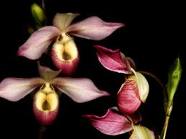
Macaulogy: a polymorphic Approach to an Historical and Dynamic Phenomenon
by Antonio de Saldanha
Date & Time: Monday, May 16, 2011, at 6:30 PM
Venue: Macau Ricci institute, Av. Cons. Ferreira de Almeida, No. 95-E
Language: English

NOVENA OF OUR LADY OF FATIMA
Intention : For the peace of the world and the renewed of the Christian Community.
PROGRAM
NOVENA
4th to 12th May
8:00 a.m – Novena with Rosary and Mass (in Chinese).
5:30 p.m – Novena with Rosary and Mass (in Portuguese).
ADORATION
12th May
7:00 – 8:00 p.m – Adoration for English speaking community.
8:00 – 9:00 p.m – Adoration for Chinese speaking community.
9:00 – 10:00 p.m – Adoration for Portuguese speaking community.
FEAST OF OUR LADY OF FATIMA
13th May
8:00 a.m -Mass (in Chinese)
3:00 p.m – Exposition of the Blessed Sacrament and Adoration.
5:00 p.m – Rosary in Portuguese.
5:45 p.m – Benediction and Consecration to Our Lady. Mass (in Portuguese).
Procession
Rosary will be recited during the Procession from S. Domingos Church
to Penha Hill Church, followed by the blessing with the
Blessed Sacrament to all the participants and the City of Macau.
Cogregation of Our Lady of Fatima
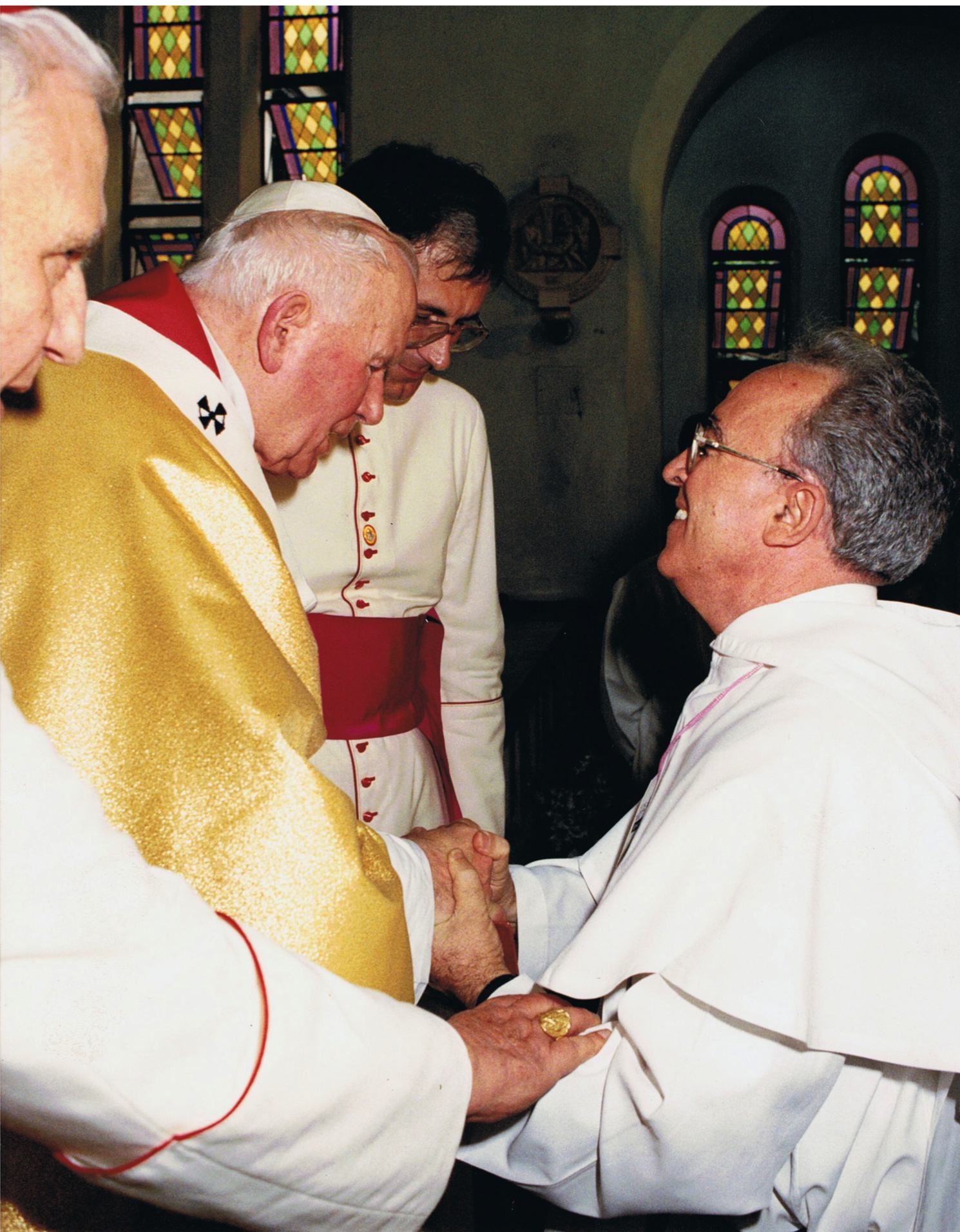
“JOHN PAUL II, WE LOVE YOU!â€
(Some Personal Notes on Blessed John Paul II)
At University of Santo Tomas, Manila: January 1995
On February 25, 2011 I had a chance to visit again the tomb of Pope John Paul II. I was told by my friends in Rome that his tomb was the most visited by pilgrims. (From now on, it will be much easier to visit the place where his coffin will be placed: in the Basilica of St. Peter itself, near the Pieta of Michel Angelo) Although it was still early morning, dozens upon dozens of people were visiting and praying before his simple tomb in the crypt of the Vatican: some were standing, others were kneeling and many others were just passing slowly by the tomb – all were silent, some were crying. I lingered for a while there and remembered how lucky I was for having had the privilege of meeting John Paul II seven times. Nothing personal, I was just lucky! Truly lucky! In these light notes, I shall touch and comment mainly on my personal encounters with John Paul II.
From May 1, 2011, the Church has a new blessed in the person of Pope John Paul II. Millions of Catholics and men and women of good who were touched by John Paul II rejoiced! In spite of the criticism by some theologians and liberals within the Church, and with due respect, I believe history will also consider him not just a most popular and approachable Pope but a great one.
The first time I met Pope John Paul II was on September 5, 1980 in Castel Gandolfo. Together with twenty eight priests and eight bishops, I had the great honor to concelebrate at the Eucharist presided by the Holy Father. What impressed me most then was the contemplative attitude of the Holy Father through the Mass: totally absorbed, following carefully the rhythm of the Mass, pronouncing each word (in Latin) slowly and distinctly, making strategic pauses of silence. Throughout his 26 years as successor of Saint Peter, John Paul II showed the primary place of prayer in his life. Some authors today consider him a modern mystic. It has been said that he made decisions on his knees. Monsignor Slawomir, the postulator of the Pontiff’s cause of beatification, was asked: What aspect of the Pope’s life particularly struck you? He answered: He was certainly a mystic, “a mystic in the sense that he was a man who lived in the presence of God, who let himself guided by the Holy Spirit, who was in constant dialogue with the Lord, who built his whole life around the question (asked by Jesus to Peter), ‘Do you love me’.†A close collaborator said on April 30, 2011: “To see him pray was to see a person who was in conversation with God.â€
I remember with special fondness the third time I met him personally. (The second time I met him took place during his first visit to the University of Santo Tomas, Manila in February 1981; in this visit, he beatified Lorenzo Ruiz and Companions Martyrs – now saints – at the Luneta Park, Manila) It was during the World Youth Day in Manila (January 1995), where the Holy Father had the greatest audience ever: more than four million people attended the Pope’s final Mass. (One Hong Kong newspaper wrote that then the multitude became a megatude). He celebrated Mass in the University of Santo Tomas for the youth delegates – 245 from all over the world – to the 5th International Youth Forum. This time after the Mass he greeted one by one the students and some others who had the great luck of attending the Mass. While the Holy Father greeted the youth he embraced them – and also some others not so young including me. While he embraced me I could hardly tell him, “Holy Father I have read your lovely book Crossing the Threshold of Hope.†He looked at me intensely and kindly, and told me “Bene, bene.†I was deeply touched and really moved – almost to tears! I remember the words of TIME when the magazine named the Pope Man of the Year (1994): “He generates electricity unmatched by anyone else in the world.â€
The last time I met the John Paul II was on February 21, 2004 at the Sala Clementina in the Vatican (like my three previous encounters with him) in the company of about a hundred and fifty people, most of us members of the Pontifical Academy for Life. By that time, he was already sickly and with his Parkinson’s developing slowly. (Parenthetically, the miracle worked by Pope John Paul II that led partly to his fast-track beatification was the healing from Parkinson’s of French Sister Marie Simon-Pierre right after she asked John Paul II to cure her) He could not walk anymore and it was hard to understand his speech. But still then, and against the advice of some of his assistants, he greeted us – about 130 people – one by one: we knelt before him and kissed his ring; he blessed us and smiled. Many writers on John Paul II underline this characteristic of the late Pope: he was concerned with the person, with each person, each one creature and image of God. This is one of the reason he touched the hearts of so many people throughout the world: the young, the children, the old, men from other religions and cultures… In his first encyclical Redemptor Hominis (1979), issued a few months after his election, the Pope explained that man is the road of the Church and Christ is the road of man: Jesus Christ as the Son of God and the Son Mary (the Pope was a faithful servant of Mary: totus tuus!), the primordial foundation of Christian morality, the Way, the Truth and the Life. John Paul II was missionary of the world: he visited about 130 countries during his papacy. He was from Poland but, indeed, the world was his parish. The well-known Catholic convert André Fossard once said: “This is not a Pope from Poland, but a Pope from Galilee.†John Paul II knew, loved and followed Jesus to the end.
More than my personal encounters with John Paul II I remember – with his holy life of dedication to Christ, Mary and the Church – some of his fundamental teachings. In particular his teachings on human life found especially in his encyclical (he wrote fourteen encyclicals) Evangelium Vitae,†or The Gospel of Life (1995), the first encyclical on bioethics, where he repeats one of his constant mottos: “Human life must be defended from the moment of conception (against abortion) to natural death (against euthanasia and the death penalty).† I also treasure his radical and creative social teachings found in his three social encyclicals and many addresses and exhortations. It is worth noting here that John Paul II, a remarkable worker since he was a youth, was beatified on May 1, the day of labor; moreover, he wrote an important encyclical, Laborem Exercens 1981, on human work: “Capital is for labor; work is for man.† From the social teachings, I consider this point (from his Novo Millennio Ineunte, 2001) most innovative: heretic is not only the believer who does not accept or distorts an article of the Creed but one who does not share something with the poor and weak of the world. Also I love to underline his substantial teachings on freedom and truth (in his basic encyclical Veritatis Splendor, 1994): “freedom is not freedom from the truth but freedom in the truthâ€; on justice and love: “love is the soul of justiceâ€; on peace and democracy: as it is well known, the late Pope contributed immensely to the collapse of European communism in 1989. Just before the war of Iraq he shouted from the famous papal balcony in the Vatican: “No to war. War doesn’t resolve anything. I have seen war. I know what war is.†The Pope words on justice ring frequently in my ears: “No peace without justice, no justice without forgiveness.†As a religious man, I appreciate John Paul II Vita Consecrata (1996), his important apostolic exhortation in which he invites religious men and women to be holy, that is prayerful and compassionate: to go up to the mountain of prayer and to come down to the market places of the world and witness their passion for God and compassion for humanity.
(Parenthetically, let me mention here that the main criticism these days against the Pope is focused on his apparent silence regarding the terrible sexual scandal of priests and their victimizing of innocent children. Â Knowing John Paul II, a really wise and holy man, I think I can truly say that he was not really aware!)
I remember once, somewhere in 2004, discussing with a friend the possibility that John Paul II might resign as Pope. Later on I read somewhere: a person asked John Paul II if he would resign. The Pope answered: “I cannot, because Jesus did not go down from the cross.†On February 21-23, 2005, the members of the Pontifical Academy for Life could not have an audience with the Holy Father. By then John Paul II was gravely ill. He would die one month and a half later, on April 2, 2005, after giving his most moving and last speech to the world: his patient, compassionate, dignified, exemplary way of dying and facing death. Before dying, when thousands of young people were camping near the Vatican and praying for the Pope, he said to his assistants: “Tell the young, I love them.†We are told that his last words – almost inaudible – were: “Let me go… Let me go to the house of the Father.†I remember the Pope had said at the beginning of his pontificate, then with his booming voice: “Our life is a pilgrimage to the house of the Father.†His beatification means he is in the house of the father! I am sure he will remember us singing in Manila, in New York, in London, in Rome: “John Paul II, we love you!†and telling him now: “Blessed John Paul II, pray for us!†(F. Gomez Berlana, OP: Macau, May 2, 2011)
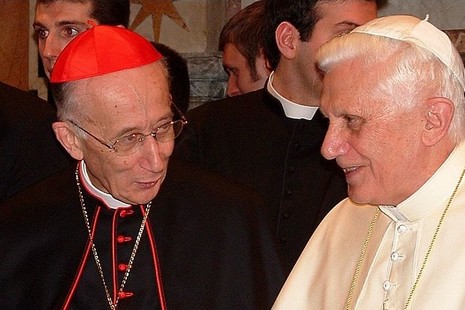
Cardinals petitioned for JP2 fast track
Italian Cardinal Camillio Ruini has told journalists that he was given a signed petition at the conclave that elected Pope Benedict to push for fast-track sainthood for the recently deceasedPope John Paul II.
Vatican City
April 27, 2011

Italian Cardinal Camillio Ruini has told journalists that he was given a signed petition at the conclave that elected Pope Benedict to push for fast-track sainthood for the recently deceasedPope John Paul II.
“The beatification was asked for inside the conclave.†The scoop arrives from an Italian news agency just four days before the solemn ceremony in which Benedict XVI will become the first Pope in 11 centuries to proclaim “blessed†his immediate predecessor.
Cardinal Ruini told AGI news wire how a large group of Cardinals had signed a petition calling on the next pope, still not yet elected, to waive the standing five-year minimum wait for the process of beatification to begin in the case of John Paul.
“Entering the conclave, a letter was given to me signed by many Cardinals who joined in the popular request (heard after John Paul’s death) to begin the process for sainthood right away,†said Ruini, who also served at the time as Vicar of Rome. “The letter was given to me because the Cardinals didn’t know who would be elected in the conclave.â€
SOURCE
Revelation: Cardinals Petitioned For John Paul II Sainthood Inside Conclave (World Crunch)
PHOTO
Giuseppe Ruggirello (Wikipedia/CC 3.0)