POPE BENEDICT XVI RECEIVED THE MASTER OF THE ORDER
IN PRIVATE AUDIENCE
On March 11, 2011 His Holiness, Pope Benedict XVI, received the Master of the Order and his Vicar in a private audience. The goal of the meeting was to talk to the Pope about the main themes addressed by the last General Chapter and about the status of the preaching of the Order at the on-set of the Master’s mandate. During the meeting, the Pope asked many questions about our placements, formation, our Provinces’ teaching engagements, and the general situation of the Order by individual regions. At the time when a new Pontifical Council has just been appointed, the Pope highly encouraged the Order to keep working on those dimensions of our charisma of friars preachers, which best contribute to the evangelization. He specially highlighted the following dimensions: careful attention to the life-search and the spiritual quest of our contemporaries; the importance of studying and teaching Theology in line of the solid tradition of reflection initiated by Thomas Aquinas; Theology’s essential spiritual dimension; the vital bond between Theology and worship; the particular challenge to Theology posit by the dialogue with new cultures and sciences – a clear sign of our relation with the world; the role of statistics in evangelization; appropriate care given to the human, religious and theological dimensions in initial formation; and the hope that our evangelizing efforts will give our contemporaries the possibility and the joy of a personal relationship with Jesus. (IDI, April 2011 – N° 491)
THE MASTER OF THE ORDER OF PREACHERS VISITS
ST. DOMINIC’S PRIORY
Fr. Bruno Cadoré, OP, Master of the Order of Preachers visits the Dominicans of Our Lady of the Rosary Province in Macau and Hong Kong on January 18-22, 2011. The program of the visit to St. Dominic’s Priory and Studentate in Macau is as follows:
January 18 (Tuesday):
- 18:00Â Â Arrival, Hong Kong International Airport
- 21:00   Arrival in Macau and Greetings to the Community at St. Dominic’s
January 19 (Wednesday):
- 06:30Â Â Meditation and Morning Prayer
- 09:30Â Â Meeting with the Provincial and Formation Councils (Saint Paul School)
- 12:30Â Â Lunch
- 15:00Â Â Meeting with Students
- 18:15  Evening Prayer and Eucharist
- 19:00Â Â Dinner
- 20:30Â Â Socials
January 20 (Thursday):
- 06:30Â Â Meditation, Eucharist with Morning Prayer
- 09: 30Â Â Visits to School of Christian Studies, University of Saint Joseph
- 10:30Â Â Visit to the Bishop of Macau
- 11:30Â Â Short Macau Tour
- 12:30Â Â Lunch
UNIVERSITY OF SAINT JOSEPH CELEBRATES ITS PATRON
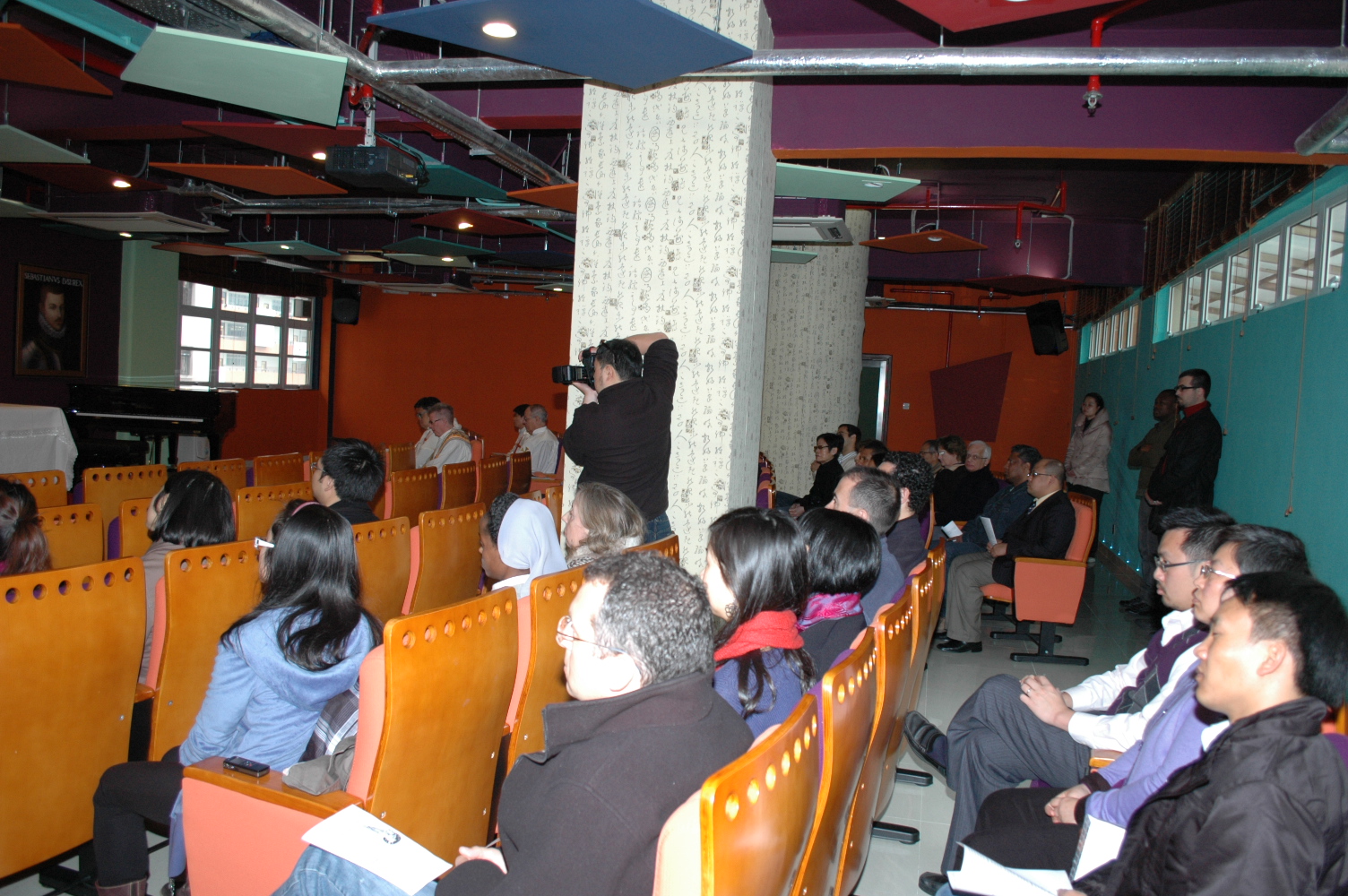
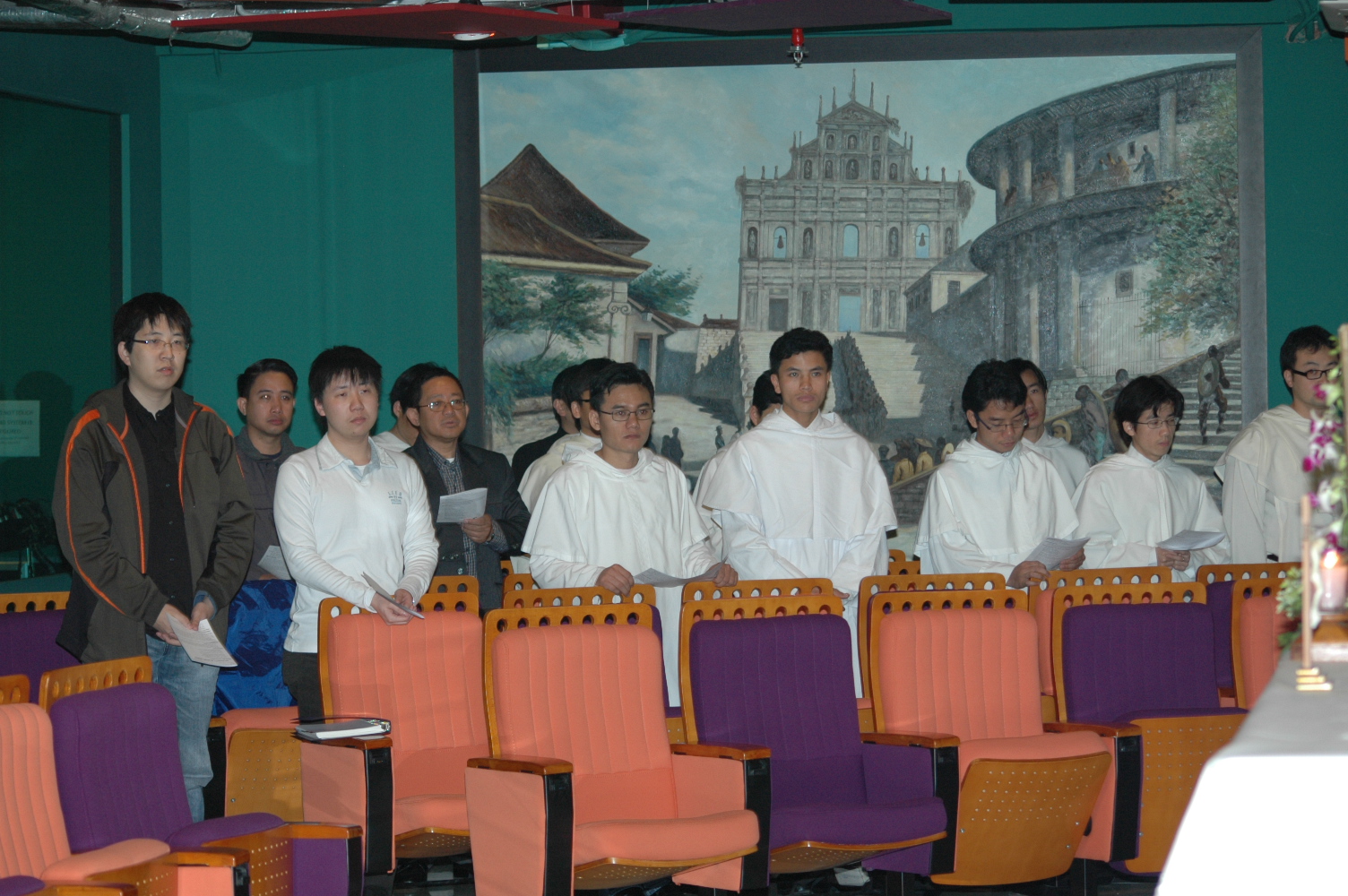
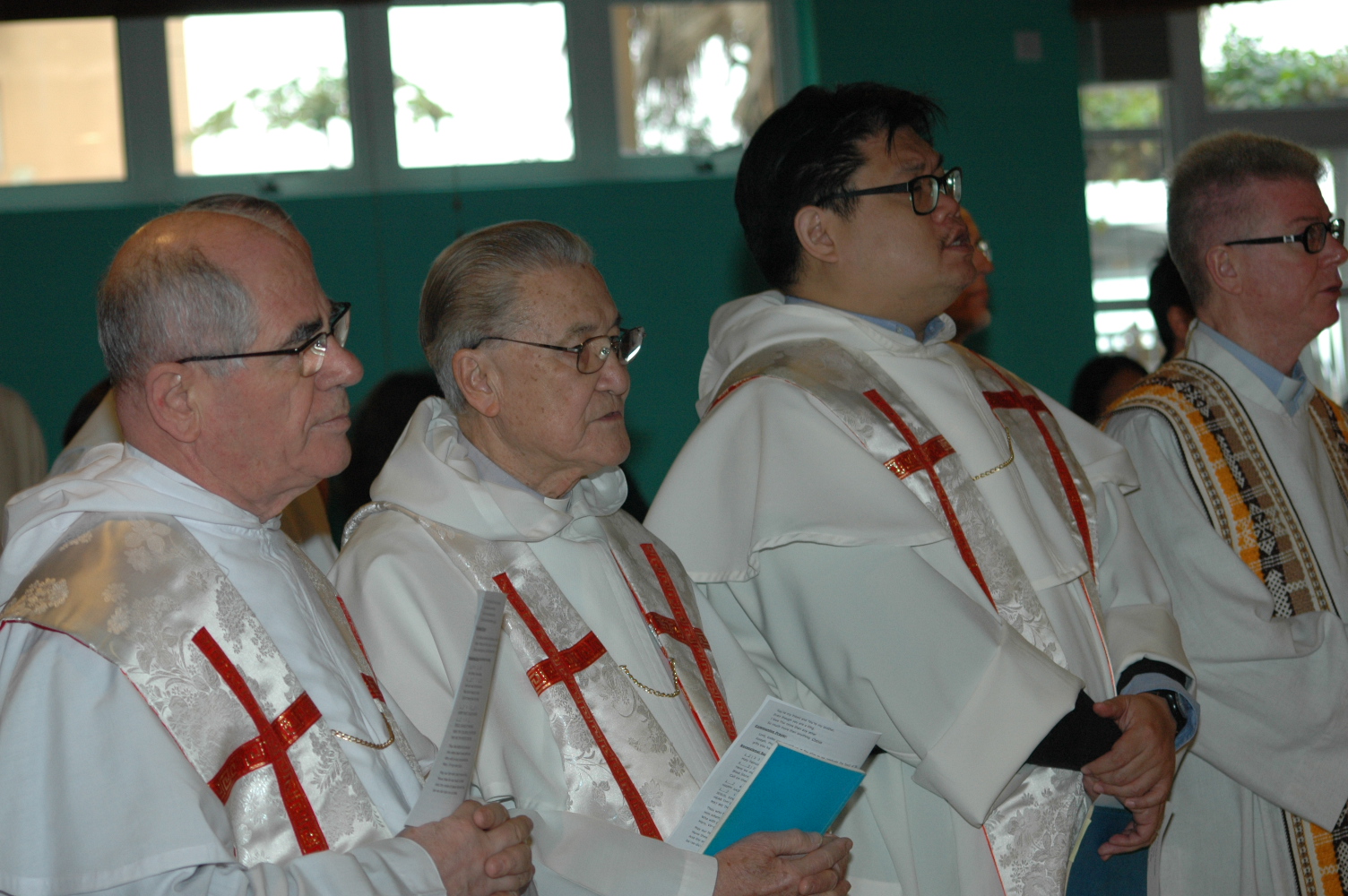
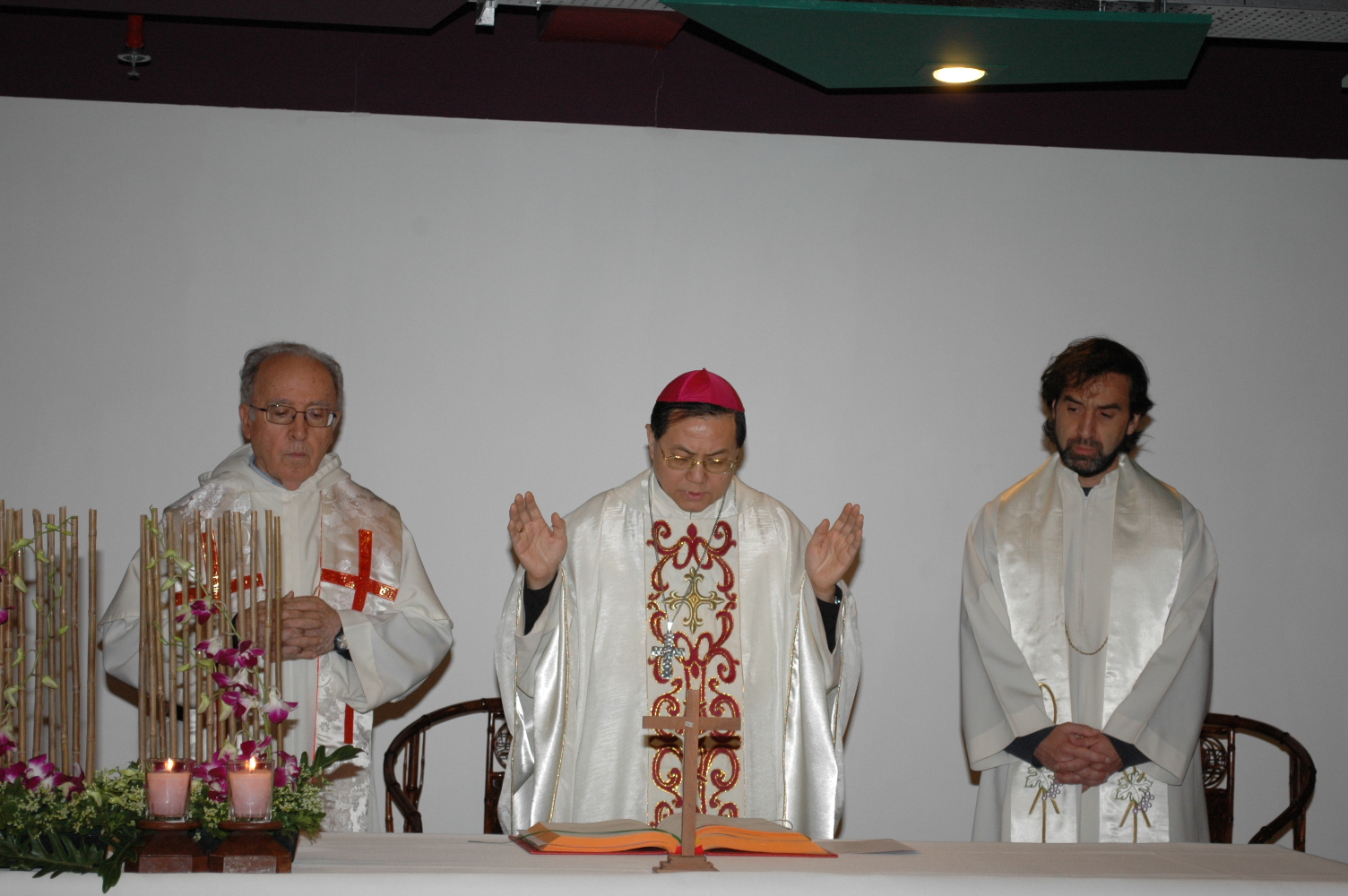
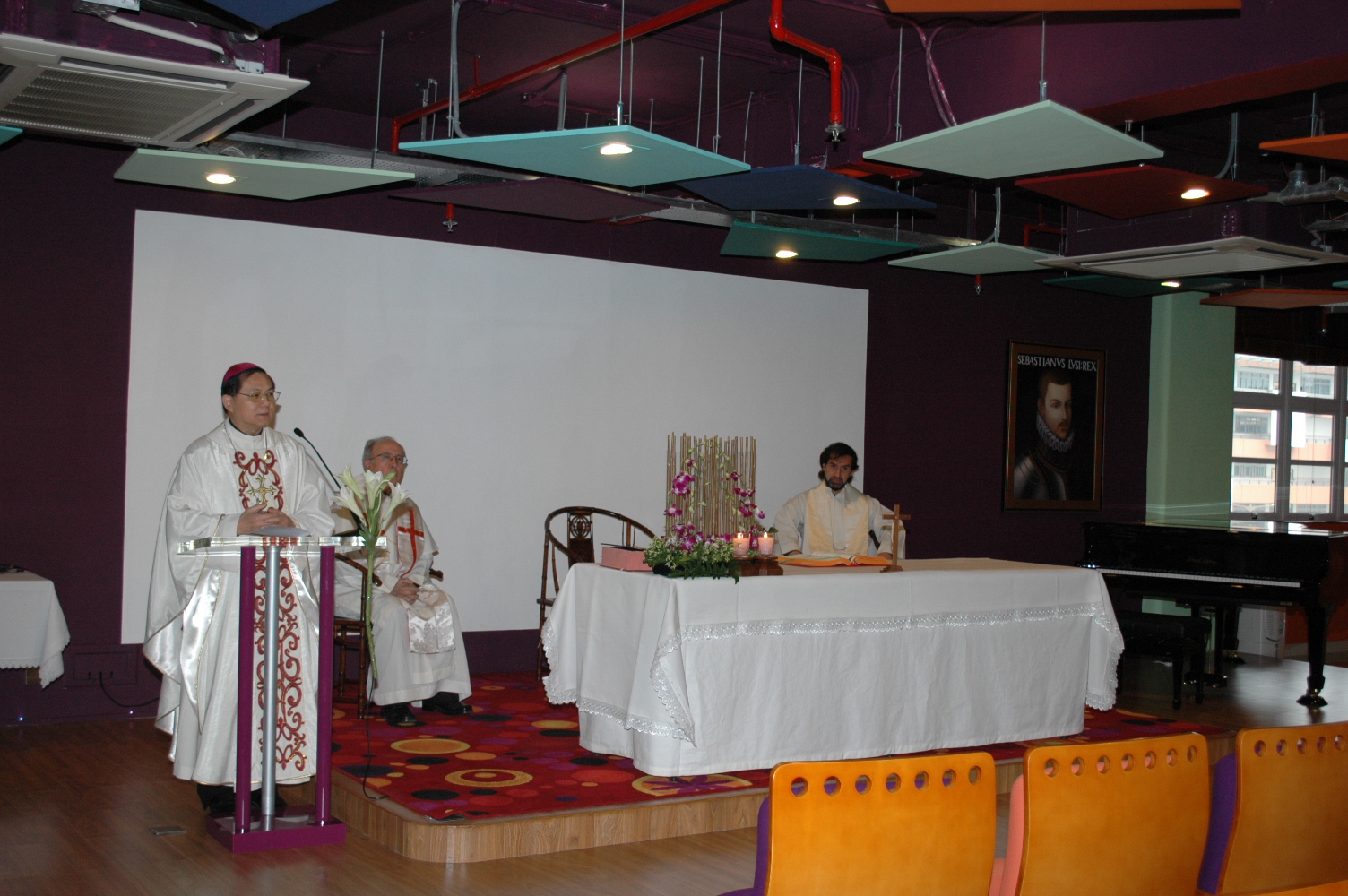
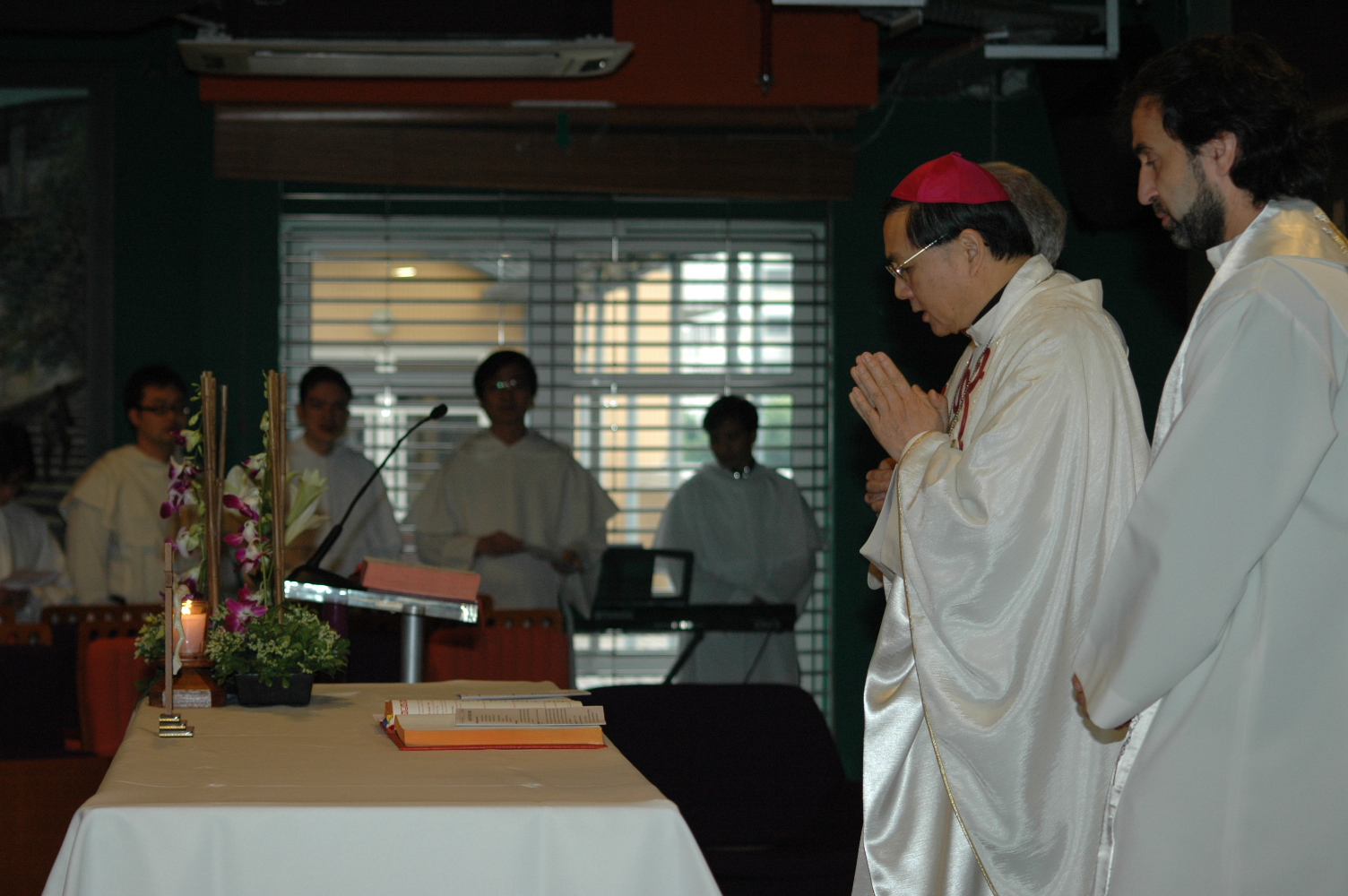
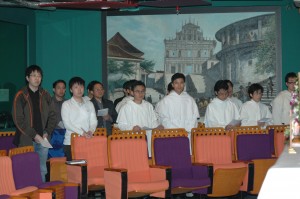
The University of Saint Joseph (USJ) celebrated the Feast of its Patron Saint, Joseph, with a Mass presided by His Excellency Msgr. José Lai, bishop of Macau, on March 18, 2011 at the main auditorium of the University. Eight priests from the secular clergy and religious congregations, including five Dominicans, concelebrated the Eucharist. Seventeen Dominican students of St. Dominic’s Priory in Macau animated the Mass with lovely religious songs. The holy Eucharist was attended by about one hundred professors and students.
In his homily, bishop Lai underlined some significant points of the life of Saint Joseph, in particular, the holy saint as the faithful guardian of Jesus, the loyal husband of Mary, and the universal patron of the Church. The bishop added that “Saint Joseph is loved by the people of Macau, where we have also “the Seminary of Saint Joseph, the Catholic School of Saint Joseph, and many people are named St. Joseph.† He closed his brief homily by calling the faithful to follow the saint’s example of humble holiness, good work and silent witnessing.
Before closing the Eucharist, Father Joao Eleuterio, coordinator of the School of Christian Studies of the University of Saint Joseph, thanked all the faithful present, in particular the kind bishop and the choir. He added another important point of the life of the Saint: Saint Joseph
helped Jesus, the Son of God and the Son of Mary, grow up as a child and a young man. “May we all, particularly professors and members of the administration help our young students to grow up in maturity, knowledge and compassion.â€
The simple Mass closed with a beautiful hymn of Saint Joseph, Holy Patron Thee Saluting:
“Happy Saint, in bliss adoring,
Jesus, Savior of mankind,
Hear thy children, thee imploring
May we thy protection find.â€
The University of Saint Joseph is the Catholic University of Macau. (FGB)
Many USJ pofessors and staffs attended Mass
Dominican Brothers
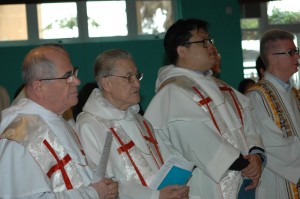
- Fr. Felicisimo op, Fr. Lionel op, Fr. Jarvis op
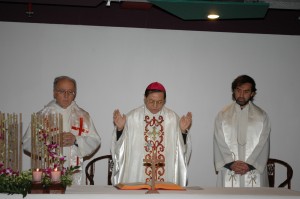
Fr. Fausto Gomez op, Fr. Joao Eluterio(USJ, coordinator the school of christian studies of the USJ) concelebrated Mass
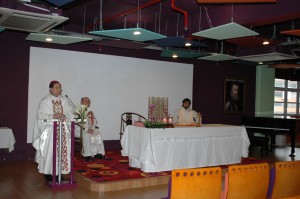
Macau diocesan Bishop Joseph Lai Homily
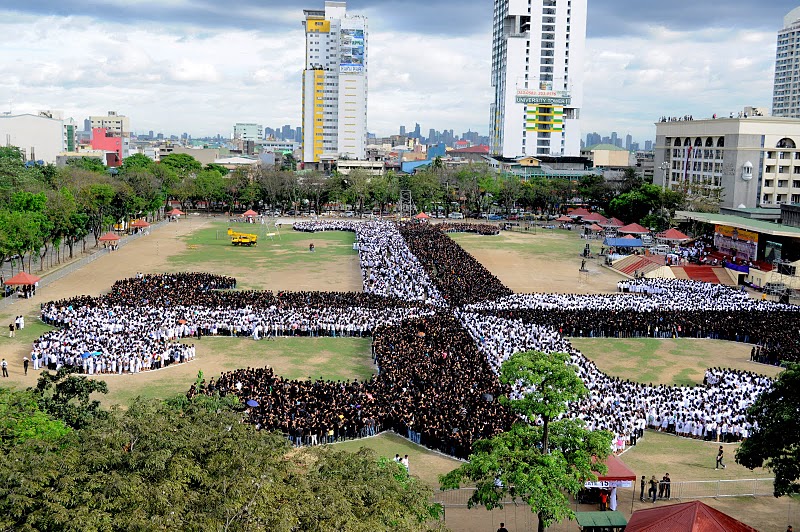
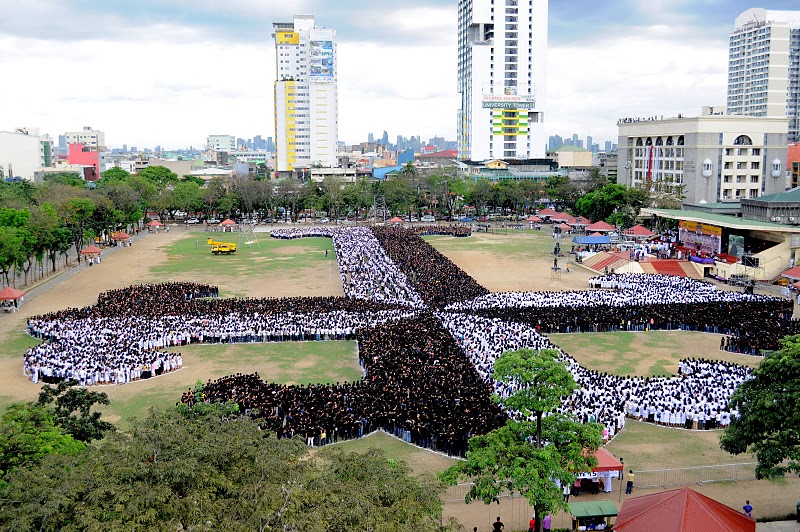
Largest Dominican Cross
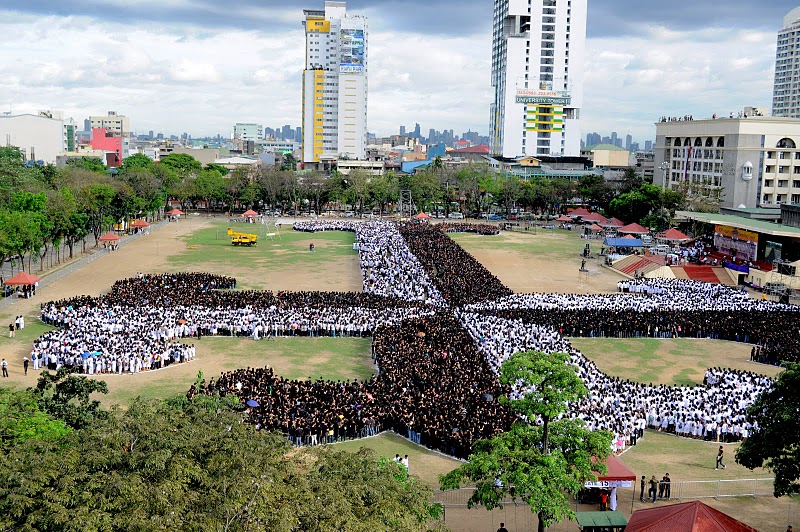
Santo Thomas University in Philippines
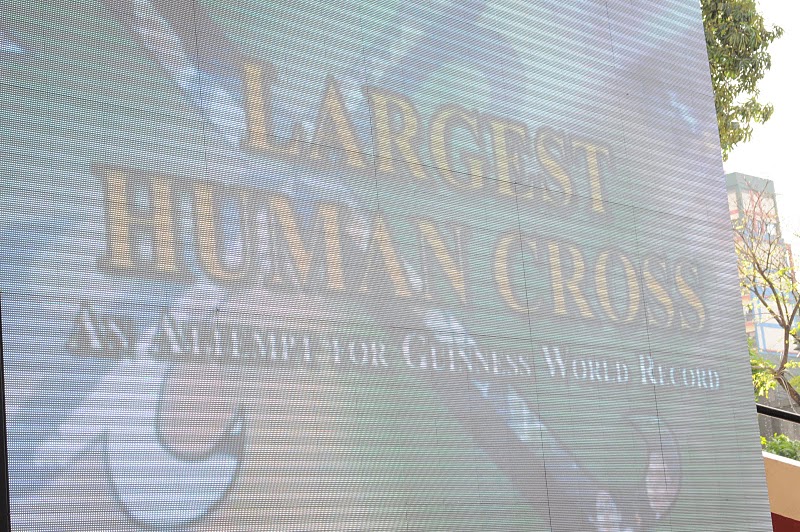
Largest Human Dominican Cross an attempt for Guinness World Record
We would like to share with you some ground and aerial shots of the “Largest Dominican Cross†formed by the administrators, faculty, employees and students of the University of Santo Tomas (UST) yesterday, March 9, 2011. Twenty-four thousand people were present at the UST football field to form the black and white cross; it was an attempt to be included in the Guinness Book of World Records. This event was done to begin a season of prayer and penance this Lent, in line too with the Quadricentennial celebration of the University.

UNIVERSITY OF SANTO TOMAS CELEBRATES ITS 400TH
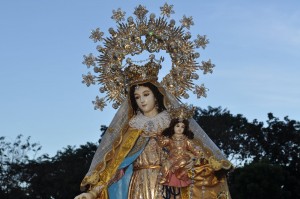 The University of Santo Tomas (UST), Manila, celebrated its 400th Foundation Anniversary with profound gratitude, joyful hope and unending grace. The glorious Grand Week (January 24-28, 2011) of the UST Quadricentennial Celebrations included outstanding religious, academic and cultural events. The Grand Week or Semana Grande of the Royal and Pontifical University began in the evening of January 24 with a solemn Eucharistic celebration and closed in the evening of January 28 with a most solemn Mass and a banquet.
The UST week-long celebration was ushered in by the Opening of the Door of the University Chapel and Santissimo Rosario Parish Church turned through the year-long quadricentennial celebration into a Jubilee Church, where Thomasians, parishioners and visitors may gain plenary indulgences under the usual conditions. Cardinal Gaudencio Rosales, Archbishop of Manila, opened the door of the Church and presided over the Eucharist concelebrated by about seventy priests, most of them Dominicans. In his moving homily, the good Cardinal spoke well of the 400 years of history of the University of Santo Tomas, the oldest university in Asia and now the biggest Catholic University in the world, with forty two thousand students. Archbishop Rosales highlighted some salient points in the history of the university, above all its essential role in shaping the Filipino nation and the Philippine Church. The University counts among its illustrious roster of alumni heroes, leaders and saints, including fifteen martyrs of the faith that constitute UST’s purest glory.
 On the second day of the UST Grand Week, the 10th ICUSTA Conference – attended by the members of the association and representatives from Catholic Universities throughout the world – opened with a High Mass, followed by the inaugural session at the UST Chapel, now the Jubilee Church. (ICUSTA stands for International Council of Universities of Saint Thomas Aquinas.) Archbishop Edward Joseph Adams, Apostolic Nuncio to the Philippines, presided over the concelebrated Eucharist. The Keynote Address was given by Ninoy Aquino III, President of the Republic of the Philippines. While the Apostolic Nuncio focused in his homily on the essential role of UST, the Catholic University of the Philippines, in the local Church and other Asian Churches, the President of the Philippines centered his speech on the University’s leadership role in Philippine education through four hundred years. The inaugural session of ICUSTA started with the warm welcoming words of Fr. Rolando V. de la Rosa, OP, UST Rector and closed with the reading of a unique resolution by the Philippine Congress, which praised the University’ s remarkable history and thanked the university community for its outstanding work in molding the youth of the nation. Another highlight of the inaugural session was the Message of the Master of the Dominican Order, Fr. Bruno Cadoré, OP, who thanked the Dominicans in the Philippines and encouraged them to continue their mission in education and evangelization.
On the third day of the UST Grand Week, January 26, the ICUSTA Conference continued. Moreover, in the morning, thousands of students from the different colleges of the University held a street dance on the streets around the university. It was a scene to see and enjoy – even the noise sounded joyful and youthful!
In the evening of the third day another great event took place: the Unveiling of the Quattromondial Monument found between the back of the UST Main Building and the Benavides Central Library, at the UST Quadricentennial Park. The monument, the latest landmark of the University campus, captures well the motto of the 400th Anniversary, namely, “UST Building the Church, the Nation and the Family, Our Birthright and Destiny.â€Â The monument of bronze-glass and ten-meter-high was made by renowned UST alumnus Ramon Orlina. It is composed of four larger-than-life human figures in bronze representing a male and a female student, a teacher and a Dominican friar. Sculptor Orlina explained that “the four figures represent the four centuries of excellence, erudition, spirituality and tradition that the university has displayed and inspired in every one of its stakeholders.â€Â The four youthful standing figures –with their backs against each other – hold a globe, with their raised-up hands to express the universality of the University, the interconnectedness of peoples and cultures. 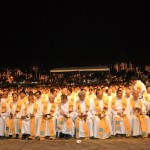 Three significant texts in Latin encircle the figures from top to bottom: the name of the University (Universitas Pontificia and Regalis Santi Thomae Aquinatis), the motto of the Dominicans (Contemplari et contemplata aliis tradere), and the focus of human and Christian education: work ethics and love (fideles in labore, proficientes in caritate).
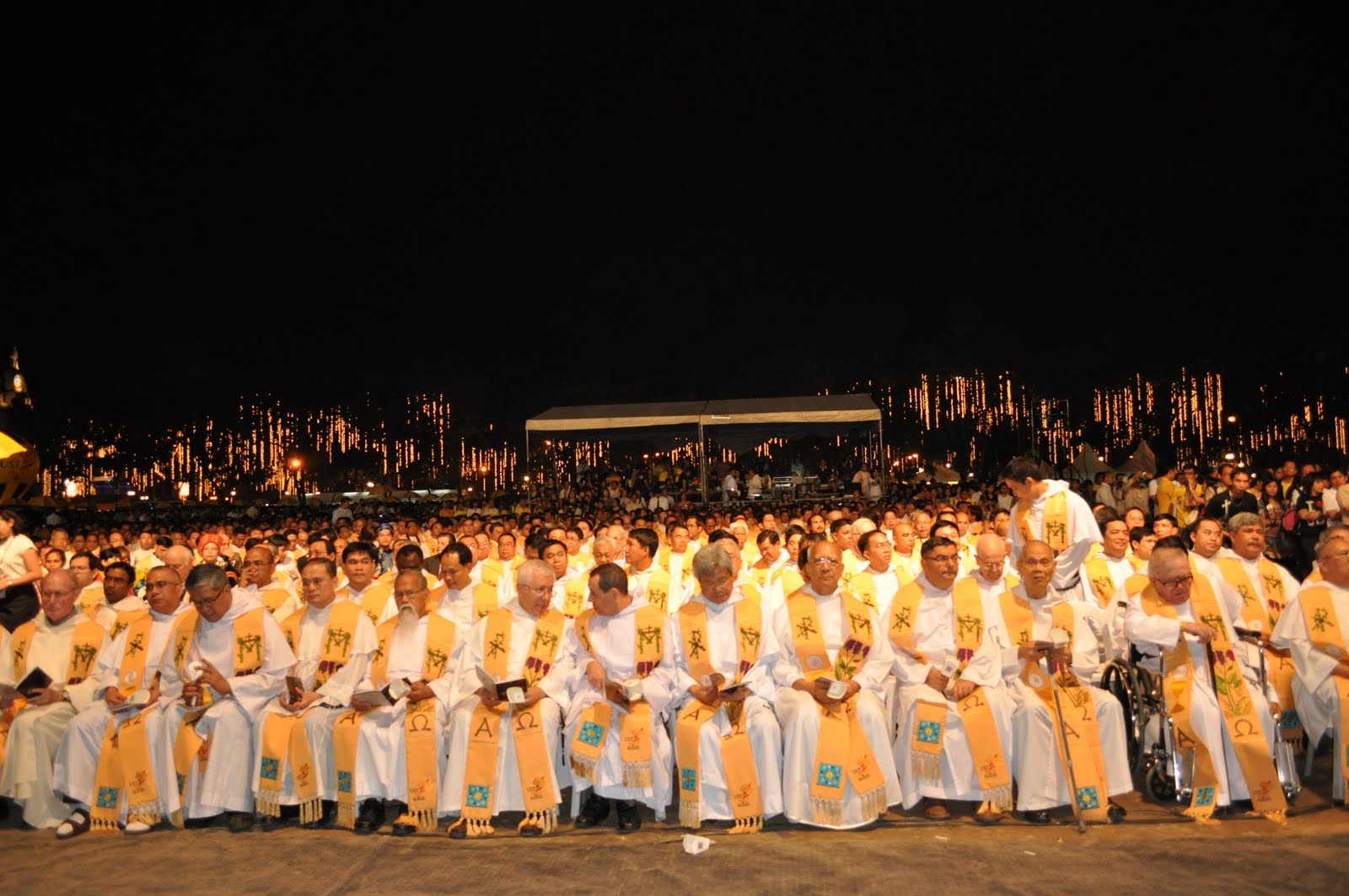
The greatest day of the UST Grand Week was the Quidricentennial Day: January 28, the feast of St. Thomas Aquinas, Patron of the University. It was crowned by the Quadricentennial Mass, preceded by colorful Philippine folk dances and powerfully animated by the Symphony Orchestra and Choir of the UST Conservatory of Music. The solemn Thanksgiving Eucharist celebrated at the UST Grandstand and Open Field was presided by Cardinal Zenon Grocholewski, Prefect of the Congregation for Catholic Education and Legate of Pope Benedict XVI. Filipino Cardinals Ricardo Vidal and Gaudencio Rosales, the Apostolic Nuncio to the Philippines, the Master of the Dominican Order, Fr. Quirico Pedregosa, OP, Prior Provincial of the Philippine Dominican Province, about 100 bishops, over one hundred Dominicans, nearly five hundred other religious and secular priests concelebrated with the Papal Legate. The Mass was attended by tens of thousands of Thomasians, parishioners, and friends of the University. In his homily, Cardinal Grocholewski spoke gratefully and admiringly of the great history of the University of Santo Tomas, particularly for the Philippine Church and other Asian Churches. He also referred to St. Thomas Aquinas and underlined three points in the life of the
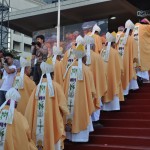
Angelic Doctor, namely, his unique gift to harmonize faith and reason, his admirable humility and his exemplary fidelity to the Church.
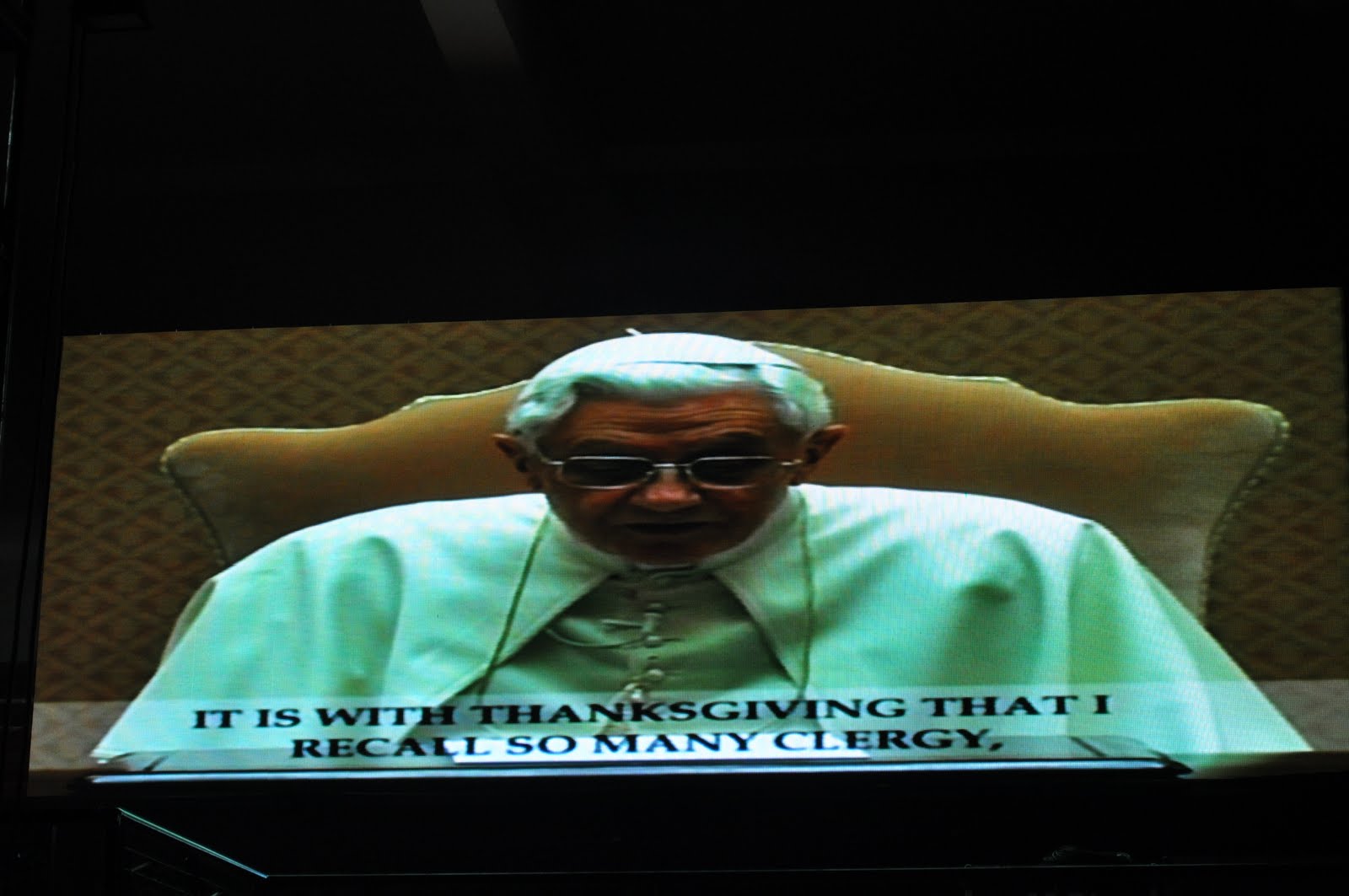
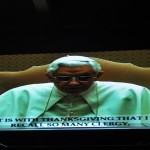
The most awaited moment of the Eucharistic celebration was the taped video appearance and Message of Pope Benedict XVI, who was received with a thunderous applause and followed by a respectful silence. After hispaternal greeting to all, the Holy Father acknowledged the great importance of the event and recalled with gratitude the memory of the Founder of the University Bishop Miguel de Benavides and of the Dominicans who through 400 years guided well the University of Santo Tomas. Benedict XVI sees a very important role for the University and is convinced that it will continue contributing to the intellectual, spiritual and cultural enrichment of the Philippines and other countries. Invoking the memory of UST’s Patron, St Thomas Aquinas, the Holy Father ended his message with his Apostolic Blessing to all.
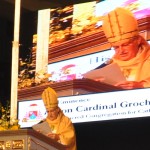
Before the end of the Eucharist, Fr. Rolando de la Rosa, OP, UST Rector expressed the deep gratitude of the University to all those who made this wonderful day possible. He mentioned in particular, the members of the Dominican Province of Our Lady of the Rosary, for  their important contribution through the 400 years of the University’s history.
A banquet in the 24-hectare campus for the whole university community followed the Eucharist. The day was capped by a short but colorful and elegant display of fireworks. As professors, alumni,
students and administrators were leaving the campus, one sentiment stood out: all seemed happy and proud, outrageously happy and unabashedly proud for being Thomasians at 400!
The yearlong celebration of the 400th year foundation anniversary of the University of Santo Tomas continues – and with its unending grace. (FGB)