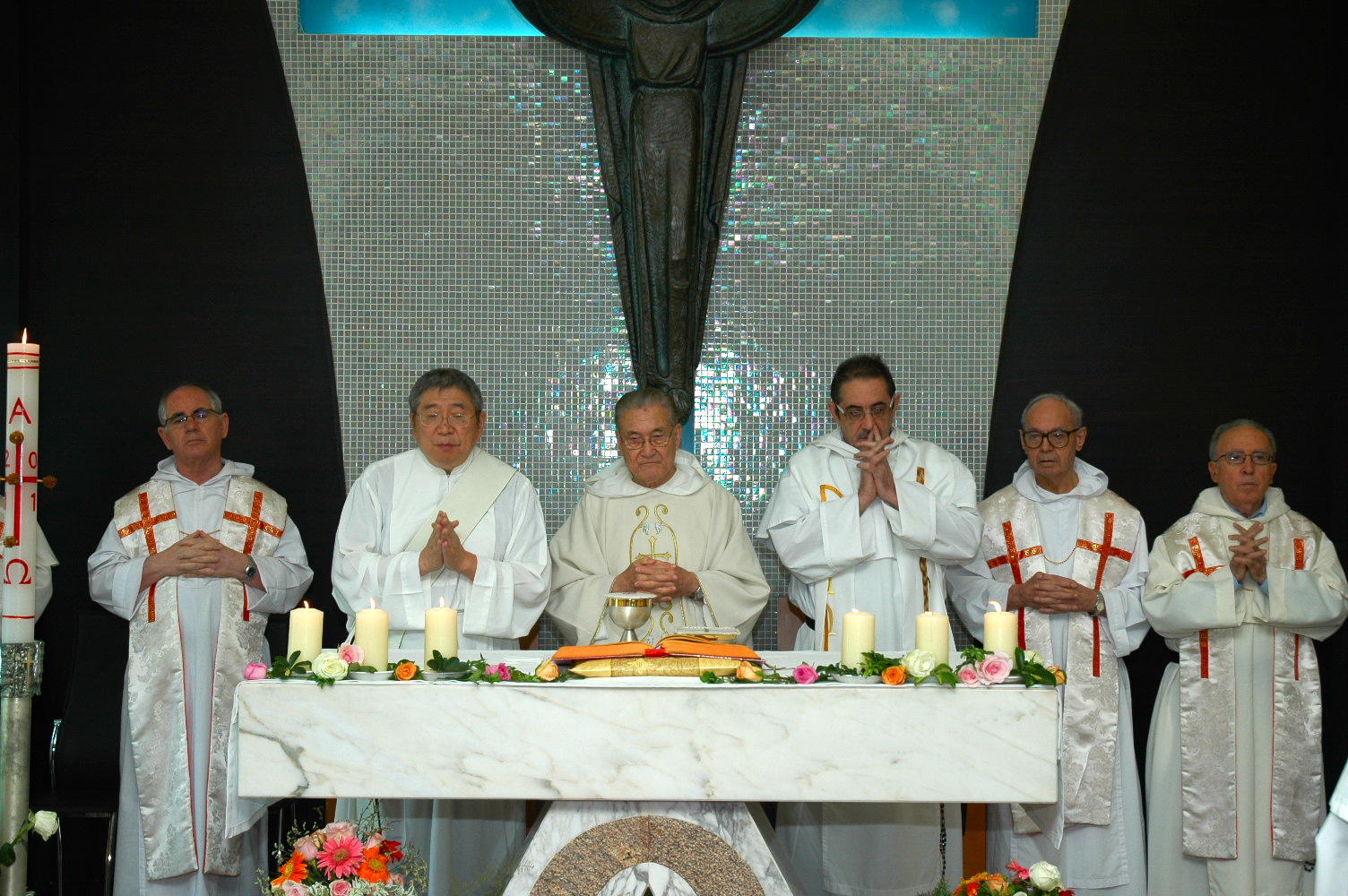
NOVENA OF OUR LADY OF FATIMA
Intention : For the peace of the world and the renewed of the Christian Community.
PROGRAM
NOVENA
4th to 12th May
8:00 a.m – Novena with Rosary and Mass (in Chinese).
5:30 p.m – Novena with Rosary and Mass (in Portuguese).
ADORATION
12th May
7:00 – 8:00 p.m – Adoration for English speaking community.
8:00 – 9:00 p.m – Adoration for Chinese speaking community.
9:00 – 10:00 p.m – Adoration for Portuguese speaking community.
FEAST OF OUR LADY OF FATIMA
13th May
8:00 a.m -Mass (in Chinese)
3:00 p.m – Exposition of the Blessed Sacrament and Adoration.
5:00 p.m – Rosary in Portuguese.
5:45 p.m – Benediction and Consecration to Our Lady. Mass (in Portuguese).
Procession
Rosary will be recited during the Procession from S. Domingos Church
to Penha Hill Church, followed by the blessing with the
Blessed Sacrament to all the participants and the City of Macau.
Cogregation of Our Lady of Fatima
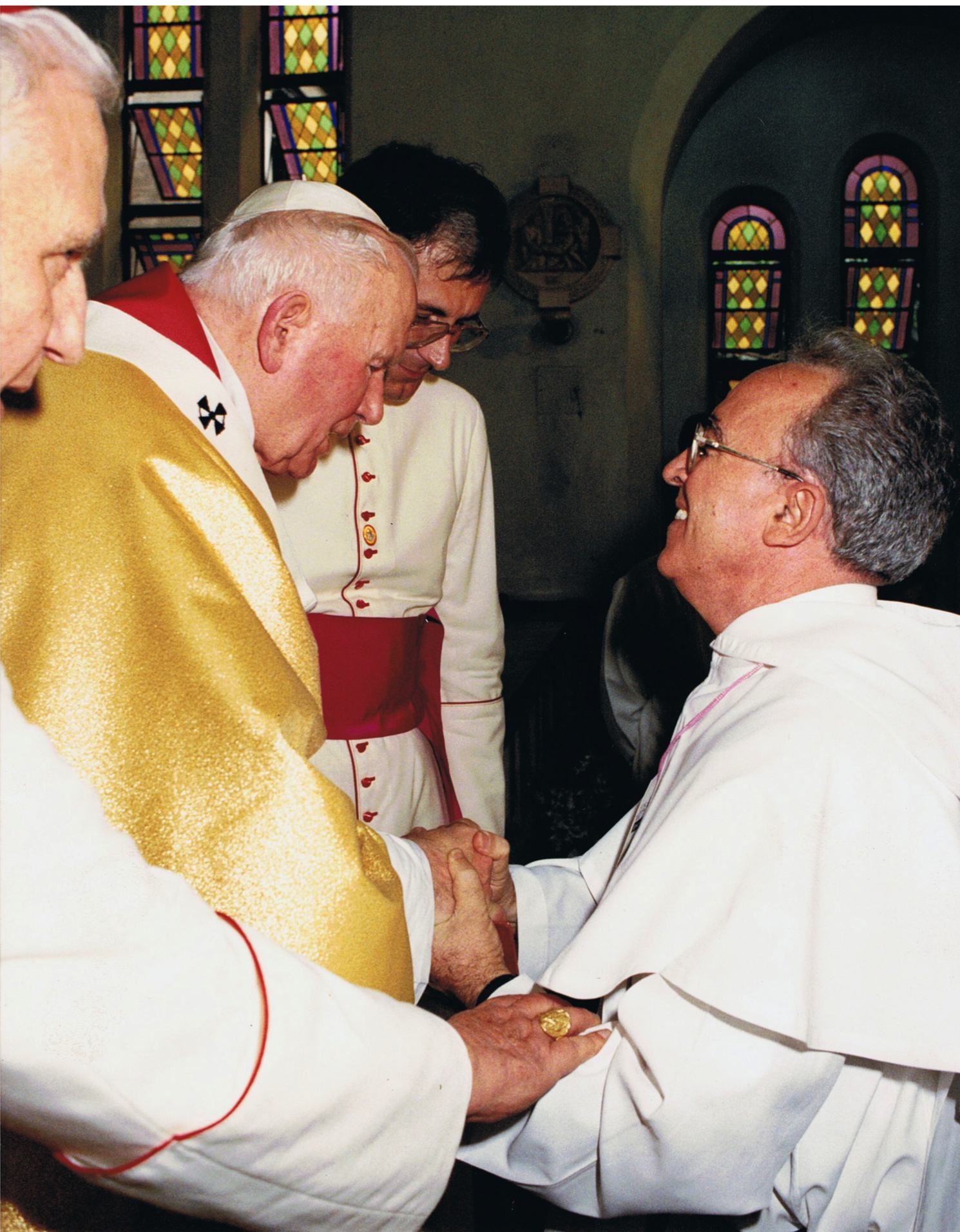
“JOHN PAUL II, WE LOVE YOU!â€
(Some Personal Notes on Blessed John Paul II)
At University of Santo Tomas, Manila: January 1995
On February 25, 2011 I had a chance to visit again the tomb of Pope John Paul II. I was told by my friends in Rome that his tomb was the most visited by pilgrims. (From now on, it will be much easier to visit the place where his coffin will be placed: in the Basilica of St. Peter itself, near the Pieta of Michel Angelo) Although it was still early morning, dozens upon dozens of people were visiting and praying before his simple tomb in the crypt of the Vatican: some were standing, others were kneeling and many others were just passing slowly by the tomb – all were silent, some were crying. I lingered for a while there and remembered how lucky I was for having had the privilege of meeting John Paul II seven times. Nothing personal, I was just lucky! Truly lucky! In these light notes, I shall touch and comment mainly on my personal encounters with John Paul II.
From May 1, 2011, the Church has a new blessed in the person of Pope John Paul II. Millions of Catholics and men and women of good who were touched by John Paul II rejoiced! In spite of the criticism by some theologians and liberals within the Church, and with due respect, I believe history will also consider him not just a most popular and approachable Pope but a great one.
The first time I met Pope John Paul II was on September 5, 1980 in Castel Gandolfo. Together with twenty eight priests and eight bishops, I had the great honor to concelebrate at the Eucharist presided by the Holy Father. What impressed me most then was the contemplative attitude of the Holy Father through the Mass: totally absorbed, following carefully the rhythm of the Mass, pronouncing each word (in Latin) slowly and distinctly, making strategic pauses of silence. Throughout his 26 years as successor of Saint Peter, John Paul II showed the primary place of prayer in his life. Some authors today consider him a modern mystic. It has been said that he made decisions on his knees. Monsignor Slawomir, the postulator of the Pontiff’s cause of beatification, was asked: What aspect of the Pope’s life particularly struck you? He answered: He was certainly a mystic, “a mystic in the sense that he was a man who lived in the presence of God, who let himself guided by the Holy Spirit, who was in constant dialogue with the Lord, who built his whole life around the question (asked by Jesus to Peter), ‘Do you love me’.†A close collaborator said on April 30, 2011: “To see him pray was to see a person who was in conversation with God.â€
I remember with special fondness the third time I met him personally. (The second time I met him took place during his first visit to the University of Santo Tomas, Manila in February 1981; in this visit, he beatified Lorenzo Ruiz and Companions Martyrs – now saints – at the Luneta Park, Manila) It was during the World Youth Day in Manila (January 1995), where the Holy Father had the greatest audience ever: more than four million people attended the Pope’s final Mass. (One Hong Kong newspaper wrote that then the multitude became a megatude). He celebrated Mass in the University of Santo Tomas for the youth delegates – 245 from all over the world – to the 5th International Youth Forum. This time after the Mass he greeted one by one the students and some others who had the great luck of attending the Mass. While the Holy Father greeted the youth he embraced them – and also some others not so young including me. While he embraced me I could hardly tell him, “Holy Father I have read your lovely book Crossing the Threshold of Hope.†He looked at me intensely and kindly, and told me “Bene, bene.†I was deeply touched and really moved – almost to tears! I remember the words of TIME when the magazine named the Pope Man of the Year (1994): “He generates electricity unmatched by anyone else in the world.â€
The last time I met the John Paul II was on February 21, 2004 at the Sala Clementina in the Vatican (like my three previous encounters with him) in the company of about a hundred and fifty people, most of us members of the Pontifical Academy for Life. By that time, he was already sickly and with his Parkinson’s developing slowly. (Parenthetically, the miracle worked by Pope John Paul II that led partly to his fast-track beatification was the healing from Parkinson’s of French Sister Marie Simon-Pierre right after she asked John Paul II to cure her) He could not walk anymore and it was hard to understand his speech. But still then, and against the advice of some of his assistants, he greeted us – about 130 people – one by one: we knelt before him and kissed his ring; he blessed us and smiled. Many writers on John Paul II underline this characteristic of the late Pope: he was concerned with the person, with each person, each one creature and image of God. This is one of the reason he touched the hearts of so many people throughout the world: the young, the children, the old, men from other religions and cultures… In his first encyclical Redemptor Hominis (1979), issued a few months after his election, the Pope explained that man is the road of the Church and Christ is the road of man: Jesus Christ as the Son of God and the Son Mary (the Pope was a faithful servant of Mary: totus tuus!), the primordial foundation of Christian morality, the Way, the Truth and the Life. John Paul II was missionary of the world: he visited about 130 countries during his papacy. He was from Poland but, indeed, the world was his parish. The well-known Catholic convert André Fossard once said: “This is not a Pope from Poland, but a Pope from Galilee.†John Paul II knew, loved and followed Jesus to the end.
More than my personal encounters with John Paul II I remember – with his holy life of dedication to Christ, Mary and the Church – some of his fundamental teachings. In particular his teachings on human life found especially in his encyclical (he wrote fourteen encyclicals) Evangelium Vitae,†or The Gospel of Life (1995), the first encyclical on bioethics, where he repeats one of his constant mottos: “Human life must be defended from the moment of conception (against abortion) to natural death (against euthanasia and the death penalty).† I also treasure his radical and creative social teachings found in his three social encyclicals and many addresses and exhortations. It is worth noting here that John Paul II, a remarkable worker since he was a youth, was beatified on May 1, the day of labor; moreover, he wrote an important encyclical, Laborem Exercens 1981, on human work: “Capital is for labor; work is for man.† From the social teachings, I consider this point (from his Novo Millennio Ineunte, 2001) most innovative: heretic is not only the believer who does not accept or distorts an article of the Creed but one who does not share something with the poor and weak of the world. Also I love to underline his substantial teachings on freedom and truth (in his basic encyclical Veritatis Splendor, 1994): “freedom is not freedom from the truth but freedom in the truthâ€; on justice and love: “love is the soul of justiceâ€; on peace and democracy: as it is well known, the late Pope contributed immensely to the collapse of European communism in 1989. Just before the war of Iraq he shouted from the famous papal balcony in the Vatican: “No to war. War doesn’t resolve anything. I have seen war. I know what war is.†The Pope words on justice ring frequently in my ears: “No peace without justice, no justice without forgiveness.†As a religious man, I appreciate John Paul II Vita Consecrata (1996), his important apostolic exhortation in which he invites religious men and women to be holy, that is prayerful and compassionate: to go up to the mountain of prayer and to come down to the market places of the world and witness their passion for God and compassion for humanity.
(Parenthetically, let me mention here that the main criticism these days against the Pope is focused on his apparent silence regarding the terrible sexual scandal of priests and their victimizing of innocent children. Â Knowing John Paul II, a really wise and holy man, I think I can truly say that he was not really aware!)
I remember once, somewhere in 2004, discussing with a friend the possibility that John Paul II might resign as Pope. Later on I read somewhere: a person asked John Paul II if he would resign. The Pope answered: “I cannot, because Jesus did not go down from the cross.†On February 21-23, 2005, the members of the Pontifical Academy for Life could not have an audience with the Holy Father. By then John Paul II was gravely ill. He would die one month and a half later, on April 2, 2005, after giving his most moving and last speech to the world: his patient, compassionate, dignified, exemplary way of dying and facing death. Before dying, when thousands of young people were camping near the Vatican and praying for the Pope, he said to his assistants: “Tell the young, I love them.†We are told that his last words – almost inaudible – were: “Let me go… Let me go to the house of the Father.†I remember the Pope had said at the beginning of his pontificate, then with his booming voice: “Our life is a pilgrimage to the house of the Father.†His beatification means he is in the house of the father! I am sure he will remember us singing in Manila, in New York, in London, in Rome: “John Paul II, we love you!†and telling him now: “Blessed John Paul II, pray for us!†(F. Gomez Berlana, OP: Macau, May 2, 2011)
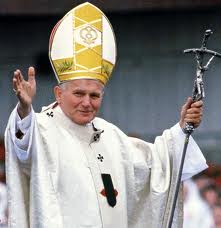
ZE11042908 – 2011-04-29
Permalink: http://www.zenit.org/article-32424?l=english
Pilgrims Converge in Rome for 3-Day Beatification
Vatican Reiterates Details of Vigil, Liturgies

VATICAN CITY, APRIL 29, 2011 (Zenit.org).- Pilgrims arriving to Rome are looking forward to three days of events surrounding Sunday’s beatification of Pope John Paul II, who died in 2005 at the age of 84 of complications associated with Parkinson’s.
The Vatican press office held a press conference today to review the final details of the events, which begin Saturday with a vigil to take place in the Circus Maximus, presided over by Cardinal Agostino Vallini, the Pope’s vicar for Rome, and organized by the Diocese of Rome.
Monsignor Marco Frisina, director of the Office of Liturgical Celebrations of the Vicariate of Rome, revealed that the Choir of the Diocese of Rome will perform, as will the Orchestra of the Santa Cecilia Conservatory, which he will conduct. The choir of the Philippine community in Rome and the Gaudium Poloniae Choir will perform two traditional pieces.
Brief films detailing key moments of the pontificate will be shown, Monsignor Frisina said, adding that “through images we will also relive the last months of the pontificate of John Paul II, which were marked by his suffering.”
Several figures close to John Paul II will offer their testimonies: Cardinal Stanislaw Dziwisz, archbishop of Krakow, who was the Polish Pontiff’s personal secretary; JoaquÃn Navarro Valls, Vatican spokesman during John Paul II’s pontificate; and Sister Marie Simon Pierre, who was miraculously cured from Parkinson’s, and whose miracle was used in the cause of beatification.
At the end of the first part “Totus tuus” will be sung, a song composed for the 50th anniversary of Karol WojtyÅ‚a’s priestly ordination.
During the second part of the vigil, Cardinal Vallini will reflect on the spiritual and pastoral personality of John Paul II. Then the mysteries the Polish Pope added to the rosary — the luminous mysteries — will be prayed, with a simultaneous video-connection to five Marian shrines: in Krakow, Tanzania, Lebanon, Mexico, and Fatima.
Each of the mysteries will be tied to a prayer intention of importance to John Paul II: at the sanctuary of Lagiewniki in Krakow, Poland, the intention will be for the youth; at the sanctuary of Kawekamo, Bugando, Tanzania, the intention will be for the family; at the sanctuary of Our Lady of Guadalupe in Mexico City, Mexico, the intention will be for hope and peace among nations; at the sanctuary of Fatima, the intention will be for the Church.
Benedict XVI, who will participate through a video connection, will recite the final prayer and impart the apostolic blessing to all the participants.
“White night”
That night, eight churches will be open along the path that leads from the Circus Maximus to St. Peter’s, in what Father Watler Insero, director of the Office of Social Communications of the Vicariate of Rome, called a “white night” of prayer.
“After the Vigil in Circo Massimo, beginning at 11:30 p.m.,” he said, “it will be possible to continue praying until dawn in eight churches in the city center that are found on the journey from Circo Massimo to St. Peter’s Basilica: Santa Anastasia, San Bartolomeo all’Isola, Santa Agnese in Agone (in Piazza Navona, which will be led by a group of Polish youth), San Marco al Campidoglio, Santissimo Nome di Gesu all’Argentina, Santa Maria in Vallicella, San Andrea della Valle, and San Giovanni dei Fiorentini.”
“The Roman youth, serving as hosts of this evening of faith, will greet the pilgrims, inviting them to enter the churches and join in the prayers,” he continued. “During the night, in keeping with the common format adopted by the churches involved, there will be an alternation of the various following moments programmed: the reading of and meditation on the Word of God; silence and Eucharistic adoration; and the reading of some texts that John Paul II addressed to the youth.
“There will also be testimonials from some young persons, songs performed by youth groups, and the recitation of the Rosary and Divine Mercy Devotion. In these eight churches … many priests will be available to hear confessions.”
Father Walter Insero also announced that Caritas’ soup kitchen for the poor and service center at Termini Station will be dedicated to Blessed John Paul II. It is “a sign of love offered by the Diocese of Rome to recall her beloved bishop and his pastoral concern for the poorest of the poor.”
Mass and veneration
The second event is the Mass of beatification in St. Peter’s Square on May 1 at 10:00 a.m. presided over by Benedict XVI. For an hour preceding the Mass, there will be prayer, including the Divine Mercy chaplet, which was introduced by St. Mary Faustina Kowalska.
The preparation will conclude with an invocation to the Mercy of God in the world, with the hymn “Jezu ufam tobie” (Jesus, I trust in you).
The readings at the beatification Mass will follow the readings of the Sunday after Easter. The Eucharist will be distributed in St. Peter’s Square by 500 priests and 300 others will do so along the Via della Conciliazione.
It will be possible to go to Communion in churches connected with screens to follow the Mass. Fourteen giant screens will be installed along the Via della Conciliazione and adjacent areas.
At the end of the rite of beatification, the Pope will pronounce the formula of beatification and the image of the new blessed will be unveiled. At the end of the Mass, a reliquary of John Paul II will be brought to the altar for the veneration of all the faithful.
Afterward, the veneration of John Paul II’s remains will begin in St. Peter’s Basilica, and will continue until everyone in the line has been able to pass through.
Thanksgiving
The third event is a Mass of thanksgiving on May 2, which will be celebrated at 10:30 a.m. in St. Peter’s Square by the Pontiff’s secretary of state, Cardinal Tarcisio Bertone.
The Mass will be preceded by an hour of recitation of John Paul II’s poetry performed by two actors, Dariusz Kowalski of Poland and Pamela Villoresi of Italy.
Monsignor Frisina revealed that the readings will be interspersed with symphonic pieces performed by the Choir of the Diocese of Rome with the participation of the Choir of Warsaw and the Symphonic Orchestra of the Radio of Katowice, Poland. Soprano Ewa Izykowska will also perform.
The celebration will culminate with the singing of the Regina Coeli.
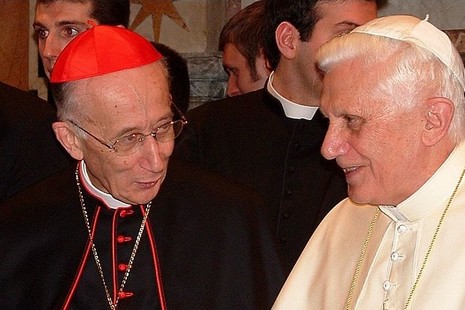
Cardinals petitioned for JP2 fast track
Italian Cardinal Camillio Ruini has told journalists that he was given a signed petition at the conclave that elected Pope Benedict to push for fast-track sainthood for the recently deceasedPope John Paul II.
Vatican City
April 27, 2011

Italian Cardinal Camillio Ruini has told journalists that he was given a signed petition at the conclave that elected Pope Benedict to push for fast-track sainthood for the recently deceasedPope John Paul II.
“The beatification was asked for inside the conclave.†The scoop arrives from an Italian news agency just four days before the solemn ceremony in which Benedict XVI will become the first Pope in 11 centuries to proclaim “blessed†his immediate predecessor.
Cardinal Ruini told AGI news wire how a large group of Cardinals had signed a petition calling on the next pope, still not yet elected, to waive the standing five-year minimum wait for the process of beatification to begin in the case of John Paul.
“Entering the conclave, a letter was given to me signed by many Cardinals who joined in the popular request (heard after John Paul’s death) to begin the process for sainthood right away,†said Ruini, who also served at the time as Vicar of Rome. “The letter was given to me because the Cardinals didn’t know who would be elected in the conclave.â€
SOURCE
Revelation: Cardinals Petitioned For John Paul II Sainthood Inside Conclave (World Crunch)
PHOTO
Giuseppe Ruggirello (Wikipedia/CC 3.0)
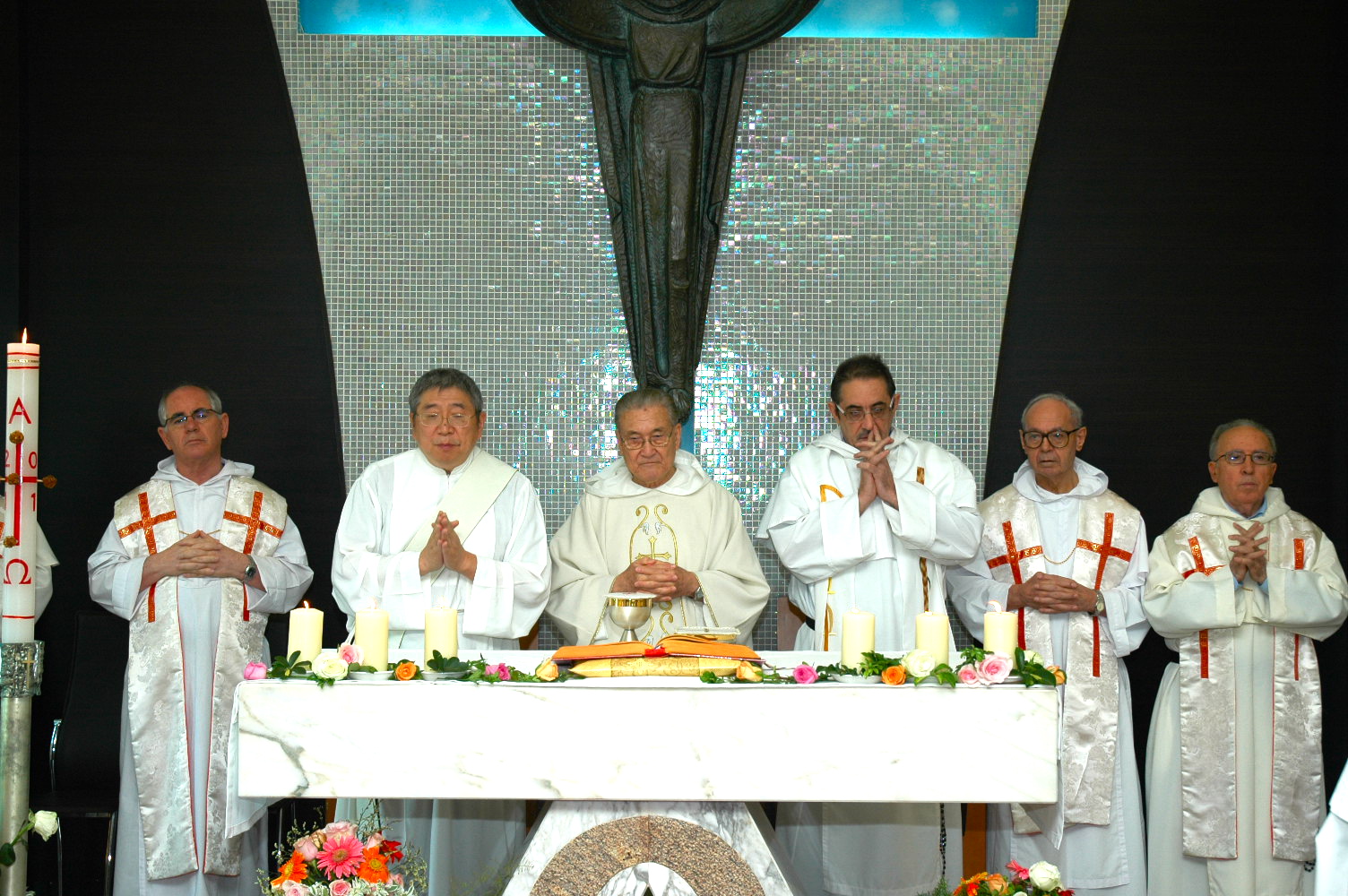
EASTER SUNDAY: RESURRECTION OF THE LORD
“We are Easter Poeple and Alleluia is our song. Alleluia, praise the Lord”
Easter Sunday 1
Easter Sunday 2
Easter Sunday 3
Easter Sunday 4
Easter Sunday 5
Easter Sunday 6
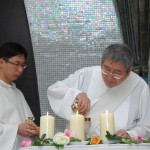
Easter Sunday 7
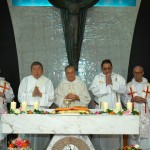
Easter Sunday 8
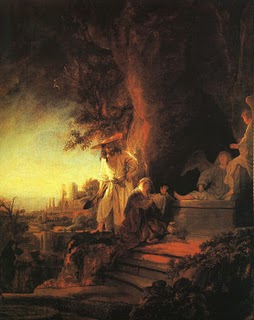
“He is not here… He is risen!†These are the words the angels will use this morning to announce the Resurrection to the women. “He is not here… He is risen!†But what will these few words allow the women to believe? How will this short sentence allow them to pass from sorrow into hope? How will these words of the angels “He is not here… He is risen!†make it possible for them to hope again in life after the immense sorrow they had just passed through?
Indeed, these women’s sorrow was immense and, crushed by this sorrow, they came to the tomb on that early dawn, which would be Easter. They were crushed, indeed, for they had seen the Master, the Lord, Jesus. They had followed him. They had listened to him speak of the goodness of the Father. They had heard him speak to all people, starting from the little ones. They had seen him raise the little ones, and then speak to the learned, to the powerful and tell them that they were wrong to think that, because they thought that they knew God, they could exercise power over the little ones, and tell them what they should know about God and somehow impose on them a way of life. The learned, the powerful had believed that they possessed God. They thus dispossessed the little ones of God. And when the powerful and the learned heard the Son of man, the One who spoke of the Father challenge their words, they arrested him, and then they silenced Him. And then they killed Him!
And the women had seen all this and it is in this sorrow that, on that morning, they came to the tomb in silence, crushed. They wanted to render a last homage to the body of him whom they had followed, the one they loved. And in that silence, suddenly, the angels speak: “He is not here, He is risen. Remember… He told you, He promised you!†All of a sudden the silence is no longer one of absence, an oppressive silence, the sort of silence in which one can say that one is all alone and from which there is no way out. All of a sudden, silence is the lace of the Word. The Word the authorities had wanted to silence resounded anew. This Word is the promise of life above all, of life for all starting from the little ones, starting from those whom people wanted to silence, starting from those that are marginalized. This Word was given to them. From then on, silence was the place where the women listened to the Word of God. Then they looked at the tomb, and the tomb was empty! This empty tomb is a curious sign that speaks of Resurrection. Often, indeed, we do not like emptiness, it frightens us, and it offers no future. Sometimes it makes us believe that nothingness, death, and anguish can take man and enclose him once and for all. We do not like emptiness.
The women looked and the tomb was empty… “He is not here†… From the empty tomb the women understood that it was not an absence that they had to witness, on the contrary, it was the rising of the One who had been crushed by death. It is a new presence that will spring from the empty tomb. The women, then, understood that, contrary to the emptiness that comes from nothingness and death, there was an absence that attracted them to life, a presence that would walk with them for all their life. Silence was inhabited by the Word. Emptiness was filled by the dense presence of The One they loved and that they can love again. But this tomb, like all tombs, was somber, and so, beside the tomb they saw the clothes of the angels, and the Gospel tells us that their vestments were shining with light.
This is Resurrection! We often believe that death, darkness, impasses will have the upper hand on our plans, our projects, and sometimes even on our hope. We often think that everything that darkens the horizon, darkens the world … we will never get out of this! We often think that our destiny is darkness, rather than light. The angels’ clothes are there, and they speak to us, as in the novel by Yasmina Cadra, “What the Day owes the Nightâ€. Night is the crushing of Jesus in death, a crushing from which He rose again. The day is the light of this rising. The angels’ clothes signify that it was necessary for him to pass through death to be crushed and then to live again: He is risen!
When we sometimes think about our resurrection, we imagine that it is for the future, for later on. That resurrection is the future we are promised is true. But today, together with the women by the tomb, we have to believe strongly, otherwise… or better! Resurrection is not something for later on.
Resurrection is first of all that of Christ, and our life begins with the resurrection of Christ.
This is the message of the empty tomb: our life begins with the Resurrection of Christ. The silences that prevent us from telling our story and from believing in ourselves, the silences that enclose us in ourselves, these silences are now inhabited by the life of Christ, arisen from the dead. Emptiness, anguish, the loss of hope which mark our life, because life is difficult … this emptiness, is suddenly filled by a presence, the presence of the living One, He who is our life. The obscurities, those things that sometimes make us stammer and stumble in life … the deaths, the ordeals we face, what makes us think that death is the end of everything, all of this, today on this Easter morning is illumined by the light of Christ. Yes, He is risen, He is no longer here.
He is risen! And where is He? He is in your life, in the life of each one of us; in the midst of our silences and of our words, in the midst of our words and of our obscurities, in the midst of our relations and of our loneliness. He is life!
Saint Paul said, “For me to live is Christâ€. For us, on this Easter morning, life is the life of the Risen Christ.
Happy Easter !!!
Fr. Bruno Cadore, OP
Master of the Order of Preachers
April 23, 2011
From the Gospel of St. Luke proclaimed during Easter, Bruno Cadoré, Master of the Order of Preachers meditates on the words of the angels: “He is not here, He is risenâ€. Beside the empty tomb the women who received this message were able to hope again, and we with them for life begins with the Resurrection of Christ.