NEW YEAR 2012 – We began the New Year half an hour before midnight of December 2011 and January 2012. Before the Blessed Sacrament, all the Members of St. Dominic’s Priory said Good-Bye†to 2011 with their gratitude to God, to one another and to so many wonderful people who accompanied us on the journey of life. Forty seconds before twelve, we ate the traditional grapes and wish one another a Happy New Year. May it be so for us and for all!
On January 14, Fr. Jose Luis de Miguel, OP, arrived in our Priory. Fr. Jose Luis comes after finishing his apostolate in Chile, where he worked for the Kingdom for about twenty seven years. He will be the new Moderator of Studies and also the Assistant Master of Students. A most cordial and fraternal welcome!
CHINESE NEW YEAR – On January 22 in the evening we celebrated the coming of the Chinese New Year with a sumptuous dinner. We had a short program in which all the members of the community and the support staff received from the Prior Fr. Alex the traditional “laisi(red envelope)â€. The Chinese New year, the Lunar New Year, represent the most significant holidays for all the Chinese throughout the world. Known as “the Spring Festival,†it is above all a family celebration. This year of 2012 is the Year of the Dragon, and therefore, a prosperous, successful and happy year. May it be so for all of us working with and among our Chinese brothers and sisters!
GENERAL ASSEMBLY, PAV – On February 11, 2012, Fr. Fausto Gomez, OP went to Rome for the Annual Conference and General Assembly of the Pontifical Academy for Life (PAV), of which he is a member, since 2000. The topic of the Conference was: “Management of Infertility Today.†After PAV Assembly, Fr. Fausto stayed for a few days at our community in Via Condotti and was able to see that our four students pursuing postgraduate studies – three at the Angelicum and one at the Sancta Croce University – are fine and doing very well in their studies. They are Brothers Edmund, Philip and John Bosco, and Fr. Krzysztof Wojciech.
ST PAUL SCHOOL “CLASSROOM 2012 PROJECT†– The Partnership Signature Ceremony for the innovating “Saint Paul School Classroom 2012 Project†was held at the school hall on 28 March, 2012 It was witnessed by Most Reverend Don Jose Lai (Bishop of Macau), Fr. Javier Gonzalez (Provincial of Our Lady of the Rosary Province) and Mr. William Wai (Adviser of Office of the Secretary for Social Affairs and Culture of Macau). The Director of the Education Department, the Principal of Saint Paul School, representatives from Macau University of Science and Technology, Microsoft, DyKnow, Mediasite, Automated, H3C, Lenovo and Hp compromised in partnership for the further development and implementation of the “Classroom 2012 Projectâ€. Fr. Alejandro Salcedo, OP, Principal of the School of Saint Paul and the moving spirit behind the project presented the vision of the “Classroom 2012 projectâ€. He said that the vision was born after realizing that the current traditional approach of the School to learning and teaching was not addressing fully the technological needs of our 21st Century students and ICT was not improving the quality of education of our students. It was visualized, he added, on the requirement to review our curriculum and pedagogical practices to accommodate new learning and teaching styles aiming to develop systems and structures that excite, engage and motivate our students and increase parental involvement. With the implementation of the project the School has passed from the traditional single-source paper textbooks and moved towards electronic based textbooks so that students will be able to reference information from multiple sources. Likewise, the a 1:1 table-pc to student ratio enable students to use their own table-pc at home and at school in a technology-rich learning environment. Most Reverend Bishop Jose, Lai, the Director of the Macau Education Department Ms. Leong Lai and the representative from Microsoft gave an opening speech each praising and thanking Saint Paul School for the innovative, challenging and unique project in Asia and Europe. After the ceremony all guests were invited to the classrooms where they could eyewitness the project in action.
Â
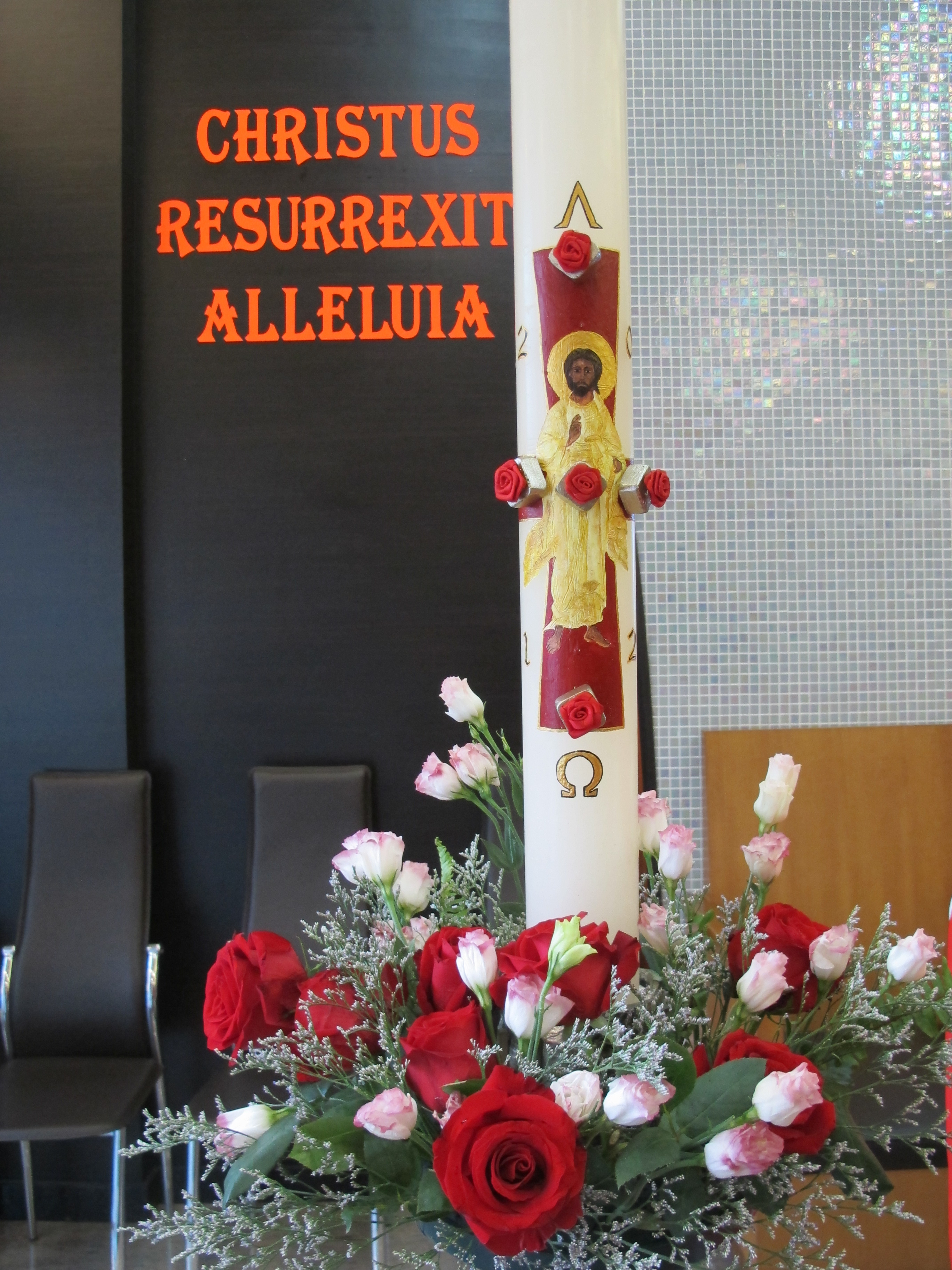
HOLY WEEK AND EASTER – The Priory celebrated the Triduum of Holy Week and Easter (April 5-8) with great solemnity and devotion. We were accompanied at our Masses and other liturgical services by a good number of faithful who filled our chapel. After the Easter Vigil celebration, the faithful attending the Mass were invited to partake of our simple and plentiful table. For its part, the University of Saint Joseph had its Easter Mass on Easter Tuesday with the Bishop of Macau, Bishop Jose Lai as main celebrant and our students as the choir.
Â
USJ CELEBRATES ITS PATRON’S FEAST – The Catholic University of Saint Joseph (USJ) of Macau celebrated the Feast of its Patron Saint, St. Joseph on March 16, 2012. The simple celebration centered on the Concelebrated Mass held at the University’s Speakers Hall at noon. The Eucharist was presided by His Excellency the Most Reverend José Lai, Bishop of Macau. It was concelebrated by seven priests-religious from the Society of the Divine Word (SVD) and the Order of Preachers (OP). About one hundred people, including professors, students and the administrative staff attended the Mass. The students of the USJ School of Christian Studies animated the celebration with appropriate songs and prayers.
 RELIGIOUS MEN AND WOMEN IN MACAU – On April 13, 2012, the religious men and women working in Macau had a meaningful Easter Celebration at the St. Joseph Seminary Hall. The evening program included: The Exposition and Adoration of the Blessed Sacrament; a short talk, and a fraternal agape. As the previous one for Christmas, the celebration was prayerful, serene and joyful. Fr. Jose RuÃz Márquez, CFM, talked briefly on The Birth of Christ: The Acts of the Apostles Yesterday and Today. All the religious congregations present contributed food and drinks to the common table. Our Priory was represented by some priests and student brothers.
OUR VISITORS – Fr. Provincial stayed with us from January 4 to January 23, while he taught Canon Law at the University of Saint Joseph. Fr. Jerome from the community of Binondo, Manila, was with us for a few days in January. Fr. Augusto Antolinez, OP, from the Community in Avila, was also with us a few days in Jan. Luciano Lopez, a well-known Spanish lawyer visited us on January 25 and stayed with us for some weeks. He was a Dominican and loves the Dominican life. Fr. Felicisimo Martinez, OP, lived with us over one month (March-April), while teaching The Trinity and Christology at the University of Saint Joseph. Fr. Secundino Vicente visits us every month to be available for spiritual direction for our students. We are also happy to mention that brothers from the two Dominican communities in Hong Kong and the communities in China visit us from time to time. We were happy receiving some of the brothers who participated in the meetings of the Commission on Formation (April 16-17, 2012) and of the Extraordinary Council of the Province (April 18-19, 2012). Both important meetings were held at our Convent of Saint Albert in Rosaryhill, Hong Kong. (FGB)
(For these and other news and developments you may wish to visit our web page:Â www.dominicansmacau.org )
Preface. On February 29, 2012, representatives of the different religious congregations and institutes met at the SOLT Fathers Residence. Our representatives were Frs. Dionisio Cabezón and José Luis de Miguel. Considering that it is important for us all to know what is going on in our different religious communities and in the diocese, and how we religious men – and women – can help each other and the pastoral project of the Macau Diocese, we present hereafter the minutes of said meeting.
Minutes
Date: February 29, 2012
Time: 15:10
Venue: SOLT Fathers Residence
Present: Fr. Peter Pong Ping Fai SDB, Fr. James Liebner SVD, Fr. Jojo Ancheril CMF, Fr. Matthias Christian SVD, Fr. John Ledesma SDB, Fr. Jose Luis de Miguel Fernandez OP, Fr. Dionisio Cabezon Garcia OP, Fr. Artemio Balana Jr. SOLT, Fr. Franz Gassner SVD, Fr. Martin Daniel CB, Fr. Pedro Balde Jr. SOLT, Fr. Antonio Kim BMC and Fr. Victor Aguilar MCCJ.
1- The meeting started with a Lenten Season opening prayer led by Fr. Victor.
2- The Minutes of the last meeting on January 25, 2012 were read and approved.
It was pointed out that there is a correction of the previous minutes saying that “At present there are ten (instead of nine) Male Religious Congregations in Macauâ€. It is to be added to the list of the previous minutes the “Clerical Congregation of the Blessed Korean Martyrs†BMC.
3- The Agenda for the meeting was presented and approved.
*Election of the directing committee of the Religious Men in Macau
*Organization and Plan for the year 2012
*AOB
4- Election of the directing committee (Association) of the Religious Men in Macau
Fr. Victor explained to the participants the proposal of the previous meeting that is to formally elect a directing committee or Association of the Male Religious in Macau. This Association will allow us to collaborate among ourselves and also to support and collaborate with the Bishop of Macau, with the secular clergy and with the Women Religious in Macau.
Fr. Peter Pong asked about the opinion of the bishop of Macau regarding this proposal of the Association of the Male Religious in Macau. Fr. Pong also informed the participants that he and Fr. Manuel Machado were elected and are members of the “Presbyteral Consultative Council of the Diocese of Macau†representing the Religious.
Different opinions in favor of the importance of establishing this organization were expressed by the participants and it was proposed that the directing committee is composed by Fr. Peter Pong (president), Fr. Alberto Rossa (vice-president) and Fr. Victor Aguilar (secretary).
All the participants unanimously agreed on this leadership.
5- Organization and Plan for the year 2012
It was proposed that the elected directing committee gathers and make a draft of the guidelines for the Association (i.e. bylaws) taking into account the Vision, Mission, Membership, Plan, Activities, etc.
Some aspects to be considered in these guidelines are the following:
* To do some activities together (during the year) with the Women Religious Association in Macau.
* Besides the monthly meetings also other kind of activities (i.e. outings, picnic, etc.) and prayers activities are to be conducted.
* To know more ourselves, our congregations; to create a family spirit and to unite ourselves.
* To discuss together challenges, difficulties and also developments and plans.
* To look for common concerns and real cooperation and collaboration.
* Feast days of each Congregation are to be celebrated and included in the plan and also mutual invitation could help us to know more each other.
* To celebrate together the World Day for Migrants and Refugees.
* For the monthly meetings, we usually visit different communities; therefore the hosting community can share about themselves and their service and ministry.
* To consider the possibility of an inculturation course for those newly arrived in Macau.
* To help the Diocese of Macau and the bishop to make a Diocesan Pastoral Plan.
6- Any Other Business
Fr. Jojo was appointed by the bishop to be the Administrator of St. Joseph Seminary. He is planning to organize a Novena in preparation for the Feast of St. Joseph (March 19, 2012). He is inviting all of us to participate and collaborate during the Novena with the Eucharistic celebration. He will prepare a final schedule for the masses during the Novena and will request our support and collaboration. We thank the SOLT Fathers for their kind hospitality of today’s meeting.
7- Next meeting
Our next meeting is scheduled for March 28, 2012 in the Comboni Missionaries (MCCJ) Residence.         Following the recommendations of the participants the schedule of the monthly meeting is for the last Wednesday of every month.
8- The meeting adjourned at 16:15.
Fr. Vic Aguilar, MCCJ
Postface. On March 10, 2012, the Bishop of Macau, His Excellency Most Rev. Joseph Lai, DD called a meeting, held at the Cathedral, of different representatives from the Parishes, Religious Men and Women and Lay Movements. The purpose of the meeting was to present and discuss the new Pastoral Project of the Diocese and the renovation of the Catholic Center, which shall house the different centers and activities of the Diocese. Certainly, something is moving! This is good also for us Dominicans in Macau, for we shall have a golden opportunity to participate and contribute towards the implementation of pastoral programs directed to a renewed evangelization in Macau. The representative of our community to this meeting was Fr. Fausto Gómez, OP.
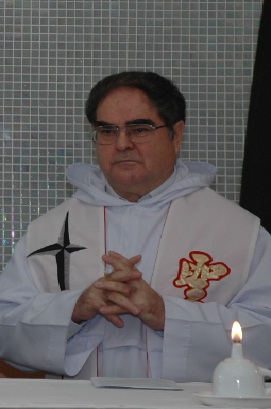
THE CHALLENGES OF FORMATION, MISSION AND INTERCULTURALISM
Interview with Fr. Javier González, OP (Jan 2012)
Fr. Javier Gonzalez, OP, is a Dominican Priest from Spain. Born in Acera de la Vega, Palencia (1949), and ordained a Dominican Priest in Madrid in 1973, he is at present the Prior Provincial (since 2009) of the Dominican Province of Our Lady of the Rosary. He is also a professor at the University of Saint Joseph School of Christian Studies, Macau. He holds a Licentiate in Theology from the Institute of Theology, San Pedro Mártir, Madrid (1974), and a doctorate in Canon Law from the Angelicum University (1981). He was a professor of Canon Law at the Faculty of Canon Law of the University of Santo Tomas, in Manila, from 1983 and the Dean of this Faculty for nine years. At present (January 2012), he is staying at our St. Dominic’s Priory in Macau and teaching at the USJ School of Christian Studies.
(Our questions to Fr. Javier are in bold-italic letters.)
Â
Fr. Javier, it is good to have you here at St. Dominic’s Priory, in Macau. From Hong Kong, where you reside at the Province’s St. Joseph House in Kowloon, you visit this house of formation often. How important is formation for our Prior Provincial?
Formation is of prime importance for me, as it should be for any Dominican. I mean a formation that is integral and comprises the whole person. The reason is simple: Formation is at the service of mission and of the proclamation of the Gospel, and henceforth essential for any Dominican –members of the Order of Preachers – and with more reason for us missionaries –members of Our Lady of the Rosary Province. St Dominic wanted the best education possible for his children. So do we today. That is why, like parents who generously invest in their children’s education, the Province of Our Lady of the Rosary is currently doing a great effort in providing the best education possible to the numerous young people presently engaged in the various stages of their institutional formation. As Provincial I sincerely appreciate such generosity, both at the personal and the institutional levels, and fully support such on-going trend of the Province. Similar importance and diligence should be attached also to the continuing formation of the brethren, an intrinsic requirement of religious consecration.
This time you will be with us for a longer period. For three weeks. Main reason: because you are teaching Canon Law at the University of St. Joseph School of Christian Studies, where our Dominican students (20 of them) pursue their institutional studies. How important is it today the intellectual dimension of Dominican formation?Â
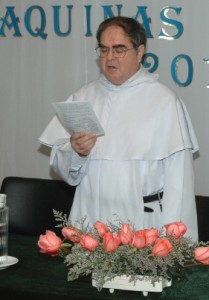 Dominican formation is intellectual by its very definition. Doctrinal by nature, it has always been associated with study, which in the Dominican tradition appears as a “sacred obligation†and as one of the essential elements of Dominican spirituality. It is not difficult then to understand why study has enjoyed such prominent importance among the Dominicans. Paraphrasing Humbert of Romans, study is not the end of the Dominican Order, but is extremely necessary to secure its twofold end, namely, preaching and the salvation of souls; for without study neither can be achieved.
My teaching experience in Manila for nearly 30 years has convinced me that this academic activity, going hand in hand with study, is very much in line with the Dominican charism and apostolate. For study, consisting not just in knowing many things (information), but rather in knowing them well (reflection), is basic in the harmonious formation of any person. Being a learning process, I cannot conceive any genuine formation that is not truly intellectual, at least in its origins. On the other hand, it is my conviction that learning is a liberating experience: nothing probably gives so much freedom to a person than a good education. The reason is obvious, for how can our will take free decisions unless it is first knowledgeable of the matter to decide upon? I consider the scholastic philosophical principle nihil volitum quin precognitum (“nothing is willed unless it is foreknownâ€) a travelling companion that finds realization continually in our everyday life. These premises alone, leaving aside other dimensions of Dominican study, make me understand the primary importance attached to the intellectual dimension of formation in our Dominican tradition.
On behalf of the whole Province of Our Lady of the Rosary, you will inaugurate on January 28, 2012, the Feast of our brother Saint Thomas Aquinas, the Centre of Institutional Studies of the Province (to be called “St. Dominic Center of Studiesâ€), recently approved by the Master of the Dominican Order, Fr. Bruno Cadoré, OP. What is the specific significance of this Center of Studies for the Province?
A.: The establishment of our “St Dominic Center of Studies†in Macau on January 28 of this year 2012 is a historical event that will be kept in the annals not only of Our Lady of the Rosary Province, but also in those of the Dominican Order and, I dare to say, in those of the Catholic Church in Macau. Centers of Studies have always been attached great significance in the Dominican tradition to the point that it is mandated that each Dominican Province is to have its own Center(s). We, the Province of Our Lady of the Rosary could not be an exception: we have always had one and even more than one at a given time in history, in different parts of the world (Spain, USA, Hong Kong, Philippines…). Our latest Center of Institutional Studies was in Madrid (“San Pedro Mártirâ€) and for the past 50 years has fulfilled a splendid mission in the formation of this present generation in the Province. But today the situation has changed and our provincial studentate is in Macau. This explains why, in an attempt to provide new solutions to the new situation, our latest Provincial Chapter (2009) sought the establishment of a Center of Institutional Studies “in the Macau-Hong Kong region†(cf. ACP, 160). Such was the petition that I, on behalf of the Province, submitted to the Master of the Order, Brother Bruno Cadoré, once he had approved, on the 1st day of July 2011, our new Ratio Studiorum Particularis. It was a joy to see that hardly three weeks later (on the 4th of September) we had already a Decree from him establishing “the Center of Institutional Studies for the Province of Our Lady of the Rosary in the Convent of St. Dominic, Macau in China.â€
           In answer to the question on the specific significance of this newly created Center for the Province, three main points come to my mind that speak of its vital significance: (1) In the first place, it addresses our academic needs at this moment in history, bound as we are to provide our numerous students a basic philosophical-theological formation, complemented with subjects related to Dominican spirituality and tradition; (2) In the second place, this Center is called to become a reference point for the Province in this part of the world in fulfilling the important tasks of promoting scientific learning and of keeping us in touch with other academic institutions and with the university world in the Asian region; and (3) Finally, this Center has also for us an added significance, with practical connotations: to serve as a coordinating platform to oversee the studies of those students of ours who are taking their institutional courses in other nearby places, serving likewise as an instrument to facilitate transcript of records, accreditation of studies, required documents for visa purposes, etc. The establishment of this Center is indeed, apart from a historical event, a much needed institution by our Province at this point in history.
Fr. Javier, how do you envision St. Dominic’s Priory and St. Dominic Center of Studies as part of the Diocese of Macau, as participants in its pastoral project and planning? How do you see our future here regarding our pastoral presence? Â
 It is for me clear that the presence of a religious institute in a place has to be accompanied by concrete fruits of dialogue and collaboration with the local church. Thus, for as long as we Dominicans are present here in Macau, we are called not only to faithfully accomplish our main apostolate which is the witnessing to our consecration, but also to get increasingly involved in the pastoral life of the diocese. Modesty aside, something is being done already: The help extended by our student-brothers on some important religious events of the diocese; the pastoral assistance provided to Sisters (Masses, confessions…); the teaching by our brothers at St Joseph’s Catholic University, School of Christian Studies; the administrative-educational presence at St Paul’s School; etc., are important missionary activities which, together with our physical presence as an ecclesiastical institution, contribute to support the mission of the Catholic Church in Macau.
Obviously, much more could still be done, and hopefully will be done in the future. Thus it is not surprising that the current Bishop of Macau may expect some greater Dominican involvement in the pastoral work of his diocese. However, the current unique situation of Macau makes this involvement somehow difficult in practical terms, as it also demands a lot of prudence on our part… The language (Cantonese) is by itself another great obstacle: If learning Chinese may result difficult to our young student-brothers who are struggling with their English while completing their institutional studies, for us, grownups, it is simply impossible. Far from seeing in this fact an excuse, I see rather an opportunity to learn a profound lesson in humility, as our apostolate is reduced in many instances to mere presence. Another important point is the urgent need which our theology students have of some pastoral exposure as part of their formation training; this urgent need alone calls for a greater involvement of our Dominican brethren in the pastoral life of the diocese, and even for a stable work of some brothers in Macau. These issues are new and requiring proper attention.
There is a considerable number of members of our Province pursuing complementary or post-graduate studies in different cities of the world: in Hong Kong, Manila, Seoul, Bangkok, Rome, Madrid, Avila… Why do you send them to so many different countries? What is the point?Â
Things which seem to be “extraordinary†in other Provinces of the Dominican Order are “ordinary†for us, members of Our Lady of the Rosary Province, due to our unique configuration. The mentioned fact of having students pursuing studies in different cities of the world (Macau, Hong Kong, Manila, Seoul, Singapore, Yangon, Rome, Madrid, Avila…) is one of them. The reason is because of the international setup of our Province, currently present in twelve different countries. Having religious houses in those mentioned cities (and in others) with the possibility for our students of pursuing further studies and of obtaining academic degrees, it is then normal that we take advantage of it and send some of our students there. The additional reported benefits of our young brothers´ presence in those places are not less important: Enrichment of the local communities, learning of languages, knowledge of the Province, exposure to an intercultural environment, etc.; factors all these quite decisive in the present juncture of our Province.
The Dominican Province you lead is the missionary Province of the Order of Preachers. What is specific in our Province regarding the current challenges of mission?
The Province of Our Lady of the Rosary is truly unique in the Order and represents well the missionary dynamism that ought to be present within the whole Order and within the Church. Essentially missionary as it is, our Province has some specific elements which are not found in other Dominican Provinces, like for instance its non-territoriality, its international structure, its centralized organization, etc., all of them in order to better serve its missionary objectives. Even the promise added to our religious profession “to go to the missions of the Province if required by the Superiors†is uniquely ours; and although it adds nothing to our consecration, however, it is an important reminder of our missionary call, whose answer requires openness, great love and readiness to leave behind mother and father and homeland for the sake of the Kingdom. The former Master of the Order told us concisely: “Your Province exists for the mission; and the commitment to the mission urges you to overcome narrow provincialisms.â€
Thinking in the line of our current missionary challenges, it is a fact that for the past few years the Province of Our Lady of the Rosary has become more “international†and “multicultural†than ever because of the vast prism of nationalities where its new members come from. The great missionary challenge of interculturalism has made its presence felt in our midst, putting to a test our capacity of living together with brethren from different cultures. Experience tells us that such fraternal life in common is not easy due either to differences in character, linguistic barriers, human limitations, misunderstandings, or simply selfishness. The only alternative left is to assume the positive values existing both in ours’ and in other cultures, and to purify them in the light of the Gospel of Jesus Christ. This Gospel which all of us, missionaries, are to announce throughout the world.
The Province of Our Lady of the Rosary is composed of members from different countries, including Spain, the Philippines, Japan, China, Taiwan, Venezuela, Korea, Myanmar, and Vietnam. How are you facing the growing challenge of interculturalism? With so many cultures intertwined, is it difficult – if not very difficult – to shape fraternal communities?
Difficult, very difficult, it is; impossible, not. Miracles do happen and I believe they are actually happening in the increasing number of our communities composed of members from different countries. I am not naïve as to think that genuine intercultural communities may just happen by chance or by simply putting together under the same roof brothers from different nations or cultures. Not at all; a true intercultural community needs to be consciously created and intentionally promoted; it requires some basic personal attitudes and a particular spirituality. Prayer, forgiveness, active patience and time are only some of the key elements in this process. For allowing the different cultures of our community members to interact with each other, enriching the individuals and the community as a whole, is indeed a lengthy and laborious process.
How am I facing the growing challenge of interculturalism? Honestly, I could not imagine ten years ago that interculturalism was going to become the main challenge of the Province at this point in history. But it has become. And providentially, I should say. My conviction is that this challenge has to be seen (and lived) as a GIFT, not as a threat! That is why there is on our part the serious obligation to look to the future with optimism, and not to give up in our intent to transform our multicultural communities into intercultural ones. Some of our brothers may think that this is an impossible dream; I understand and respect their opinion, but I do not share it. Besides, the Province as a whole represented in the Provincial Chapter saw the current pluricultural reality of the Province as an invitation to the brothers to live together in unity and mutual loving acceptance “in a world hit by divisions and differences, broken by excessive nationalism, ethnocentrism, racism and other forms of discrimination which lead to tensions in human relationships†(ACPHK 2009, n. 110). Living intercultural relations is at the core of the mission which we, as members of a missionary Province, are called to bring to fulfilment. Along with the grace of God, this is also the best testimony to our strength and missionary work.
Does our Province have plans to open other places of mission in the near future?
Yes, apart from consolidating and expanding our presence in some of the countries where we currently are, particularly in Myanmar, there are also plans to soon open a mission in East Timor. In saying this I am not revealing any secret. Just two months ago, at the beginning of December, 2011 I received a letter from the Master of the Order, Bro Bruno Cadoré, in which he formally asked me and the Province of Our Lady of the Rosary to take the responsibility in bringing the presence of the Order to the land of East Timor. He asked also the Brothers of the Asia Pacific Region to help us to make this Mission of the Order in East Timor successful. On my part, I humbly accepted the responsibility hoping that with God’s help we may carry out this important task with fidelity to the Order. Without promises of any kind at this very moment, since I have not yet been there in East Timor, I assured the Master that we will soon try to do something about it. He gave us his blessing with highly encouraging words: “May the Blessed Virgin Mother of the Holy Rosary, St Dominic and the Holy Martyrs of the Province intercede for you and help you to continue to carry the Missionary Spirit of the Founders of the Province into the New Frontiers of the Order. “
In all the General Chapters of the Order and of our Provincial Chapters, there is a consistent recommendation for greater and deeper interprovincial collaboration. How do you see the current collaboration of our Province with other Dominican Provinces, in particular with Provinces in the Asia/Pacific Region?
I think we are in a process of integration and of good relations with all the Dominican Provinces or entities. Our recent hand-over of the Basilica of Wan-Chin to our Chinese brothers in Taiwan and our welcome to them in Hong Kong; the integration of the Australian novices with ours for several years now; our acceptance to other entities of the Order in those territories where the Province is established; our generous hand extended to the Province of Chile; the sending of our Venezuelan brothers to study to the Province of Colombia; the collaboration with the Provinces in the Iberian Peninsula in the JIP project; our excellent relationship with the Vietnamese Province translated in mutual appreciation and scholarships; the good understanding with the Province of the Philippines, where some of our brothers are learning English or taking post-graduate studies; the many particular instances of collaboration with the Dominican family within the Vicariates, etc. etc., are only a few examples that illustrate this fact. Obviously there are also some shadows or indications that much more could and should be done. That is why the Province in its latest Provincial Chapter urged the promotion of dialogue among all Dominican entities and the collaboration in the mission. Indeed, dialogue, planning and collaboration with the different branches of the Dominican Family, both at the level of Vicariates and at the Provincial level, is necessary. In last year meeting of Asia-Pacific Provincials in the Philippines, in the presence of the Master of the Order, I requested the Provincials present there to send some formators to work with us; I received enthusiastic promises, but their fulfillment have not yet materialized. In this matter, like in most others, deeds are what count, not just good words or beautiful reports!
Last question: Would you like to make other comments?
I enjoy having given this opportunity to share some thoughts with others; and for this my gratitude goes both to you who advanced the questions and to the readers who may have the patience to read my answers. I know others would have answered the same questions in a much better fashion than me, expressing even different points of view on the same matters tackled. How I wished to be enlightened by them! After all, holding the Provincial’s office does not carry with it the prerogative of being right. Thanks God in the Dominican Order most of our decisions are taken democratically through councils and chapters, and that alleviates my responsibility as Provincial and somehow guarantees God’s providential guidance of the Province in these challenging moments of its history.
Having said this, instead of adding more comments regarding formation, mission, etc., I prefer to end with a word of encouragement: Let us walk in the Spirit and aspire to perfection, which to my mind consists not so much in doing great things for the Lord as allowing Him to do great things for us. Holy be His name!
Thank you very much.
Dear brother Javier, thank you very much for your open and candid answers. It is good to walk together in these exciting times, full of dangers and opportunities for working for mission – for the Kingdom. May we, united, turn the dangers into opportunities for preaching the Gospel today in our different cultural, historical and sociological contexts! (Fausto Gómez, OP)
Inauguration of St. Dominic center of studies
on the feast of St. Thomas Aquinas
January 28, 2012 10:00 in the morning
St. Dominic’s PrioryÂ
Avenida de Sidonio Pais, 39-41 Macau (SAR)
INVOCATION
 Student brothers
OPENING ADDRESS
 Fr. Javier Gonzalez, O.P, Prior Provincial, Our Lady of the Rosary Province Our Lady of the RosaryÂ
READING OF THE DECREE ESTABLISHINGÂ THE CENTER OF INSTITUTIONAL STUDIES
 Fr. Alejandro Salcedo, O.P, Prior, St. Dominic’s PrioryÂ
LECTURE:“THE PLACE OF STUDY IN THE DOMINICAN ORDER”
 Fr. Fausto Gomez, O.P, Provincial Regent of studies
RESPONSE AND MESSAGE
 Fr. Jose Eleuterio, USJ Coordinator, School of Christian studies.
ClOSING SONG
 Student Brothers
MASS IN HONOR OF ST. THOMAS AQUINAS
 H.E. MOST Rev.Jose Lai,DD, Bishop of Macau
READING OF THE APPOINTMENT OFÂ THE MODERATOR OF STUDIES
 Fr. Jarvis Sy, O.P, Master of Students
PROFESSION OF FAITH AND OATH OF FIDELITY
 Fr. Jose Luis de Miguel, O.P, Moderator of Institutional studies.