
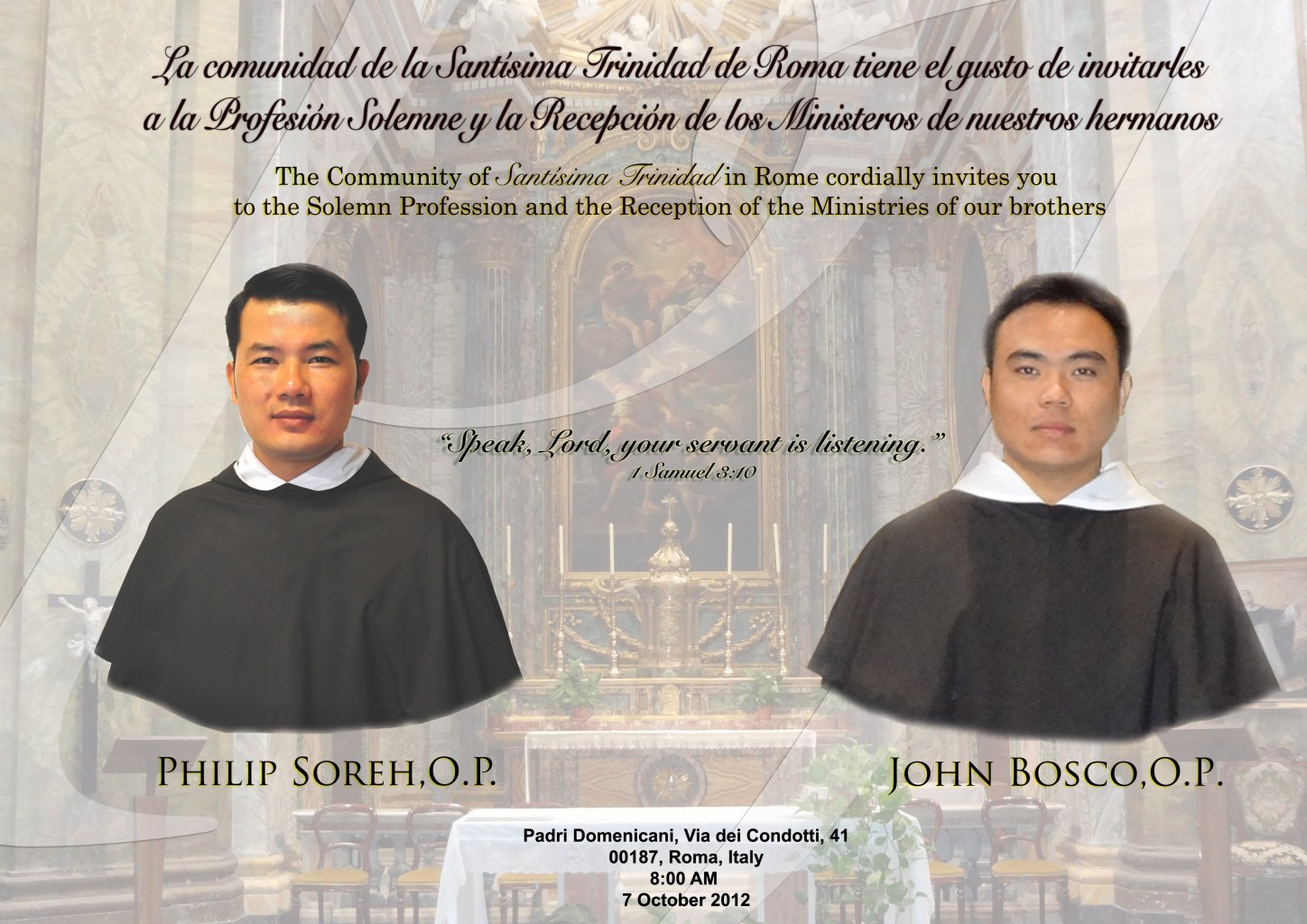
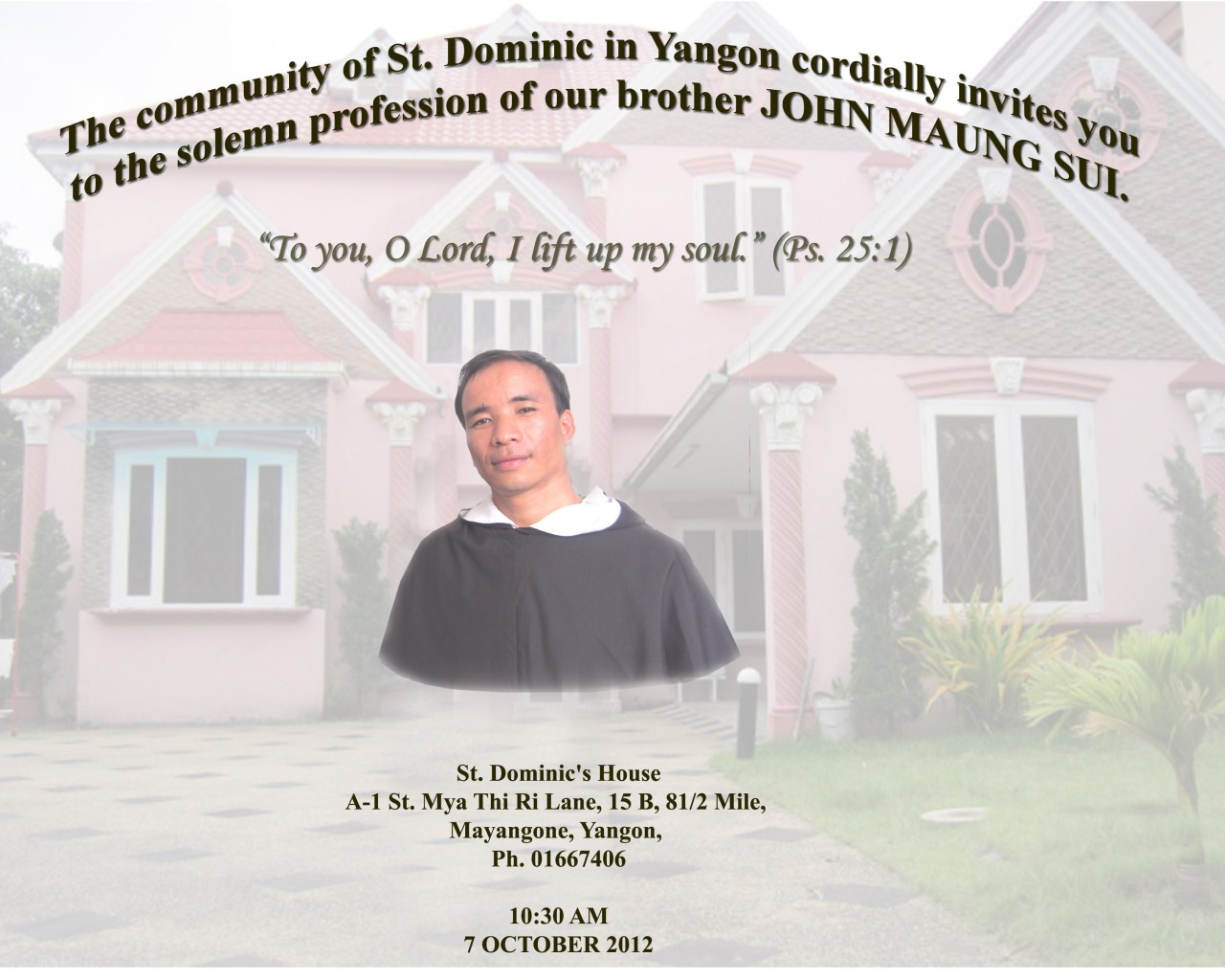
THE INVITATION CARD OF SOLEMN PROFESSION FROM ROME
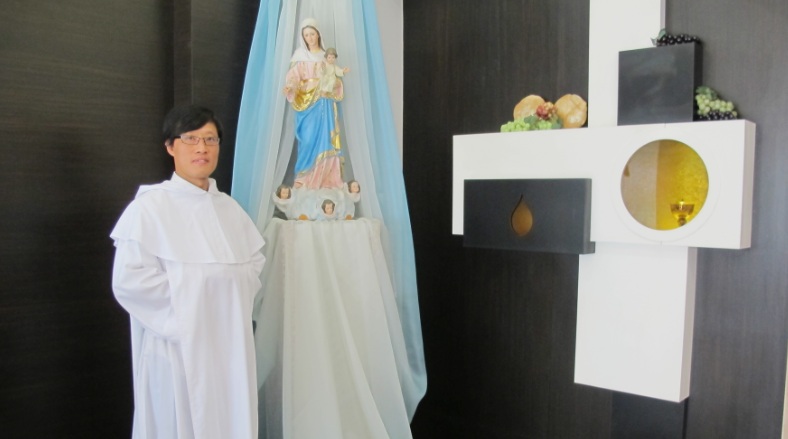
 Hereafter we publish two accounts on the same terrible accident of one of our Dominican students, Korean brother Andreas Kim, OP. The first, from Fr. Javier Gonzalez, OP. Fr. Javier, the Prior Provincial, lived the nightmarish experience with the Community of St. Joseph’s House where the Brother was a member last summer. The other account comes from Brother Andreas himself entitled “When I was missing for Five Days.†Miracles can happen and do happen!
LATEST NEWS ABOUT OUR KOREAN BROTHER ANDREAS KIM
 Greetings! Good news! After several days searching for him, our Korean Brother Andreas Kim was found yesterday, August 27, by the Hong Kong police, with the help of two helicopters, and transferred to the nearby Eastern Hospital of Chai Wan (Hong Kong), where he is now recovering in the ICU (Intensive Care Unit). He is in good physical condition, fully conscious and talkative. Everybody considers him being alive a real miracle. For the information of everyone, this is what happened:
1. Brother Andreas Kim, a second year Theology student, has been in Hong Kong for the summer months of July and August. As he normally did once a week, he went hiking on Thursday 23 of August. He left the house at 9:30 in the morning. The fact that he did not return in the afternoon of that day already worried us. But the alarm in the community came when he did not appear in the chapel the following morning for the Mass and then breakfast… It was the moment when we discovered that he was not in his room. We waited until lunch time for news about him. Since there was none, we started getting the feeling that something tragic might have happened to him. Thus we took the decision to inform the police about the incident. Immediately after my call that afternoon of 24 of August, the police came to our house in Kowloon and started gathering information from the members of the community and searching in his room for clues to locate him. Then I accompanied them to the police headquarters to file a detailed missing report of him. Since that very moment, and for the following days, the Hong Kong police started a frenetic activity searching for him: three different teams from the Regional Missing Person Unit kept coming to our house again and again to get any kind of information about him, working untiringly counter clock with great professionalism and dedication. As the days were passing without news about our Brother, no means were spared by them to search for him: helicopters, trained dogs, searching teams going around the mountains, etc. Even our Students Brothers and Novices joined them a couple of days… In the meantime, many people, both here at home and abroad, were praying hard for a happy ending of the whole story, hoping against hope even as the days passed without any result: Friday, Saturday, Sunday, Monday…, and we tried in vain to lead a normal life. Our Calvary ended when on Monday 27 at around 4 in the afternoon I received a call from the police telling us that they had spotted our Brother Andreas from a helicopter, recovered him alive, and transferred to a hospital where he was being given emergency assistance… Jumping with joy, Fr Jose Luis and myself went immediately to see him and meet some of the police rescuers who were waiting for us at the emergency room. As we reached the place, we could see in their faces the same joy we had experienced upon knowing that our Brother was alive. They were the first ones to come toward us and embrace us while we expressed to them our sincerest appreciation for the extraordinary work that they had done and for having brought us back our Brother Andreas safe and sound. The rest is easy to imagine: while he remains still in the ICU, brethren and friends keep visiting him to share the same joy and emotions as well as the same need to thank the Lord for having listened to so many prayers…
2. What happened to our Brother Andreas during those five days? This is what now many people are asking us. For uniform and objective information I describe it here briefly, paraphrasing the chronicle of our house:
On 23 August, Thursday, Andreas Kim fell off the cliff while climbing and taking photos in the mountain ranges of Shek O. According to him, he fell backwards around 7 meters down a cliff. Fortunately his knapsack saved his backbone from greater injuries. He was unconscious for a couple of hours, broke some of his ribs and vomited blood. For two days he lied there in the wilderness of Shek O forest and could not move at all. On the third day, he could walk a little and reached a stream to drink some water. It was the water that saved his life. (He had only two oranges with him.) As those mountains face the sea, he made signals to the boats but to no avail. On the fifth day (Monday) he could walk a little more and make signals to the two helicopters from the Hong Kong police searching for him until they spotted and rescued him. It was a miracle because the police got only recently the information that he might be in the far away Shek O mountain ranges. Initially everyone thought that our Brother went to one of the nearby mountain ranges in Kowloon, where the police helicopters and our Brothers were searching for him.
3. Andreas is recovering very fast. He will remain at least for a few more days in the ICU unit of the Eastern Hospital. When we first saw him there he seemed fine, a little thinner, haggard, apologetic, happy and grateful. Many people had prayed for him; and as one of our fervent parishioners says, “Prayer work miracles.†Truly a miracle is how even some police officers describes the whole operation. Once more we have to mention the impressive work done by the Hong Kong Police Missing Person Unit. They worked round the clock for this rescue mission with absolute commitment, dedication and with a sense of service that has left us edified.
4. Andreas’ family was informed when he was missing and now they rejoice to hear the good news. We, too, rejoice with them and share this bit of information with all of you so that our joy may be also yours and together we may thank the Lord for all his goodness to us. Let us celebrate life! Thank you for your prayers.
Fr. Javier González, OP
August 28, 2012
St. Joseph’s House
Kowloon Tong, Hong Kong
WHEN I WAS MISSING FOR FIVE DAYS
Â
Someone said, “Hiking is a companion with one`s own self and provides thinking for one´s  own lifeâ€â€¦
  During the last summer vacation, the Macao brothers stayed in Hong Kong to study the English language and liturgical music. I was one of them, and availed of the opportunity to practice one of my favorite sports, hiking up in the mountains, 6-7 hours every Saturday.
 On Thursday, August 23, after 5due permission was given, I left the convent at around 9:30 a.m., and boarded the bus, destination Shek O, in Hong Kong island, place of my adventure.  I got off the bus at 11: 00 o´ clock, and then walked for half an hour and I entered into a thorn-bushy forest, and after 30 minutes arrived at the stone coast and climbed up the rock. I found place to rest, ate a couple of oranges and drank water. Around 12:45 I moved to Shek O beach. After walking approximately 15 minutes, I came to a very rocky place, with a great amount of stones gathered together, which seemed to me quite slippery. As I stepped on them they moved, I lost my stability, and in a moment I was slipping down, without anything within reach to grasp with my hands.  I was afraid, because previously I had seen the profile of the rock, and it was by no means small, and of a considerable height. As I was falling, I instinctively buried my head in my arms. That was all.
 When I regained consciousness, I had difficulty in breathing and blood was flowing from my throat; I felt a very intensive pain all over, but particularly in my left lung. Soon I realized that I could not move. Immediately I asked myself about my name, the date and the place I was in, etc. My head was all right, no problem. I was still alive! After uttering a prayer of thanksgiving to God, I thought:  if my lungs are torn, or I have broken my ribs, that can be overcome. But if my spine or leg bones are broken, maybe I will not be able to move.  I tried to move. However, I was unable to do so.  I checked the time on my watch, 3:20 p.m. Then, I told myself: by tomorrow or the day after tomorrow I will be able to move and escape from this place…
  My first night, I passed it thinking about all things of my life from childhood to the present. It had been a happy life...On the Second day, still early morning, I tried to move, but I failed. I had to wait until afternoon, when I tried again and could move my legs and seat down. Thanks be to God, my legs, spine, and other bones are not broken, I thought. Then I tried to stand up.  However, I felt a very sharp pain all over, so I just kept that position and checked my bag:  many things were broken and there was no more water left. The night was cold. I prayed to God: “Lord, grant me, please, the strength so that I can escape from here tomorrowâ€.
 On the early morning of the third day I tried several times to stand, until finally, I did it. Immediately, I moved very, very slowly to find water, for I was extremely thirsty. I had noticed before, that the birds had built their nests on the branches of the nearby trees. That was surely a good signal for me, for they do it near to a place where water can be found. After several attempts, there it was: water from the mountain! I drank like a person out of his mind… Then I washed my whole body and kept some more water for the future.
 That day was Saturday.  I was in a hurry to go back home. So I started climbing up, at times crawling, in the direction of the hill of thorn-bushes. However, after a few hours I stopped, due to very intensive pain and also to the state of my physical condition: I was already exhausted, and by this time, with no more water. The hill seemed to me much too far to be reached.
 I had to change my plan and went back to the previous place, near the water; built “my nest†with an umbrella and plenty of little branches which I wrapped around my body as an extra clothe, and took muscle pain medicine for the night, to keep my physical strength. I thought of taking a different way, which would mean a shorter distance and avoiding to go back by the same way I had taken before, when I felt down, which now  seemed impossible for me to cross. I thought, “if I fall again, that will be the end of my lifeâ€. At that moment, my prayer went to my Community and our brotherhood.
 The fourth day I could move only a little and sideways through the thorn-bushed forest, advancing slowly, and with great difficulty. When the place became too difficult, I just lay down on the bushes, rolling my body and moved again.  It took me the whole day, but I could not reach the place I was going to, for I felt extremely tired, my “extra clothe†was by now torn, and my skin was, because of the thorns, badly hurt all over and bleeding. So I leaned my body against the “thorn-filled-bushesâ€, praying God to help me find water tomorrow….
 Fifth day:  August 27.  I thought I had to escape from there, at any cost, because my body was becoming noticeably weaker and the speed of my pace slower. I moved away, but at noontime I had not yet been able to find any water. After I rested for a very little while, I moved on again and found water. I shouted with all my (now little) strength: “Alleluiaâ€! Fortunately that place connects to the rock. I was nervous, because that was a very dangerous rocky place. It took me a long time to cross it. Finally I got through to the other side, and there I sat for rest.
  Around 4:00 p.m. I heard the sound of a helicopter. Then I saw the helicopter coming in the direction where I was. But I thought that it would be just one of the Hong Kong Military Police´s Helicopters which was practicing and I did not make any signal. However, after a few minutes the helicopter overflew just over my head. Immediately I signed with my umbrella and the helicopter approached me, signaling that they had seen me and that I should wait there, meaning that they would be coming back. Some five minutes later, the rescue helicopter arrived. One man jumped down with a long wire, to where I was. Only some minutes later, I was moved to the Eastern Hospital.
 I had a CTScan, and fortunately my left lung was only slightly damaged, but not crushed, two ribs were disjointed; and only some little parts of my bones were cracked or swollen. When I was brought to my room, I was met by Fr Javier, our Provincial, and Fr José Luis de Miguel. At that moment I was thinking and feeling about our fraternal life. And then I heard from them, that other brothers were looking for me up in the mountains and praying for me.  After one week I was discharged from the hospital. Fr Solis and Fr Raymond brought me to Rosaryhill, where I stayed for 10 days. Then, I came back to Macau where all the members of the Community welcomed me with fraternal embraces, including Fr Alejandro, our beloved prior.
 Through this experience my vocation has become stronger, particularly regarding prayer, study and community life. I thank so much all the members of our Province. I also want to thank the Hong Kong Police of the Persons Missing Unit, for as I have been repeatedly told, they showed an admirable dedication, professionalism and a very strong sense of responsibility. Thanks to you all. And, especially, I thank you, my God…
Bro. Andreas Kim, OP
September 2012
St. Dominic’s Priory, Macau
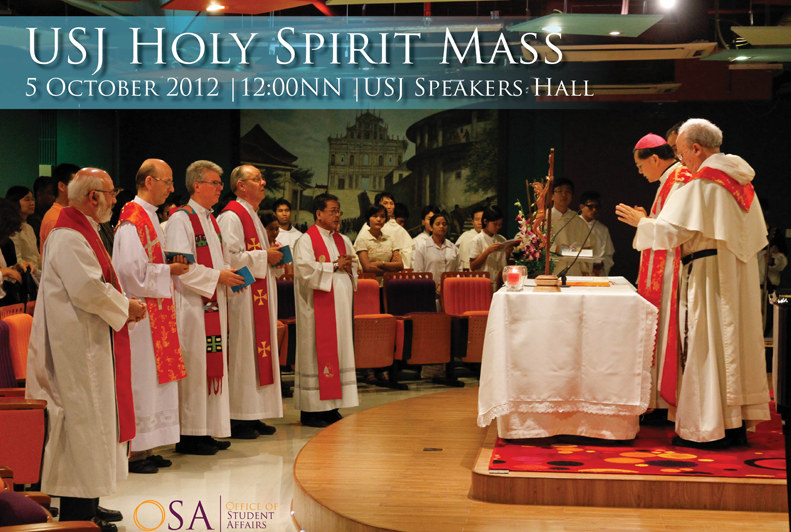
The Mass of the Holy Spirit is an opportunity for the entire University Community to gather in prayer at the beginning of the academic year. Due to the availability of our Bishop, the Mass of the Holy Spirit will be celebrated on Friday 5 October, instead of October 4th as it was announced, at 12:00pm at the Speakers Hall.
Our Rector Fr. Peter Stilwell invites you all. Staff and Students are exempted from classes from 12:00-13:00 on October 5th for this purpose; all scheduled activities during this time are cancelled/postponed. Planned class/activities will resume afterwards.
My very dear brothers and sisters,
Â
“Where are you going, Sir Henry?” “I am going to the house of Bethany, he replied.” As Blessed Jordan of Saxony recounts: When Brother Henry left his lodgings and one of his companions asked him where he was going he answered, “To Bethany.” He did not understand Henry’s reply after posing this question to him. Only later on did he understand, when he saw Henry enter Bethany, which means “the house of obedience.” It was Ash Wednesday and Brothers Henry, Leo and Jordan were entering the Order, the “house of obedience.” At that moment and in that place, while the brethren were chanting, they presented themselves before them, much to their surprise, and putting off the old man, they put on the new, thus fitting their actions to what the friars were singing. (Libellus 75) In this way, our brothers situated their vocation as Friars Preachers within the Paschal mystery and the journey towards Easter and rooted it in the common celebration of the liturgy. I am writing this letter to you about our common celebration of the Liturgy of the Hours (ACG Rome 2010 n° 79). In so doing, I am mindful of this moment in the life of our first brothers and of our own experience as we begin that part of “Ordinary Time” which follows the great Feasts of Easter and Pentecost. I shall neither dwell upon the necessity of our celebrating the Liturgy of the Hours together, nor upon our promise to do so. Each of us knows the Constitutions of the Order and the Letters of Promulgation for the different
liturgical books of the Proprium OP. What is more, each of us is aware of what it means when there is a lack of commitment to our common prayer. It is by building our regular life, personally and communally, upon this common celebration that we choose patiently to build the unity of our communities rather than to submit to the arbitrary subjectivism of the individual. Also, I have no wish to dictate the form of this celebration. Travelling around the Order the last year and a half, I can see how our customs differ. And yet, I can also see how much the unity of a community and a province can be fostered when care is given to our liturgical prayer. There is no doubt that we need well-prepared celebrations. We all know the delight of a beautiful liturgy, even when it is simple. At the same time, we all are painfully aware of the exhaustion, disappointment and tension that arise when our prayer is celebrated with excessive formalism or extreme casualness. At such times, the heart and reason for our celebration risks being displaced, causing us to turn our focus away from Christ and toward ourselves. Instead, I would like to make two simple, yet radical points. The first is that our common celebration of the Hours is like a series of landmarks that direct our lives as we seek to give them over to our mission of preaching. Our prayer orients us on our journey of conversion, from Ash Wednesday to the Light of the Resurrection where we pass from the “old man to a man born anew” through the grace of that Breath of Life given by the Risen Lord. The second point recalls the expression used by Blessed Jordan: our common celebration of the liturgy allows us to encounter the source of our obedience and to draw from it. This obedience is to the mystery of the Word who comes to “configure himself’ to humanity, so that humanity might become configured to God. Our common celebration unites us in obedience to the Word to whom we have prayed for the grace of consecration (“Consecrate them in the Truth. Your Word is truth”). The liturgical celebration thus clearly leads us to the source of our obedience to the One who calls us to preach the Word of God and to participate in the work of evangelization. As a “house of obedience”, our liturgical celebration invites us again and again to approach this call to unity, which I wish to consider from three points of view.
Celebration of unity in the Word
No doubt when each of us was moved by the deep conviction that we wanted to give our life over to preaching in the Order, we were also delighted by the joy of being able to pray with brothers and sisters. Together in listening to the Word of God, we become aware that this Word gradually comes to live in our own words. We bless and praise Him who unceasingly enters into the heart of humanity. Most often we pray in the choir which is arranged around a central empty and open space, open specifically to receive the One who comes. We do not go to the choir primarily to fulfill an obligation which we have assumed; but rather we assemble in choir to await together Him who comes, to welcome Him and, above all, to learn to recognize Him. The liturgical celebration of the Hours, repeated several times a day in community, must be a time when the Word of God, and not ourselves, comes to be our center. It is when we allow the Word to seize us, to take hold of our desire to give our life and enable this desire to do far more that we could ever do ourselves. This celebration repeated each day and in each liturgical Hour gives us the courage to expose ourselves to the Word; to listen to the words of Scripture and the prayers of the tradition; to become accustomed to the familiarity that the Word wants to have with us; to discern through the words of Scripture the face of the Son that is revealed and who is the very source of obedience. We need constantly to regain our strength, to take heart. It is in this mystery of the liturgy that we learn how to do this, or better, in the liturgy we can implore the Lord to do it in us. What is the work of grace that operates in us, both individually and communally, through the liturgy? I would venture to say first of all, that each celebration of the Office leads us once more to anchor our lives in those gestures of our profession. “What do you seek?” “God’s mercy and yours.” Who among us has not been touched to the core at the beginning of Compline, when placing ourselves in the presence of God, we echo that question and response by which we announced our desire to make profession? In the presence of our brothers, each of us is helped once again to receive assurance of that mercy and forgiveness which gives us the courage to raise our eyes. Each of the other Hours begins with the cry for assistance to Him who alone can support our life, our fraternity and our preaching. We all know those days of which we are least proud; the days when we would have liked to have been more just, more caring, more attentive, less complacent; those days in which we no longer expected anything from the Lord; those days when our enthusiasm to begin anew, the radicalism of response and the generosity of the gift of self were not brought to this daily encounter with Him. The Daily Office, the “sanctification of the hours”, is an act of faith for us that, despite our failings, brings us always into the Presence of God. It is this promise that we celebrate, doxology after doxology, bow after bow. “Rise, brothers”, is the response to us on the day of profession. “Rise”, heard Blessed Jordan, “and put off the old man in order to be clothed in that new man.” The intuition of these young men going to the house at Bethany shows us the way that opened on the day of our profession, a way that leads to Easter. The liturgical celebration of the Hours writes this mystery of Easter on our heart even in the most ordinary part of our day. It envelops our own personal histories into a time that goes beyond us, and yet brings us into our true selves. It is the time of the promised covenant, heard in Scripture and sung in the Psalms, which gives us the words to tame and to be tamed by this Presence in every issue that confronts us and so enables us to respond to this call. It is the time of Christ present and recognized by those who were the first witnesses of his Presence and his mystery. It is the time of humanity who, recognizing the Risen One, dares with the brothers of Emmaus to implore Him to stay with them. If we celebrate the liturgy of the Hours day after day and throughout the course of each day, it is so that our time is really, strongly, seized by this
Presence and becomes a place to recall this mystery. To be clothed in the new man, it is best to let the mystery of Christ take the place of the clothes of the old man. We know that the tradition of the Order stresses (and the Constitutions ask) that, at the heart of this celebration of the Hours, the brothers celebrate the Eucharist and that they do so together in the Conventual Mass. We must consider once more the strength of this demand, which many of us would emphasize in our retreat talks for religious communities. Fraternal communion is rooted and finds its vigour and joy in the communal Eucharistic celebration. On account of their ministry it may well be that brothers must offer Mass in their parishes or for particular groups. Nevertheless the communal Eucharistic celebration must not remain for us merely an occasion for each priest to celebrate Mass when he has not already said his Mass somewhere else. Rather, it should be a pressing invitation to each brother, priest or not, to receive the Lord’s life in the Eucharistic sharing among his brothers. “Stay with us Lord … ” we say together like those disciples on the road to Emmaus, and make our hearts bum, impatient to follow you in our apostolic journey! Our communal celebration of the Eucharist should make us impatient to live truly together, rooting our preaching in the unity of our community of brothers. This we receive day after day in the broken Bread and the shared Cup.
Celebration of unity in fraternity
The liturgical celebration of the Hours must be a fraternal event. With the passing years and centuries, perhaps the liturgical celebration has gradually taken on the appearance of an observance, an aspect of the regular life in which we are engaged, a formal rite that we must fulfill like ticking off an item on our daily check-list. But, if when celebrating the Hours we celebrate the approach to Easter, then we are far from formalism or an obligation to fulfill a rite, to ‘say our office’. (Think of when we place the body of a brother who has died among us in the choir until his funeral. We do this less to indicate that the brother is still with us, than to return this brother, precisely because he is no longer with us, to Him who comes into our midst in order that He might bring this brother into His Easter.) It is Easter that urges us to hurry to the Office. It is the mystery of life always newly given that must make us impatient for this encounter. It is the joy of fraternity, sealed by the Eucharistic sharing, that unites us to celebrate together the hope of the coming of the Word of salvation. Fundamentally, we celebrate the coming of the Word as that unseen source and foundation of our fraternity. Does not our coming together in choir several times a day give us the opportunity to recall the unfathomable mystery of grace? He comes to speak to the world and to us, giving us the strength and the words to dare to speak in our tum to Him. We let go of our own discourse and wisdom and everything we think we know in order to let Him speak. Several times a day we should ponder the joyful mystery of the Finding of Jesus in the Temple: He alone is the teacher who opens the meaning of Scripture! Liturgical celebration is a constant thread running through our days so that we might be woven in our ‘consecration to the truth, which is the Word’. It is a consecration that we recall together, by which we are sustained together, and through which we are offered together. The liturgy of the Hours, tradition says, sanctifies our chronological time to God; in its repetition and duration, the
liturgy consecrates our own interior “duration” to the truth that is the Word who comes. It is in this perspective that our Constitutions invite us to base our communities around the common celebration of the Eucharistic mystery (LCO 3). We might have been particularly generous at the first or the sixth hour; we could have confronted apostolic or personal discouragement at the third or the ninth hour. But there is one hour, always favourable, when it is the right time to draw strength and joy from the source of life. There is the favourable hour to give in our turn the life that we have received with a firm heartfelt desire for the salvation of the world. Once again, of course, one can raise objections, such as the number of masses to be celebrated in certain apostolic and pastoral places, or the question of the rite one would like to celebrate. The Order is based upon the communal celebration of the mystery at the heart of all mystery and must lead us to renounce, absolutely, all temptation to relativism, which would favour our own work, choices or preferences over and above the One who is the source of our unity and the foundation of our community. There is a single unity between the celebration of the Liturgy that sanctifies the Hours and the Eucharistic celebration that brings communion. In the same way, when we live the apostolic life, there is a unity between our preaching about the issues we encounter in the world and the service of charity we give to the world. There is a single, profound unity that enables us to live within the liturgical celebration of the Hours our apostolic work and patient study. For it is always a question of our being ready to recognize and welcome the Word that comes. By seeking to live together in this unity, we celebrate the presence among us of Him in whose name we offer as the hope of salvation.
Celebration of a unity received for the salvation of the world
Into the heart of the community gathered for and through the celebration, it is not only Christ who comes, but also the world. The celebration is in fact the moment when love for the world is nourished in fraternity. We say of Dominic that he spoke either of God or to God; speaking of people to God or of God to people. We say of him, that he never ceased to intercede for the world. The liturgical celebration of the Hours is the place par excellence where our communities bring into the presence of God our aspirations for the world to which we are sent as Preachers. We already bring these aspirations to Him by proclaiming the words of the Psalms that express man’s desires with so much insistence, his longings for salvation, and his frequent incomprehension at what makes up his story. We bring these aspirations for the world when, by singing the Psalms, we make the story of the people chosen by God our own story. It is in being in the world in this way that we are a sign of the promise that the world can become a ‘world for God’. Dare we say that, by singing the story of a people for God in the midst of the world, we can open a breach in our contemporary history? A breach that allows us to raise our eyes beyond what seems to be the limits of our destiny and beyond what appears as a ‘dead end’ or an absurd barrier from a worldly perspective? We sing of the promise of a Presence and a Coming that does not accept ‘dead ends’ from a human point of view, but on the contrary, projects the Light of a promise of eternity onto ordinary situations. To sing the liturgy hour after hour calls us to be convinced that the world is saved and heard even in the midst of its own noise. For Preachers, therefore, the world is placed hour after hour under that sign which enlivens our consecration to the Word, namely, our desire for its salvation. Of course, we again bring these aspirations for the world into the prayers of intercession, which are so important in our tradition. Since Dominic first cried “what will become of sinners” intercession has been a specific aspect of our spiritual tradition. The choice of the apostolic life brings with it as a consequence our acceptance of the sorrows and the joys of the world: its hopes and fears, certainties and doubts. Just as consecration to the Word invites us to let the Word take our lives, transform them and raise them up to the Father, so our shared destiny with the world must dwell in us and constantly invite us to new Understandings of the Promise. It must teach us to raise our eyes to the Father, presenting him with the needs and concerns of the world. ‘I do not pray for them only, but for all those who have believed through them’. This is a double movement: the Word takes hold of us and in tum we speak a human word to God which recalls Christ’s concern for the world. This double movement “conforms” us to Him who has opened the way to apostolic life. It is one and the same thing to speak to the world the Word of God in which we want it to be consecrated and to speak to God the words of the world with its hopes and fears. Sometimes we are fairly timid in our intercessory prayer, or even quite formal. We should dare to engage more fully in intercessory prayer which is an essential aspect of the spiritual school of Dominic, because it was the prayer of the Lord whom Dominic wished to follow as a preacher. Dominic asked his friars to celebrate the Hours publically. During the course of each day our communities are invited to open their prayer to the world. We recall in the presence of God the joys, hopes, pains and fears of the world. Liturgical celebration is thus a compelling part of our mission of evangelization (to spread the Church to the ends of the earth). It is an aspect of our office of preaching. Glorify God and give thanks for the extraordinary love that He gave the world and by which, without ceasing, He sustains Creation. Humbly receive the grace God gives us to intercede with Him for the world and to speak to him of those whom we commend in our prayer. Accept as well that grace by which God touches our lives when we ask Him for the world’s salvation. Dare to believe that day after day through intercessory prayer the Spirit conforms us to the true image of the Son’s praying to the Father, despite the clumsiness and indignity of our words. ‘Father I desire also that those whom you have given me may be with me where I am.’ By our ordinary work being interrupted, by our ‘leaving’ the world to break into prayer, we give thanks for the sanctifying Presence of God who broke into our world. Are we not established as a community of preachers through the Spirit who patiently conforms us to the image of Him who is the only Preacher? Do we not allow Him to bring our awkward prayer to the Father and place in us that desire for salvation for which He gave his life and for which we wish in our tum to be preachers? And so, with Him, let us proceed further each day towards Easter and let us ask for the Spirit, in order to preach.
On the Feast of the Visitation
Fr. Bruno Cadore, op
Master of the Order of Preachers
 Download PDF file from here:  MO Letter to the Order EN
“Go out to the whole world and preach
the God News to all creation†(Mk 16:15).
The first evangelizers of East Timor (in the middle of the 16th Century) were Portuguese Dominicans. After a long absence, the Dominican friars have just been asked by the Bishop of the Diocese of Dili to “please, renew the work†of the first Dominican apostles of East Timor. This new apostolic beginning will be, according to the Bishop, “a great blessing to the Timorese Church.â€
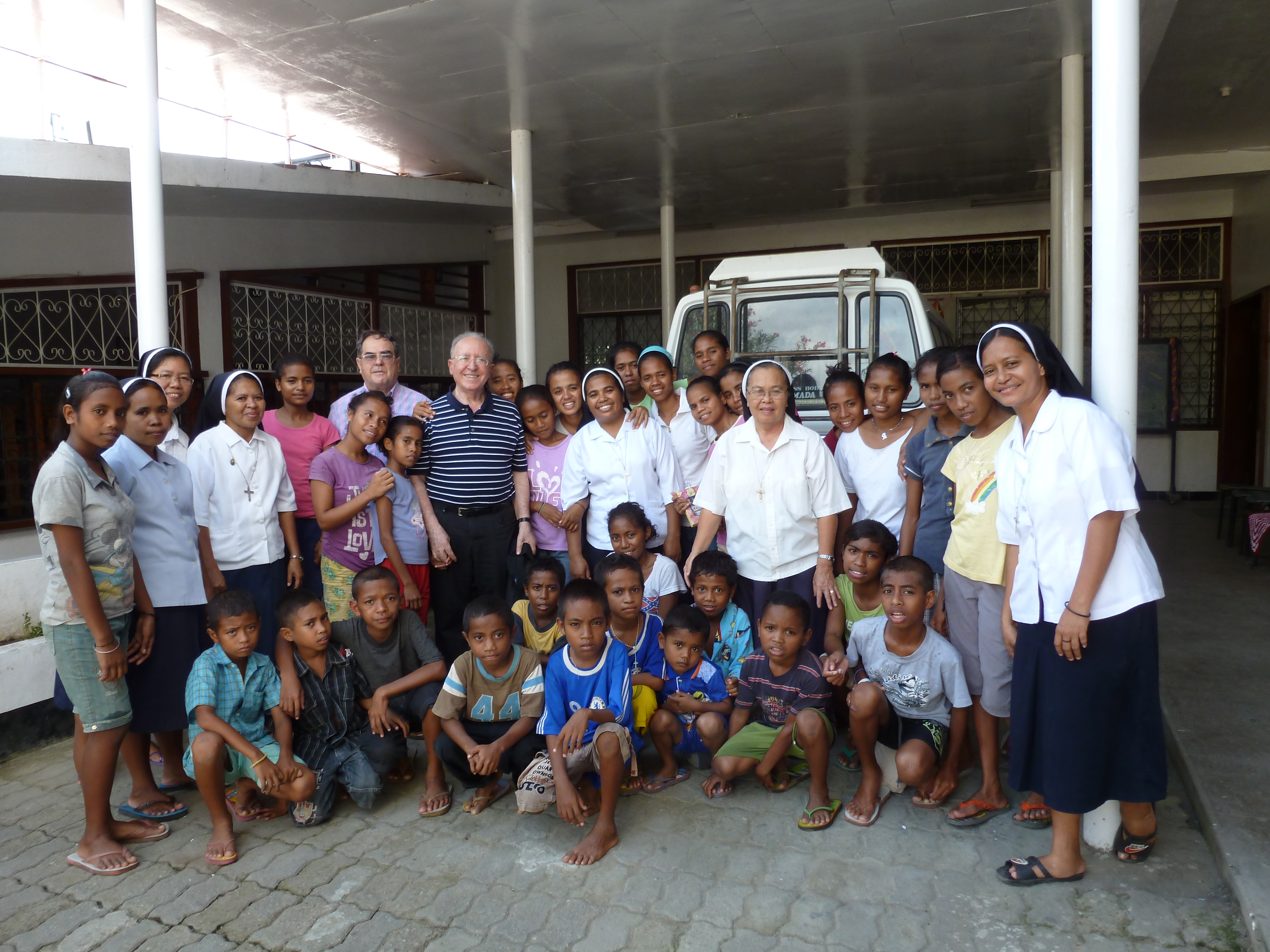
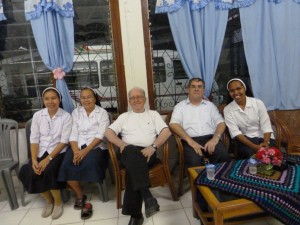
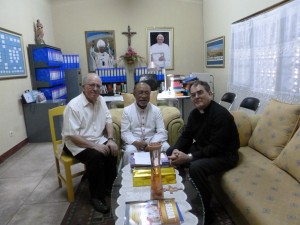 Bishop Dom Albert Ricardo da Silva spoke these words to Fr. Javier González, OP, Prior Provincial of the Dominican Province of Our Lady of the Rosary, after he handed over personally to him a letter of petition on June 5, 2012 at his episcopal house asking the good bishop to allow the Province to establish a house in East Timor. Fr. Javier, accompanied on this occasion by Fr. Fausto Gómez, OP, Regent of Studies of the same Province, was thus carrying out the desire of Fr. Bruno Cadoré, OP, Master of the Order of Preachers. Fr. Bruno wrote to Fr. Javier on November 28, 2011: Please, “take the responsibility in bringing the presence of the Order to this land of East Timor.†By the way, two Congregations of Dominican Sisters are already present in East Timor, namely, the Congregation of the Dominican Missionaries of the Rosary and the Congregation of St. Catherine of Siena of Portugal. During their stay in East Timor, Frs. Javier and Fausto stayed at the Orphanage in Bidau, Dili, run by the Dominican Missionaries of the Rosary. They also visited the Portuguese Dominican Sisters in mountainous and beautiful Remixio (about three hours by car from Dili).
In his official letter of June 6, 2012 to Fr. Javier, Bishop Alberto Ricardo accepted the request to establish a religious house of the Province of Our Lady of the Rosary. The main task of this community, the Bishop added, will be pastoral service to the city of Betano, South of East Timor. For this purpose, a new parish – the first – shall be created in this promising town of over fifteen thousand people. At present, there is a chapel under the care of the Parish of Same (a city between Dili and Betano). Once the appropriate plans of the new project are “fixed,†the bishop will “conclude the permission.†Let us quote some main lines from the significant letter of Bishop da Silva:
The presence of the Dominican Order in our Diocese of Dili will be very helpful to our pastoral work since there are still many places that need pastoral assistance. The people of Betano have been longing to receive pastoral assistance permanently due to many challenges to their faith from (many) kinds of international religious sects and the need to live better their faith by regularly attending the sacraments. I hereby recommend that your congregation be established there. I hereby accept your request to establish a religious house of the Dominican Province of Our Lady of the Rosary in our Diocese. We will conclude the permission by our decree when all plans are fixed. I consider this engagement a vital and important contribution to the apostolic life and vitality of the Church in this Diocese for the greater glory of God and the good of souls.
 In the cordial meeting with the Bishop, the issue of the philosophical and theological formation at the Major Seminary came up. The Bishop invited Fr. Javier and Fr. Fausto to contribute with professors, in particular of Sacred Scriptures and Moral Theology, to the academic and pastoral formation of the many seminarians in East Timor.
The immediate task of the Provincial now is to present the concrete plan of action to the Council of the Province; to inform the Master of the Order about the whole process, and to look for members of the Province willing and able to carry out the urgent task requested by the Bishop of Dili. Hopefully and prayerfully, the Province and the Holy Spirit will find three or more members ready to break new ground in East Timor and begin serving the local people from a parish in Betano. This challenging project of the Order of Preachers spearheaded by the Province of Our Lady of the Rosary will be ideally assisted, as the Master of the Order wishes, by members from other Dominican Provinces, in particular from the Australian and Philippine Provinces, that have already accepted the challenge, and also perhaps from the Portuguese and Brazilian Provinces. Doubtlessly, East Timor, a very young country where the majority of its people are young, shall become a place of Dominican evangelization and a source of vocations for the Order and for the Church.
East Timor, or Timor-Leste, is an independent Democratic Republic, member of the United Nations since 2002. It is a developing country with great resources – material and spiritual – and a promising future. The languages of the country are Portuguese, Tetun and Bahasa. The majority of its one million and two hundred thousand people are Catholics. There are beside Dili two other Dioceses, namely, Baucau and Maliana.
Certainly, East Timor is calling!
“Go, therefore, make disciples of all nations; baptize them
in the name of the Father and of the Son and of the Holy Spiritâ€
(Mt 28:18)