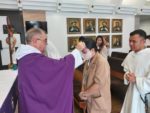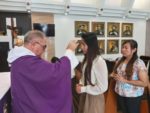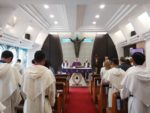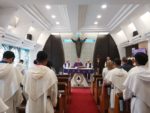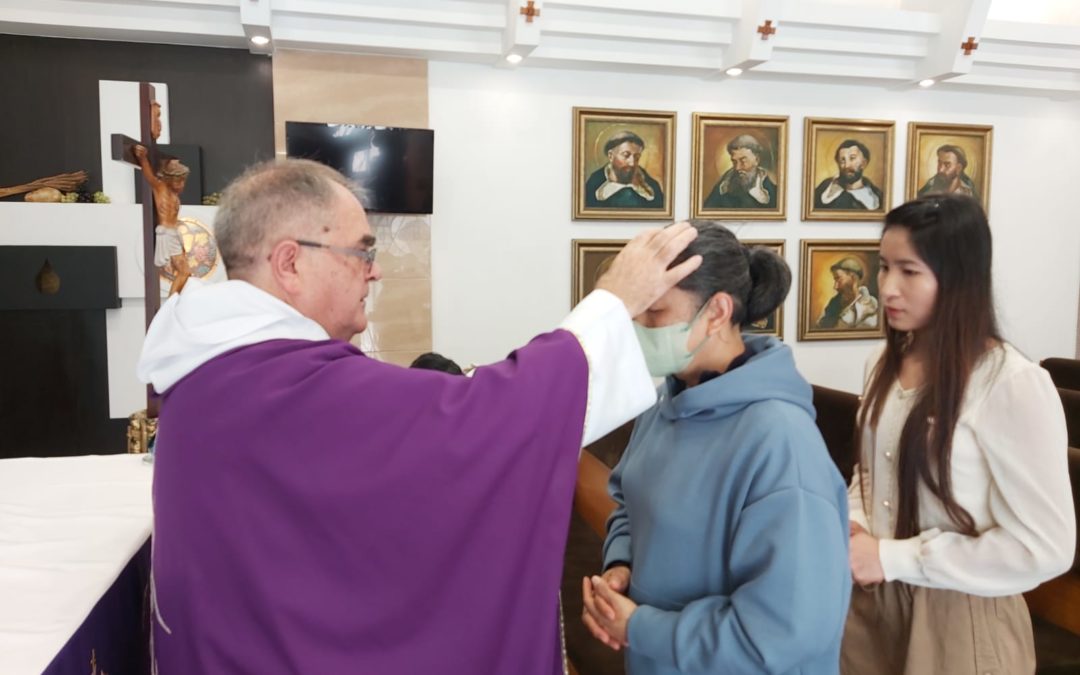
Lent is a period of forty days before Easter Sunday, during which we are invited to prepare ourselves for the celebration of Jesus’ resurrection. It is a time of penance, fasting, and prayer to remind us as believers of Jesus’ own forty-day fast before His Passion. During Lent, we are called to repent, believe in the Gospel, and focus on prayer, penance, fasting, and generous aid to others as means of entering into a renewal of spirit and community. The season of Lent precedes and prepares for Easter, serving as a time to hear the Word of God, convert, prepare for Baptism, reconcile with God and one’s neighbour, and engage in prayer, fasting, and good work. Lent is also a time for more intense prayer, interceding for those in need, and cultivating a lifestyle of sharing and responsibility.
Why Lent is Important for our Conversion?
Spiritual Preparation: Lent is a period of 40 days of prayer, fasting, and almsgiving that mirrors Jesus’ 40 days of fasting in the desert. It is a time for spiritual preparation, reflection, and repentance in anticipation of Easter, the most important feast of the Christian calendar.
Repentance and Conversion: Lent is a time for believers to turn away from sin, seek forgiveness, and grow closer to God. Through practices such as fasting, prayer, and almsgiving, Christians strive for personal conversion and spiritual renewal.
Mourning Christ’s Passion: Lent provides an opportunity for Christians to reflect on and mourn the suffering and sacrifice of Jesus Christ. By meditating on Christ’s Passion, believers deepen their appreciation for the immense love and mercy demonstrated by his death on the cross.
Renewal of Baptismal Promises: Lent is a time for Catholics to prepare for the renewal of their baptismal promises at the Easter Vigil. Through prayer and penance, believers recommit themselves to living out their faith and following the teachings of Christ.
Preparation for Easter: Lent culminates in the celebration of Easter, the most important feast in the Christian calendar. By observing Lent, Christians are better prepared to fully participate in the joy and significance of Christ’s resurrection on Easter Sunday.
Overall, Lent is a time for deepening faith, seeking reconciliation with God, and renewing commitment to living a life in accordance with Christian values. It is a season of spiritual growth, self-examination, and preparation for the celebration of the central mystery of the Christian faith, the Resurrection of Jesus Christ.
During the period of Lent we are encouraged to practice of:
Prayer: Lent is a time for intense prayer, where believers are called to turn to God with confidence, enter into communion with Him, and intercede for those in need.
Fasting: Fasting during Lent should not be a mere formality but a practice that challenges one’s sense of security, benefits others, and cultivates a lifestyle of sharing and caring for those in need. It involves choosing a sober lifestyle, avoiding wastefulness, and attuning hearts to the essentials and sharing.
Almsgiving: This practice represents a specific way to assist those in need, an exercise in self-denial to free oneself from attachment to worldly goods, and a means to respond to the needs of others through divine goodness. Almsgiving helps believers overcome the temptation of material riches and fosters a spirit of sharing with others.
The work of Charity: Alongside prayer and fasting, engaging in works of charity is emphasised during Lent. These works of charity are seen as pleasing worship to God and serve as a reminder of the need for a more just distribution of goods, allowing everyone to live in dignity and protecting creation.
Therefore, during the period of Lent, we are called to participate in prayer, fasting, almsgiving, and works of charity to deepen our relationship with God, grow in selflessness, and prepare our hearts for the celebration of Easter.
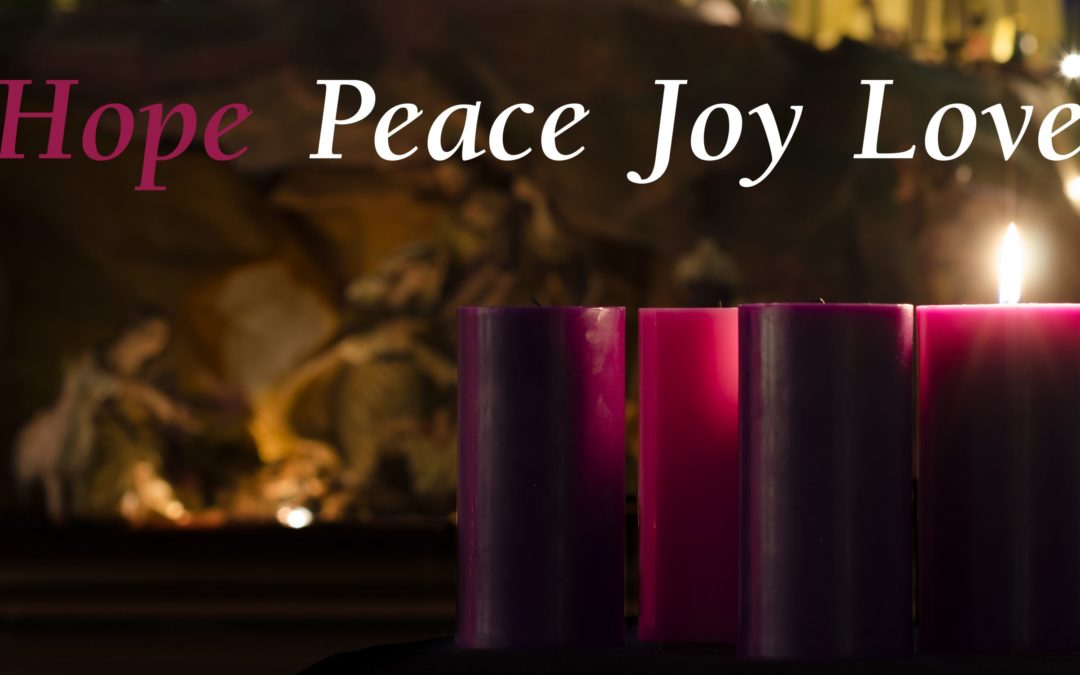
“Hope, Peace, Joy, and Love,”
Advent celebration is a significant time in the Christian liturgical calendar that marks the anticipation and preparation for the birth of Jesus Christ. It is important to meditate on the theme of Advent.
Advent: A Time of Hope:
Hope is a central theme during the Advent season. It symbolizes the anticipation of the coming of Christ and the promise of salvation. The Advent wreath, with its four candles representing the weeks leading up to Christmas, serves as a visual reminder of this hope. As Christians light each candle, they are reminded of the hope that Christ’s birth brings to the world. The prophet Isaiah’s words, “The people who walked in darkness have seen a great light” (Isaiah 9:2, NIV), encapsulate the essence of hope during Advent.
Advent: A Time of Peace:
Peace is another significant theme during Advent. It represents the tranquillity and harmony that Christ’s birth brings to humanity. The birth of Jesus is often referred to as the “Prince of Peace” (Isaiah 9:6). During this season, Christians are encouraged to seek inner peace and promote peace in their communities. Advent season serves as a reminder to reconcile with others, forgive, and strive for unity. The angelic proclamation of “Glory to God in the highest, and on earth peace, goodwill toward men” (Luke 2:14) resonates deeply during this time.
Advent: A Time of Joy:
Joy is a theme that permeates the Advent season. It represents the overwhelming happiness and delight that comes with the anticipation of Christ’s birth. The birth of Jesus is seen as a source of great joy, as it brings salvation and redemption to humanity. Advent season encourages believers to embrace this joy and share it with others. The angel’s words to the shepherds, “Do not be afraid. I bring you good news that will cause great joy for all the people” (Luke 2:10), encapsulate the essence of joy during Advent.
Advent: A Time of Love:
Love is a fundamental theme during Advent. It represents the unconditional love of God, who sent His Son to the world as a demonstration of His love for humanity. Advent season calls Christians to reflect on this love and to extend it to others. It is a time to show compassion, kindness, and generosity to those in need. The verse, “For God so loved the world that he gave his one and only Son” (John 3:16), encapsulates the essence of love during Advent.
To sum up, the Advent celebration holds immense significance in the Christian faith as it prepares believers for the birth of Jesus Christ. The themes of hope, peace, joy, and love are central to this season, reminding Christians of the profound impact of Christ’s birth on humanity. Advent serves as a time of reflection, anticipation, and spiritual growth, encouraging believers to embrace these themes and embody them in their daily lives. By understanding the essence of Advent and its themes, Christians can deepen their faith and experience a renewed sense of hope, peace, joy, and love during this sacred season.
Reflection of Br. Cesar O.P.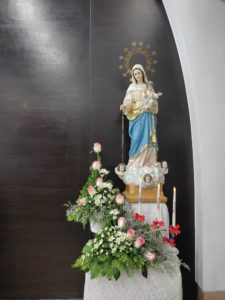
“On this feast day, we are encouraged to reflect on the power of prayer, particularly the praying of the rosary.”
The Feast Day of Our Lady of the Rosary, also known as the Feast of Our Lady of Victory, is celebrated on October 7th each year. This feast day holds great significance for the Dominican Order and is dedicated to the Our Lady of the Rosary as the patron of the Province of Our Lady of the Rosary.
The origins of this feast can be traced back to the 16th century when the Christian naval forces, known as the Holy League, achieved a remarkable victory against the Ottoman Empire in the Battle of Lepanto on October 7, 1571. The naval battle was fought in the Gulf of Patras, off the western coast of Greece.
Pope Pius V, who urged all Christians to pray the rosary for victory, attributed the triumph to the intercession of the Blessed Virgin Mary. In gratitude for the decisive victory and in recognition of the Virgin Mary’s intercession, he established this feast day, initially called “Our Lady of Victory,” which would later become known as “Our Lady of the Rosary.”
Throughout the centuries, devotion to Our Lady of the Rosary has grown, captivating the hearts of countless faithful Catholics across the world. The rosary, a powerful prayer that meditates on the life of Jesus Christ through the intercession of the Blessed Virgin Mary, has become closely associated with this devotion.
The Dominican province of Our Lady of the Rosary dedicated to Our Lady of the Rosary proudly upholds this devotion and pays homage to the Blessed Virgin Mary as their patroness. They honor her on this day by participating in special Masses, processions, and other religious ceremonies. These celebrations offer an opportunity for the faithful to come together and deepen their faith through prayer and reflection.
Devotees of Our Lady of the Rosary believe that through her intercession, they can obtain peace and protection, especially during challenging times. They seek her guidance and support in their spiritual journey, recognizing her as a loving mother who always leads them closer to her Son, Jesus Christ.
On this feast day, we are encouraged to reflect on the power of prayer, particularly the praying of the rosary. We are reminded of the significance of seeking Mary’s intercession and the importance of living a life of faith, gratitude, and love towards God and one another.
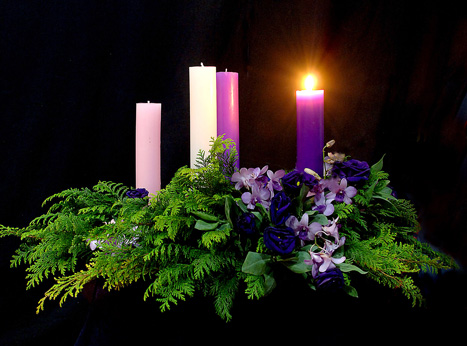
What is Advent?
The word Advent is derived from the Latin word advenire, meaning ‘to come’, referring to the coming of Christ.
In the Catholic Church, Advent refers to the four weeks preceding Christmas, a time of liturgical celebration that highlights the birth of Jesus Christ and, according to biblical prophecy, the Day of Judgment on which he returns.
Advent is a time of spiritual purification, as well as preparing for Jesus’ arrival. Purple is the color used in the vestments during celebrations, a symbol of the beginning of a new liturgical year, which occurs on the first Sunday of Advent.
Advent is a time for penance and spiritual cleansing, but for Christians, it is also a time of joy and rejoicing. This is because it nurtures the hope of the Messiah’s return through the celebration of his birth.
Advent represents Mary’s waiting for the birth of Jesus. This is announced by the Angel Gabriel in a vision in which he told her she was about to conceive the Son of God.
Advent always begins on the Sunday closest to the 30th of November and ends on the 24th of December, Christmas Eve.
The wreaths of candles has symbolic meanings tied to the Christmas season, and each of them has the meaning that the circle of wreath signifies the eternity of God with no beginning or end. And even each of the individual evergreen that makes up the wreath has the meaning that can be represented to our faith. We don’t mention each of them but the most important is that the wreath as a whole is meant to remind us of both immortality of our soul and God’s promises of everlasting life through our Lord Jesus Christ.
The four candles represent four weeks of Advent, and each candle represents each Sunday. Three candles are purple, the liturgical calendar color that represents the time of prayer, penance, and sacrifice.
The first purple candle symbolizes hope, Sometimes it is called the “Prophecy Candle” in memory of the prophets, especially Isaiah, who prophesied the birth of Christ. It symbolizes the expectation for the coming Messiah.
The second purple candle symbolizes faith. The candle is called the “Bethlehem Candle” as it symbolizes Mary and Joseph’s journey to Bethlehem.
The third candle is pink and symbolizes joy. It is the “Shepherd’s Candle”, and it is pink because rose is the liturgical color for joy. The third Sunday of Advent is Gaudete Sunday and is meant to remind us of the joy that the world experienced at the birth of Jesus, as well as the joy that the faithful have reached the midpoint of Advent.
The four and last purple candle, lighted on the four Sunday of Advent, symbolizes peace. It is the “Angel Candle,” as the angel’s message reminds us “Peace on earth, to the people of goodwill” (Luke 2:14 KJV). It is the final week of prayer, penance as we wait for the arrival of our Saviour.
In modern traditions, the Advent wreath we see does not include a white candle. But the white candle is in place in the middle of the wreath and on Christmas Eve. This candle is named “Christ candle” and it represents the life of Christ. The color white symbolizes purity because Christ is our sinless, pure Saviour.
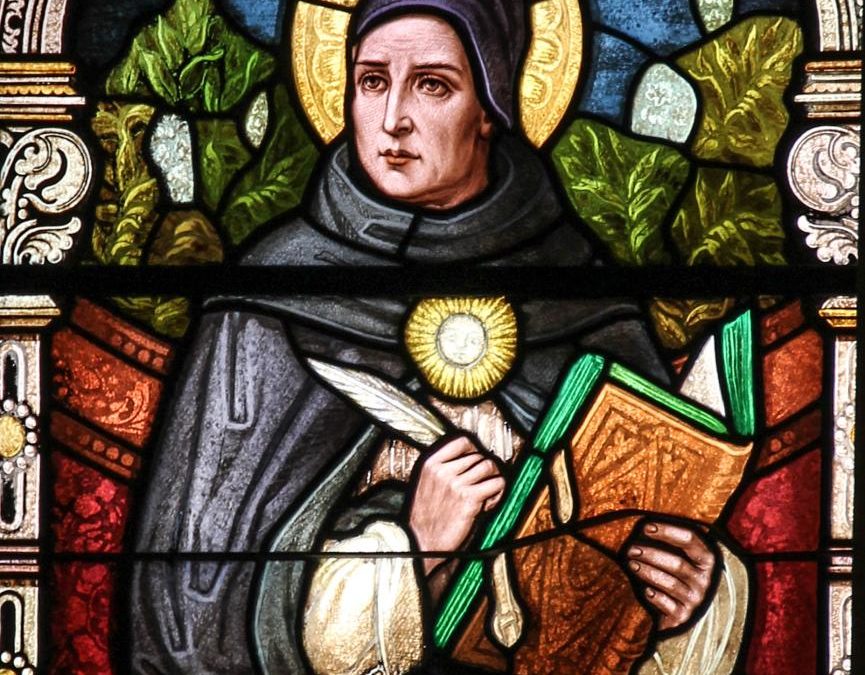
We all want good things. When we encounter something good, whether it be the type of food, or car, or smartphone, our first question is often: where can I get that?
Virtue is a good thing. A virtuous person possesses an undeniable appeal. A virtuous person can inspire us to pursue virtue ourselves, but this is where things become somewhat complex. Unlike food, a car, or a smartphone, the virtues are not external, material things that I can obtain and then place in my refrigerator, my garage, or my pocket. Virtues are things that inhere inside a person. Human persons do not have virtues so much as they are virtuous. And this is good news, although multiple persons cannot all have an individual smartphone at the same time and to the same degree, everyone has the potential to be truly virtuous and enjoy the happy freedom that virtue provides. But where do we get virtue? Where does virtue come from? What makes a person virtuous? Let us look at the causes of the virtues.
We recall that the virtues perfect the human person, and in that person’s actions good. A virtue is a kind of habit that is a stable disposition that profoundly qualifies (deeply ) that human powers of knowing, willing, and feeling.
A virtuous person performs good actions because he or she is a good person. The type of actions one performs is linked to the type of person one is. We also recall that there are two broad categories of virtue: there are, first of all, moral virtues or human virtues. These virtues perfect the human power of knowing, being willing, and feeling in a human way and on a human level. The most famous example of the virtuous is the habits of prudence, justice fortitude, and temperance.
These pivotal ( or cardinal ) virtues perfect the natural powers of knowing, being willing, and feeling in a way proportioned to natural human freedom and flourishing.
The second broad category of virtue is the theological or God’s virtues. These virtues perfect and extend the human powers of knowing and willing beyond the human person to God himself. These operate on a supernatural level. There are three theological virtues: faith, hope, and charity. Let us now turn to the causes of these two types of virtues. A natural cause of moral ( or human ) virtues is the performance of good actions. For example, take a man who interacts with others. Such a man encounters residential neighbors and works with colleagues on a regular basis. As a human being, this man of course has a will; and thus, he has the potential to exercise his will justly in his dealings with others. If he acts justly if he gives to others that which they are owed, that which is their due, he eventually becomes a just man. The man who acts justly with regularity eventually acquires the habit of justice in his will. Why? Because through the deliberate and repeated acts of justice he becomes accustomed. He becomes habituated to the form of justice. His will itself takes on the just shape of his just actions. He becomes what he does. And because his actions are just, he becomes a just person. Similarly, the man who acts temperately, the man who allows reason to guide his enjoyment of physical pleasure like food and drink eventually becomes a temperate man.
He is a man who desires to take on the virtuous shape, the liberating habit of temperance. Through deliberate and repeated eating healthy proportions ( pursuing the good and virtuous means between excess ( too much ) and defect (too little) the man becomes a temperate man.
In summary, the natural cause of moral virtue is the performance of good actions. Moral virtues can be acquired through virtuous activity. The more good that we do, the more virtuous we become. And the more virtuous we become, the more promptly, joyfully, and easily do we perform good actions, We become what we do.
There is another type of virtue that no human action can still in the soul of the person. And these are the infused virtues, the virtues that direct and unite us to God. God is the principal cause of the infused virtues. In the case of acquired virtues, repeated, good actions eventually yield a virtuous habit in the powers of the human soul. In this case of infused virtues, however, this order is reversed. God first imparts, He first infuses, supernatural virtue into the soul, and then the person is able to act according to these theological virtues.
Why do we need infused supernatural virtues? As discussed earlier, the acquired moral virtues are habits that are good in relation to human goodness. The moral virtues are good insofar as they perfect nature on a natural level. In contrast, the infused virtues are supernatural good. They are with goodness beyond the proportion of human goodness. God is the measure of supernatural goodness. And because the intimate life of God is beyond the natural reach of the human powers of knowing and willing, only God can cause the theological virtues in the power of the human soul. Take the infused (theological) virtue as faith, for example; no repeated acts of rigorous thought or even sympathetic judgment can engender or cause the supernatural virtue of faith in the human intellect. We do not come to faith in God after or because we have to judge what he says to be true. Rather, God first imparts the theological virtue of faith in the soul, and it is by this supernatural habit that we are enabled to make acts of faith.
The theological virtue of faith unites the human intellect to God. Through faith, we believe that what God reveals is true because it is God who reveals it. Our mind must first be raised to God in order for us to believe something because of God. This is what the infused virtue does.
In sum, the virtues perfect a human person, making both the person and the person actions good. But there are two kinds of goodness: There is natural (moral) goodness and there is supernatural (theological) goodness. We acquire moral virtues through repeated actions. In this way, good actions are the cause of moral virtue in the human powers of knowing, willing, and feeling.
With regard to supernatural goodness, the goodness of God, however, no human action can produce theologically proportioned virtues. Only God can cause, only God infuses his virtues: faith, hope, and charity. Therefore, repeated and deliberate good actions can cause moral virtue. But only God can cause the infused virtues in the soul of the human person.
Summa Theologiae I-II, q. 51, a,1-3
https://aquinas101.thomisticinstitute.org
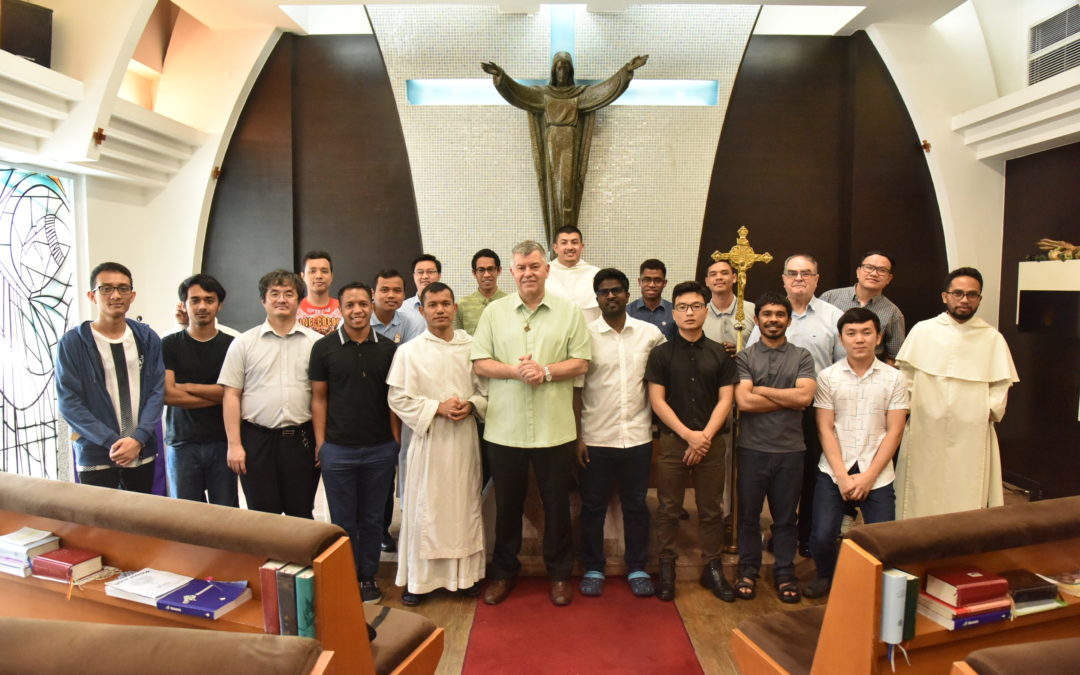
Easter is one of the most important festivities for Christianity, as it brings us to the crucifixion and resurrection of Jesus Christ. This is a moment that invites us to reflect on the victory of life over death, the victory of love over hatred. And also about our role in building a more just and fraternal society.
May this period be filled with renewal, love of neighbor, and reflection on our thoughts and actions. May we strengthen our mission and learn more and more, from each other, and be inspired by the Word of God.
May it also be an opportunity for freedom from suffering and confidence in love. Both in the love that God has for us, and in the love that we can dedicate to those around us and, mainly, to those who need it most. Whether they are in our communities or in places that are experiencing serious conflicts and appear on the news.
May the joy of the risen Jesus Christ comfort all hearts, those who are close to us and also those who are distant, needing hope to face difficulties.