By: Alexandre da Costa Freitas
I was born and raised in a Catholic family where prayer was intricately woven into the fabric of daily life. From a young age, I memorized the words of the Our Father and the Hail Mary, often reciting them without fully grasping their profound significance. During those early years, prayer felt more like an obligation than a meaningful dialogue. Yet, even in its simplicity, those prayers instilled in me a deep sense of belonging and identity, planting seeds of faith that would flourish as I grew older.
As I matured, prayer began to evolve, taking on richer meanings. During moments of adversity, such as facing exams, family struggles, or personal doubts, I discovered that prayer could be so much more than a ritual. It transformed into a sanctuary, a means to express my fears and hopes, as well as a source of strength during my weakest moments. Gradually, I came to realize that prayer transcends mere words; it’s about listening, embracing silence, and opening my heart to God’s presence. It was during those quiet interludes that I began to sense His guidance and experience profound peace.
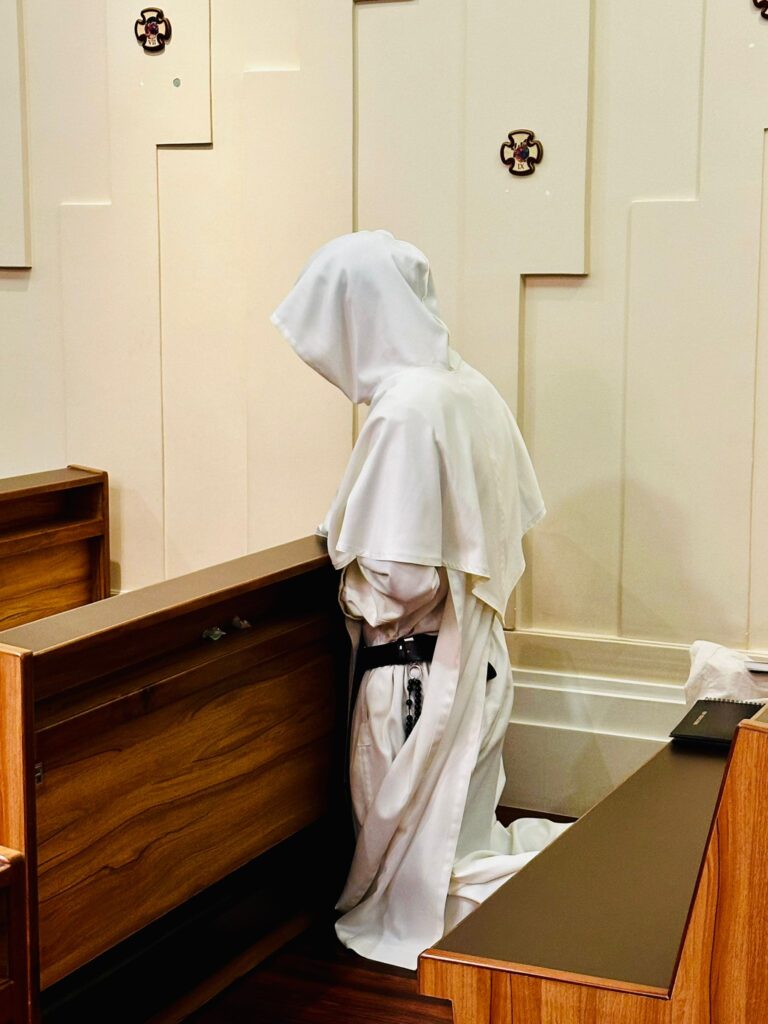
Now, prayer stands as the cornerstone of my life. As a member of the Dominican order, a religious community that places prayer at the heart of our vocation, I join my brothers and sisters each day to pray the Liturgy of the Hours, celebrate the Eucharist, and share our voices in praise. This communal aspect of prayer serves as a powerful reminder that faith thrives not in solitude, but in fellowship. It strengthens our bonds as a community and unites us in our mission to spread the Gospel.
Equally important is the practice of personal prayer. Beyond the structured prayers we share, I carve out moments to speak to God in my own words, sharing my joys and struggles, relishing the peace of simply resting in His presence. Sometimes, this takes the form of quiet meditation before the Blessed Sacrament; at other times, it’s a whispered “thank you” amid the busyness of my day. Personal prayer allows me to present my unique story, my individuality, and my innermost desires before God. It is in these intimate moments that I feel most profoundly connected to Him.
For me, here and now, prayer embodies both communal and personal dimensions. It serves as the rhythm of the Church and the heartbeat of my soul. It encompasses tradition and spontaneity, silence and song, spoken words and attentive listening. Prayer has transcended the mere lesson I was taught; it has become a living, breathing experience. It is the means through which I encounter God daily, remain anchored in faith, and draw strength for life’s journey.
Ultimately, prayer is about relationships. It is the ongoing dialogue between God and me, enriched by the community to which I belong and by the personal moments I cherish with Him. Here and now, prayer signifies being present, being open, and being transformed by the love of a God who listens, guides, and sustains me.
20 January 2026
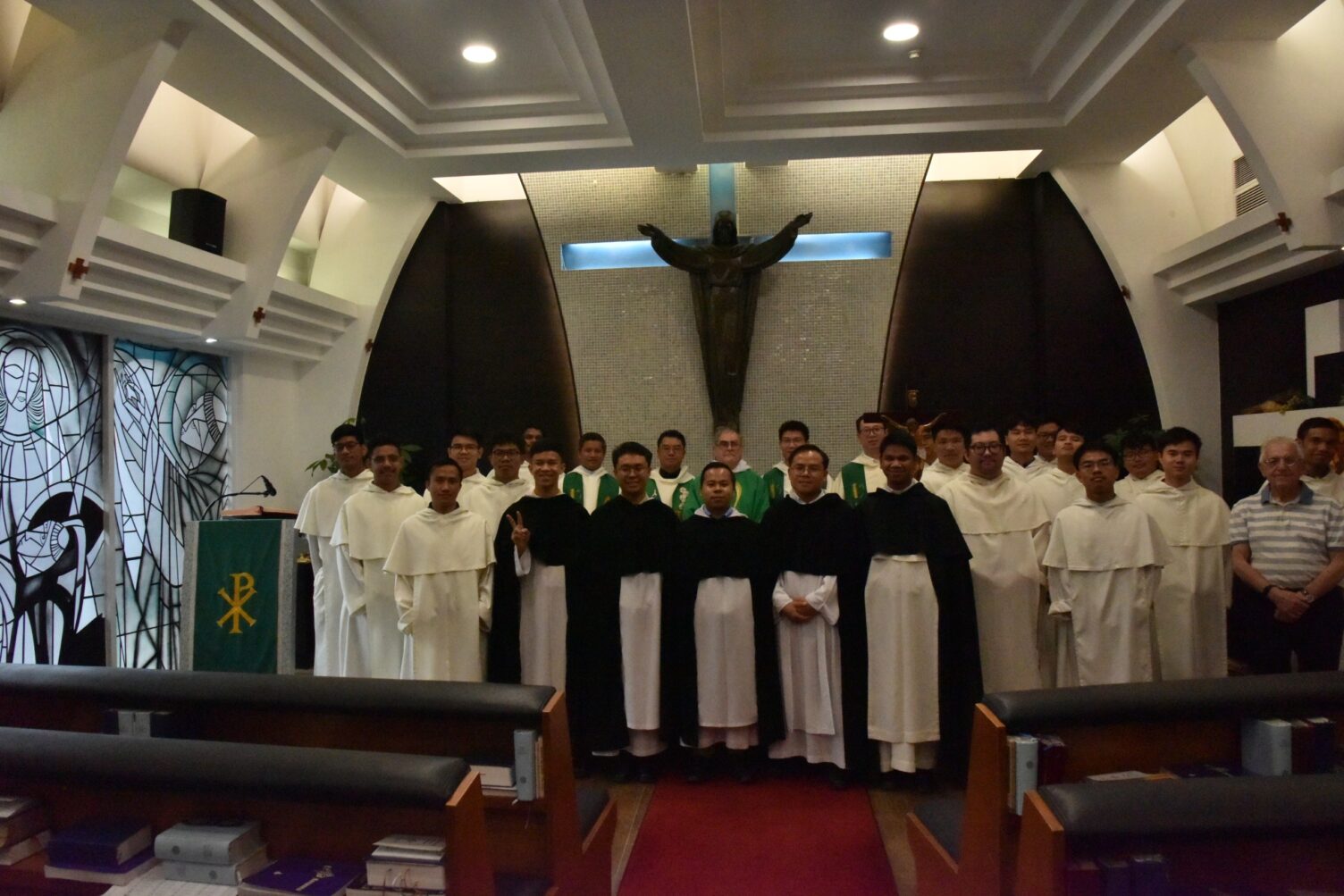
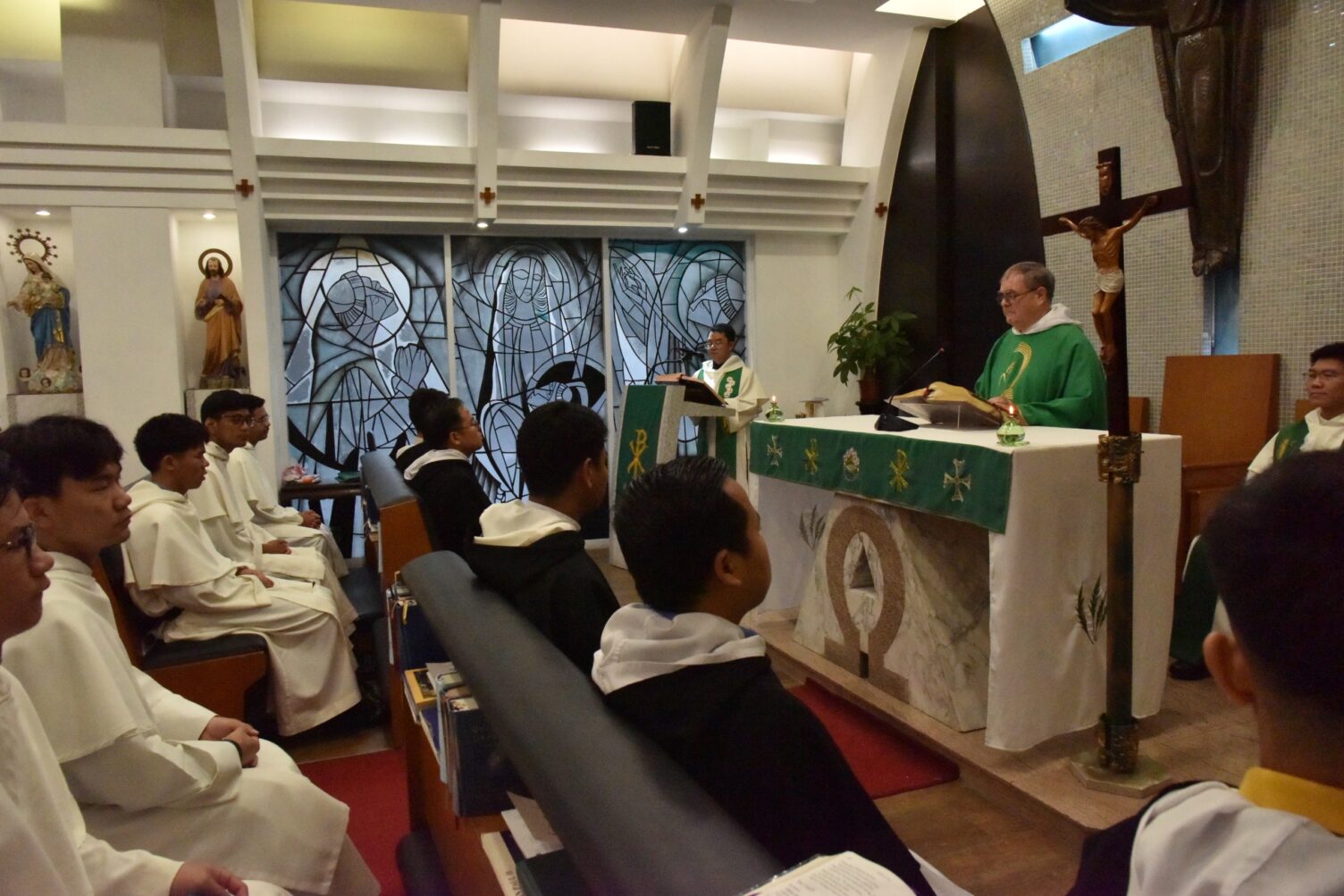
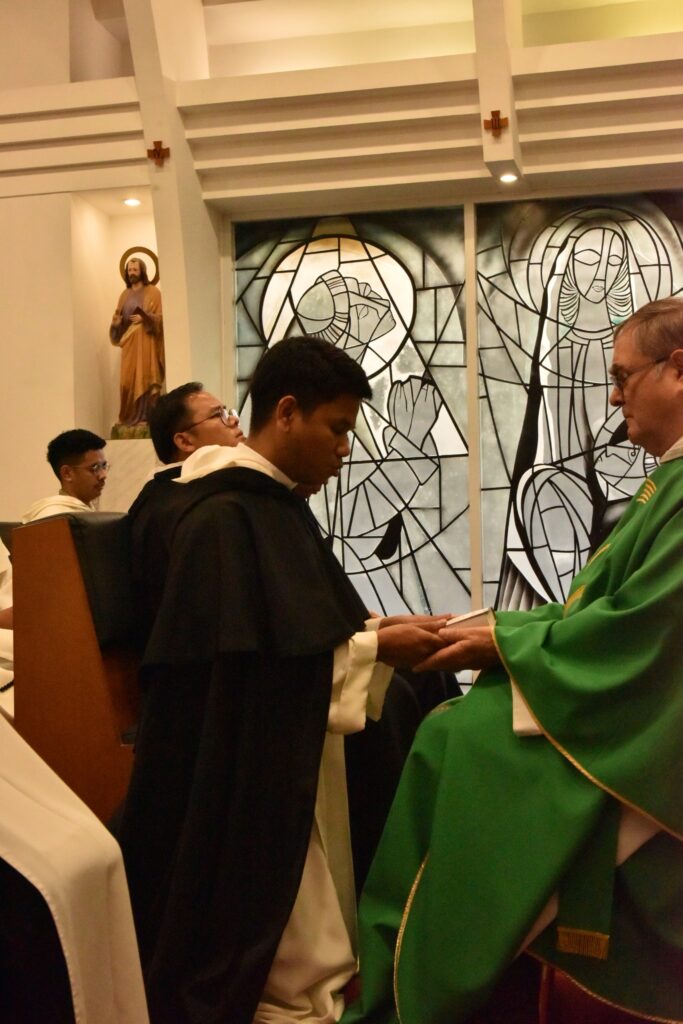
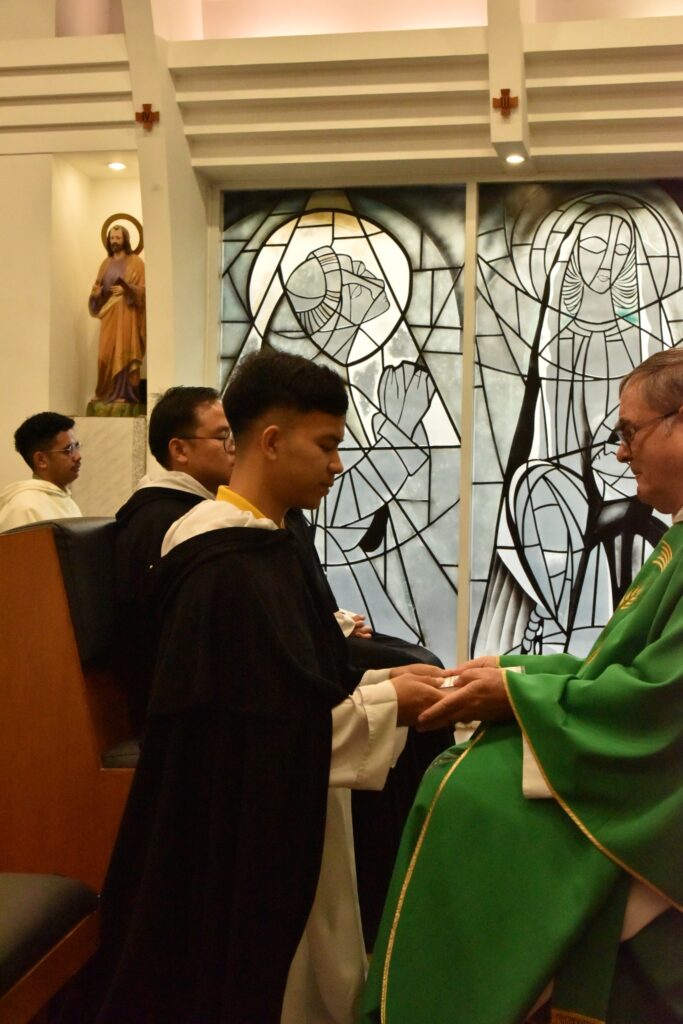
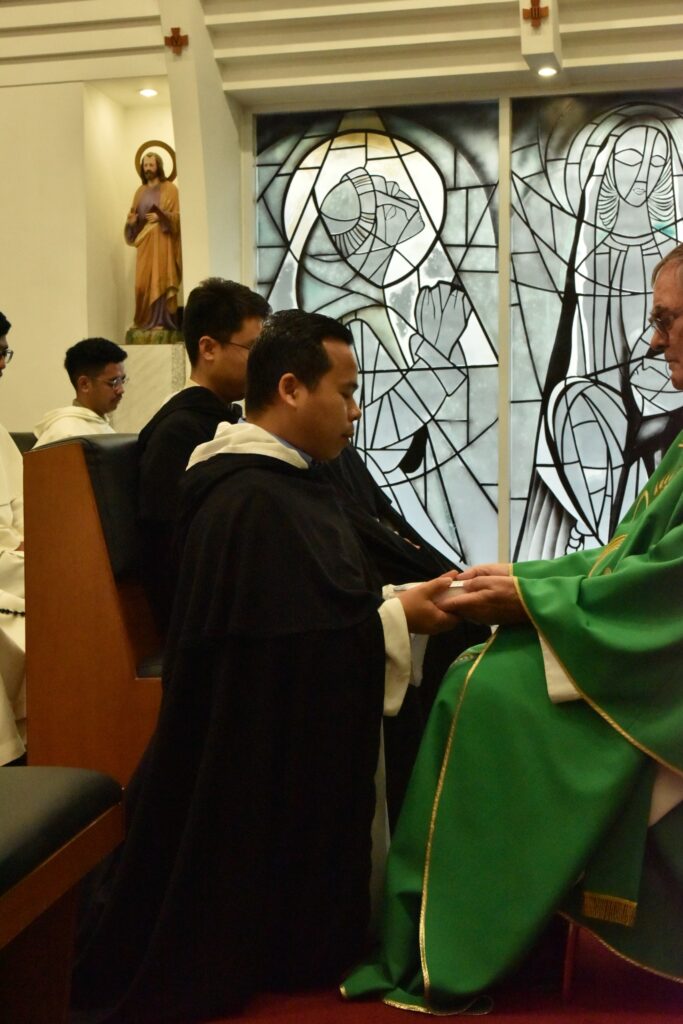
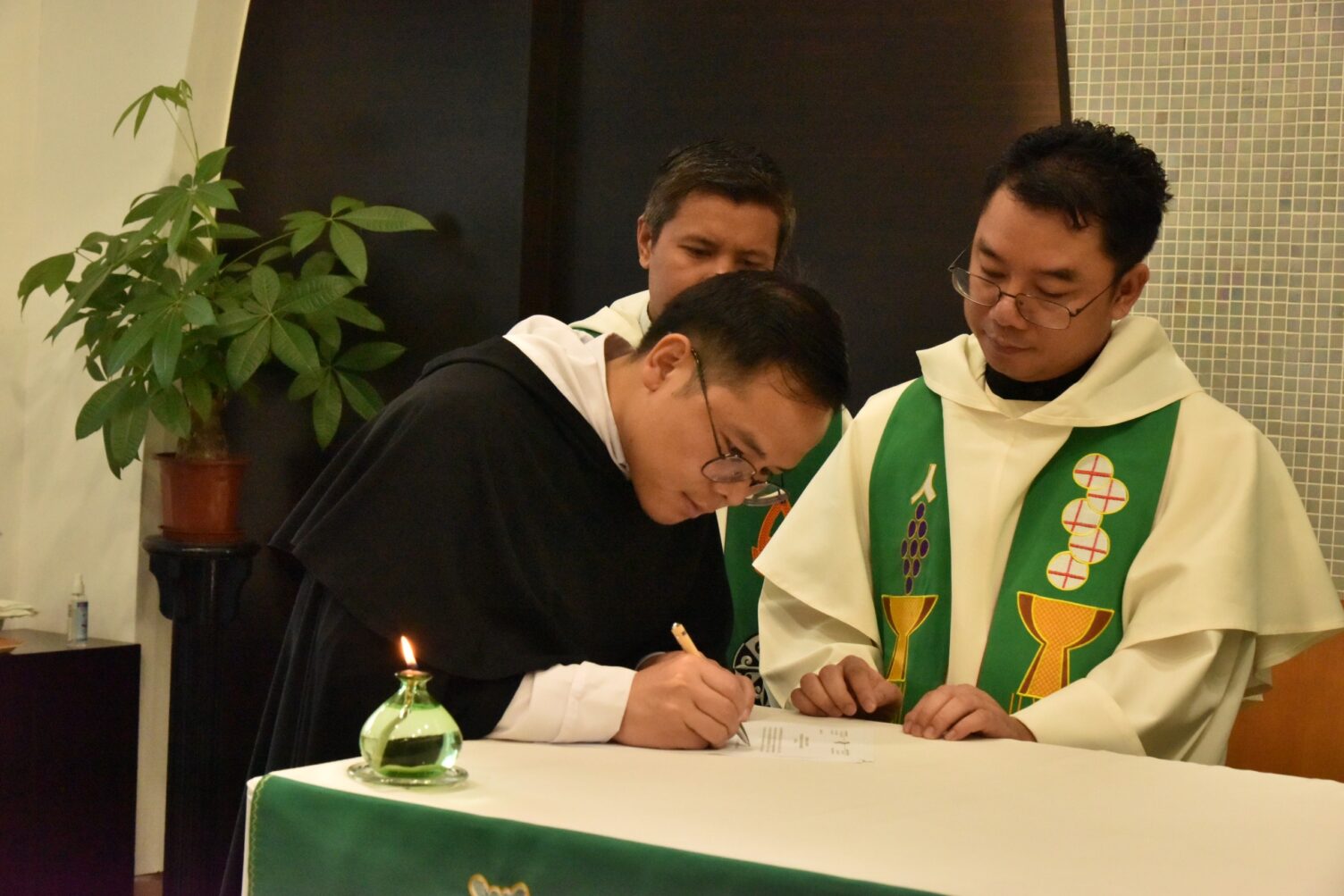
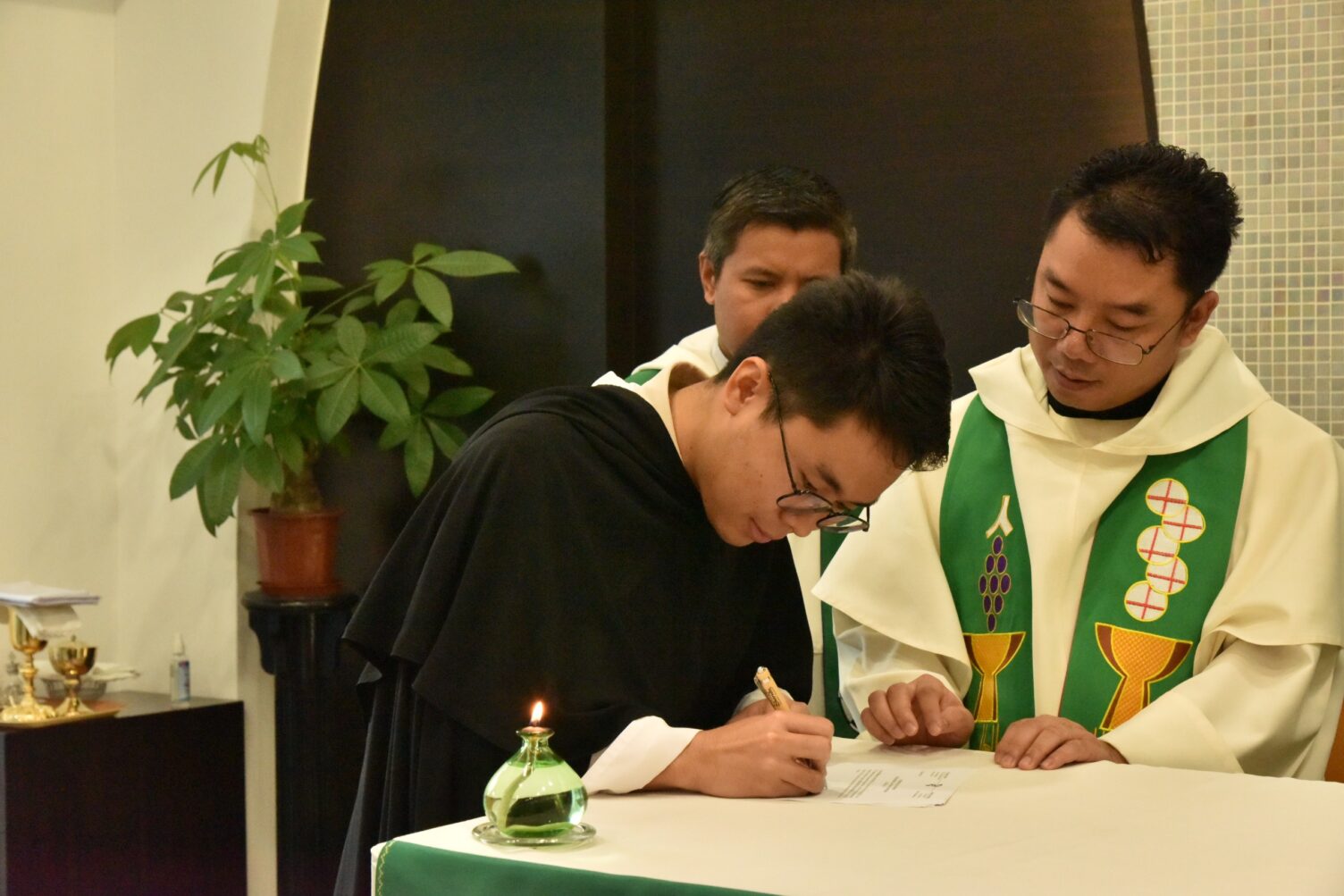
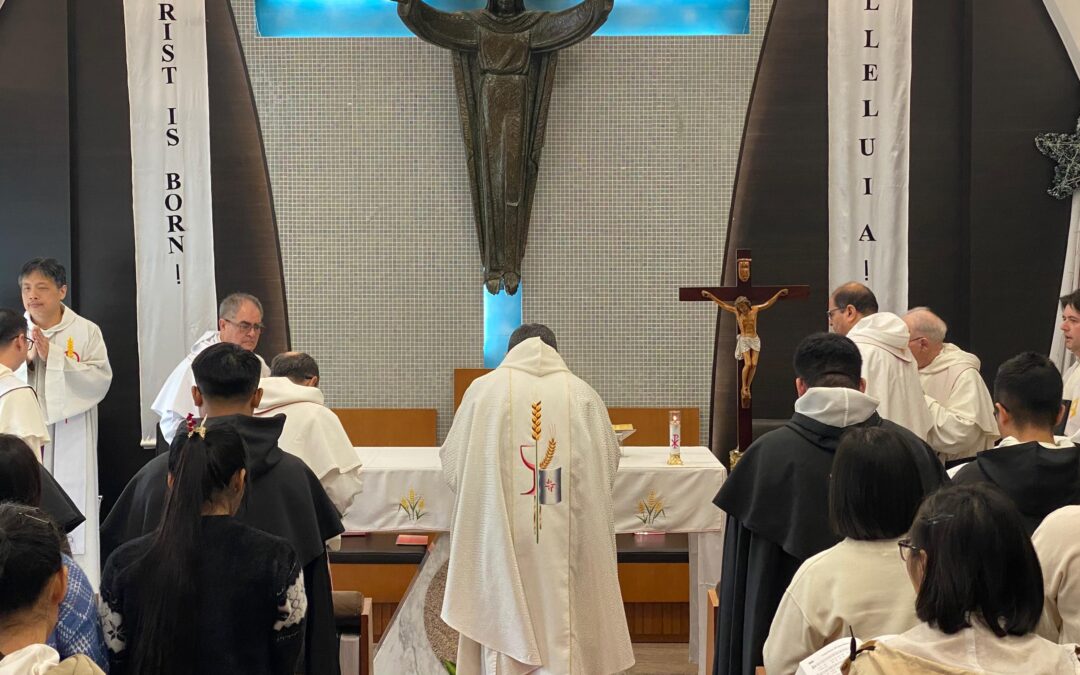
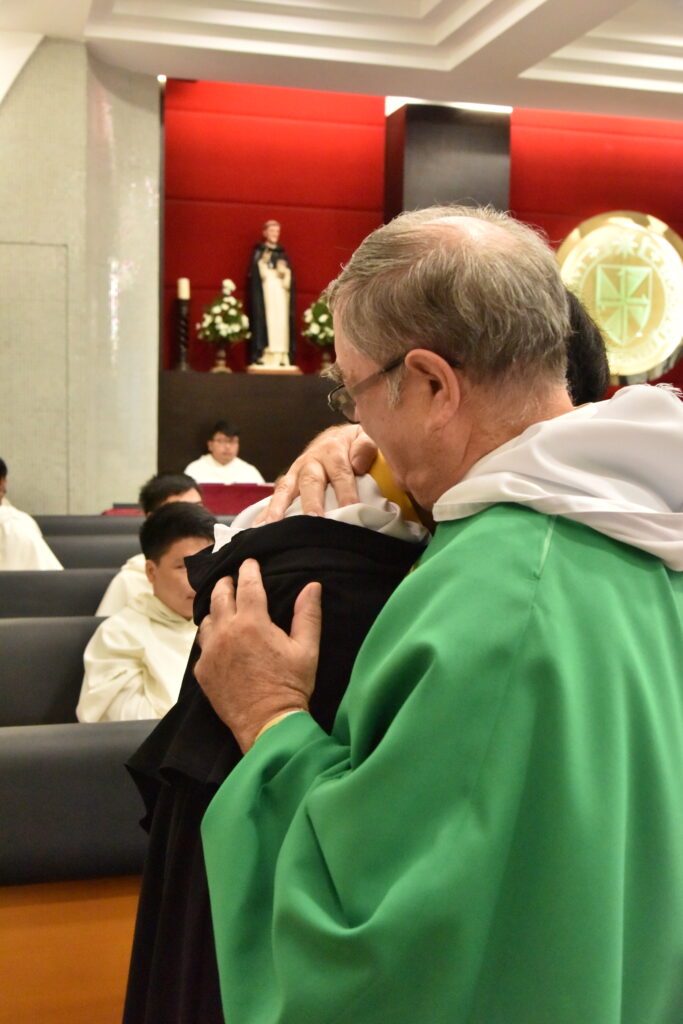
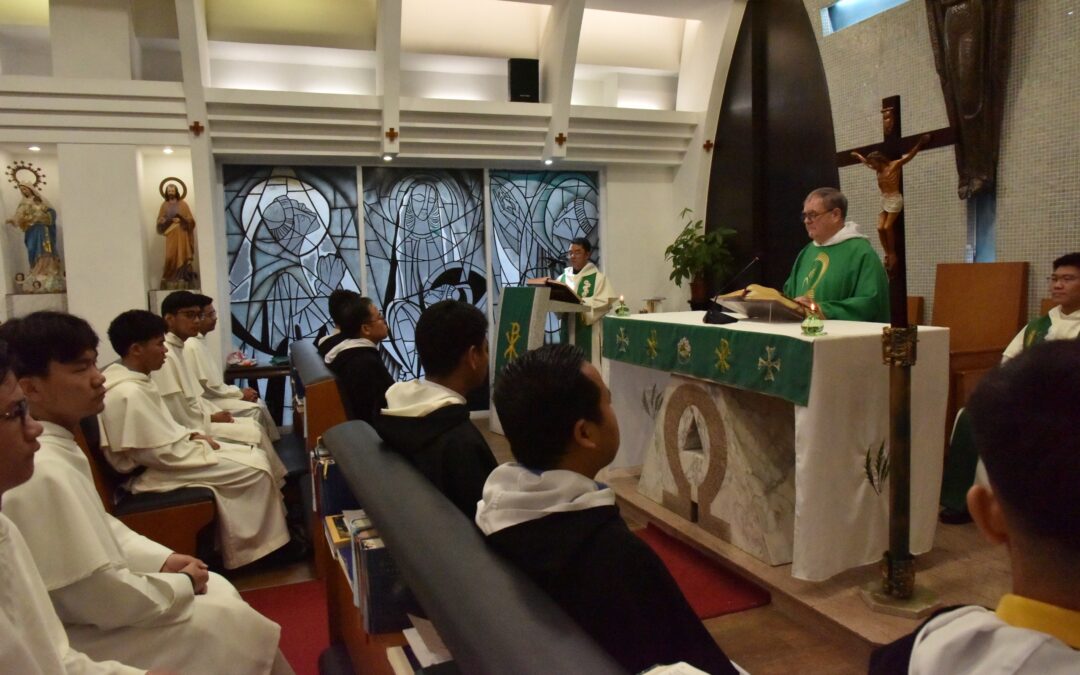
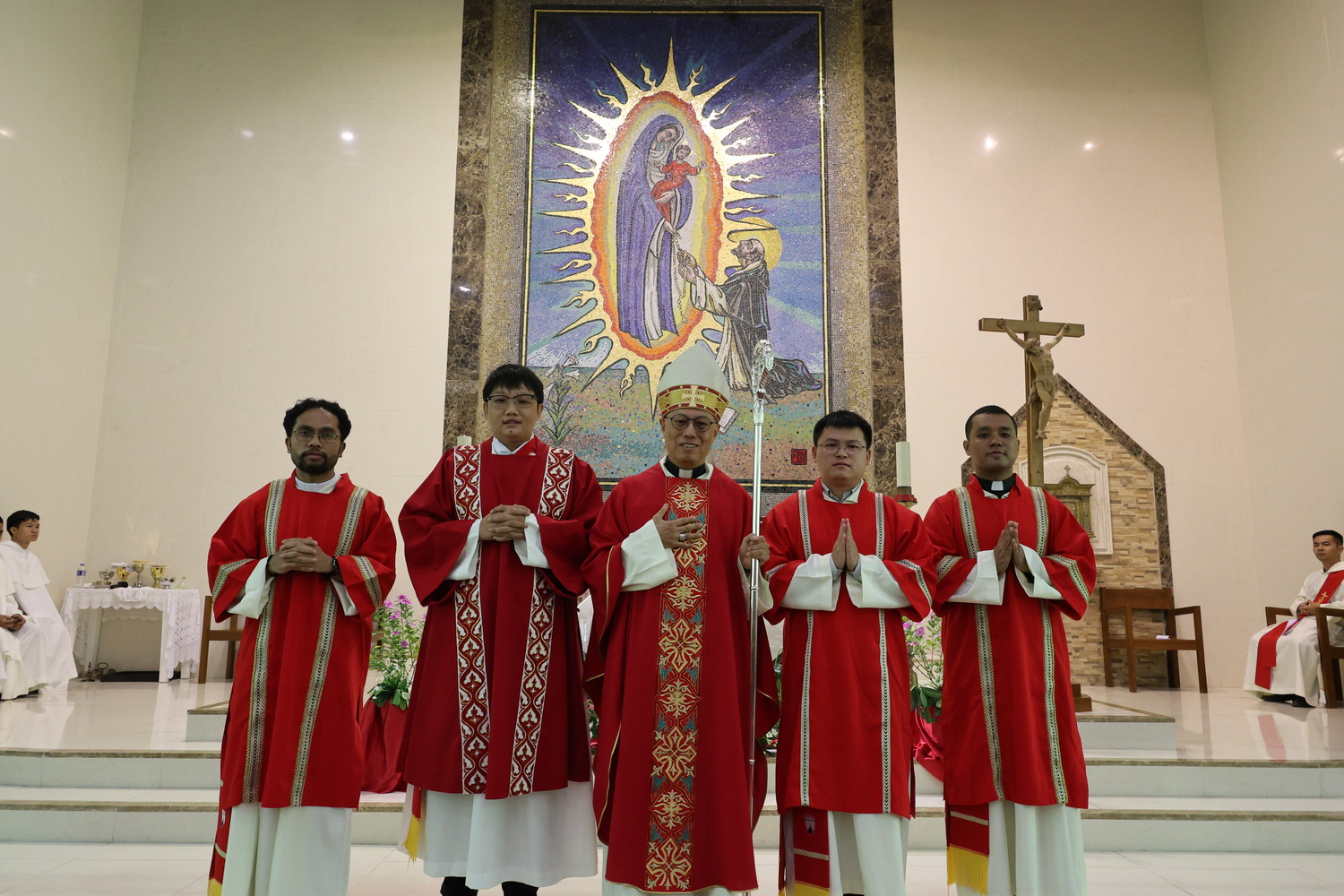
Five brothers from our Dominican community in Macau, namely, Rolindo Tilman, Xaverio Boe, John Ai, Peter Nyi and Ephraim Nay, renewed their religious profession on Tuesday, 20th of January 2026. The event took place within our conventual Mass, presided over by the Prior, Fr. Javier Gonzalez, and con-celebrated by Frs. Hilario Plureh, Lawrence The Reh, Paul Fan and Martin Bai, members of this community of St Dominic’s. Witnesses of the ceremony were all our student brothers, plus a few Sisters and Lay Dominicans who come regularly to our chapel.
In his homily Fr. Javier stressed the point that our religious vocation is a gift from God. He is the one calling and choosing those He wants, based on His own initiative and reasons. “Not as man sees does God see, because he sees the appearance but the Lord looks into the heart” (1 Sam 16:7). Hence, our response cannot be other than sincere gratitude, day-to-day fidelity and (sacrificial) obedience to Him. The Prior invited all those present to pray for the five brothers and to spiritually renew also their own profession.
At the end of the Mass, some pictures captured the spirit of this joyful event–meaningful not just for the five brothers, but also for the community and for the entire Province. Warmest congratulations to our brothers!
Distant Shores Media/Sweet Publishing, CC BY-SA 3.0 <https://creativecommons.org/licenses/by-sa/3.0>, via Wikimedia Commons
For someone seeking Jesus, intimacy with him is most important. And, ordinarily, our best means of gaining intimacy with him is knowing him in the Scripture. This makes the knowledge of the historicity of the Gospel very important. In this informal essay, I will present some evidence on the historicity of The Gospel According to Mark.
Quick Facts
From the Encyclopedia Britannica, it is certain that “…[The Gospel According to Mark] is the shortest and the earliest of the four Gospels…”. Furthermore, it was “presumably written during the decade preceding the destruction of Jerusalem in 70 CE” (Britannica).
Looking at Primary Sources
I wish to introduce an early witness, Papias, regarding the authorship of the Gospel, for authorship influences its reliability greatly. Papias, according to Britannica, flourished in the 2nd century and was a bishop of Hierapolis, now in Turkey. He was thus an early Church leader, whose view reflects the early Church’s belief, at least in general. Furthermore, “According to the 2nd-century theologian St. Irenaeus, Papias had known the Apostle John.” (Britannica). Papias would thus be a second-generation Christian, having heard the apostle.
Going Deeper:
Can we trust St. Irenaeus? St. Irenaeus, according to Britannica, was born around 120/140 AD and died around 200/203 AD. He was the Bishop of Lyon (now in France) and was declared, by the Catholic Church, a doctor of the Church for his sanctity and knowledge. He has an important work, “Adversus haereses (Against Heresies), written about 180…” (Britannica). Furthermore, “His own works establish a few biographical points, such as that he, as a child, heard and saw St. Polycarp, the last known living connection with the Apostles, in Smyrna, before that aged Christian was martyred in 155.” (Britannica). He was thus a third-generation Christian, the “grandson” generation of the apostles. His Adversus haereses is trustworthy for two reasons. First, St. Irenaeus was intellectually objective. The work aimed to defend orthodox Christian doctrines against heresies. And in so doing, St. Irenaeus would summarize the heretical views before rebutting them. And, “After the discovery of the gnostic library near Najʿ Ḥammādī (in Egypt) in the 1940s, respect for Irenaeus increased: he was proved to have been extremely precise in his report of the doctrines he rejected.” (Britannica). This means he is intellectually objective in dealing with opposing views. Second, St. Irenaeus would, in general, have to carefully check his sources to prevent his opponents from falsifying him. The opponents “said that they possessed a secret oral tradition from Jesus himself.” (Britannica). And “Against such statements Irenaeus maintains that the bishops in different cities are known as far back as the Apostles—and none of them was a gnostic [the heretic]…” (Britannica). In short, Irenaeus relied on the evidence of the succession of bishops in order to defend orthodox beliefs. He must have had been very careful in certifying the bishop list, or else his opponents—who could also access historical sources, being contemporary with Irenaeus—could falsify him. This is an example of why St. Irenaeus would have to be careful in checking his sources. In short, St. Irenaeus’s work has general credibility.
Having now known briefly about Papias, let us look at what he wrote. The below photo is from the book (p.15-16) Jesus and the Eyewitnesses (2006) by Professor Bauckham, a historian at the University of Cambridge.
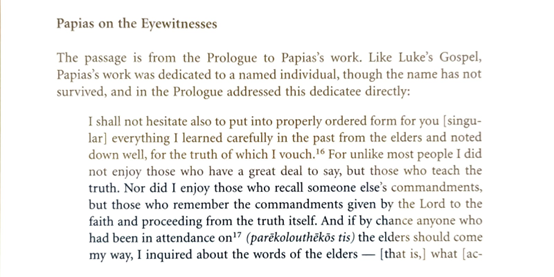
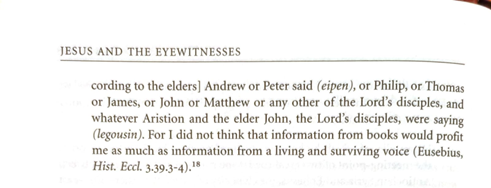
I will highlight that Papias has integrity and that he can ascertain his information. He has integrity because he says he is writing what he had “learned carefully in the past from the elders and noted down well, for the truth of which I vouch.” He has the ability to know reliable information because he acquired his information from the elders, who either knew the disciples of the Lord—e.g. the apostles Andrew or Peter—or were the disciples of the Lord themselves—Aristion and the elder John (note, this elder John is different from the Apostle John, who had been mentioned separately in the text). Thus, Papias’s testimony regarding certain facts is trustworthy.
Finally, let us look at what Papias’s testimony is (picture is from Bauckham, p.203).
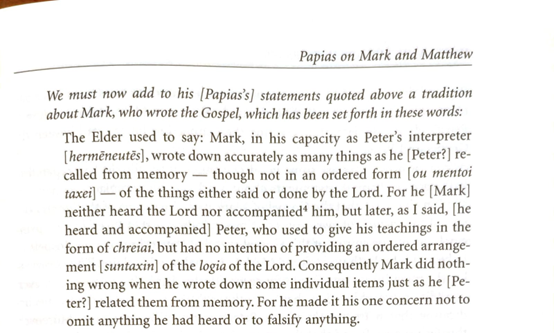
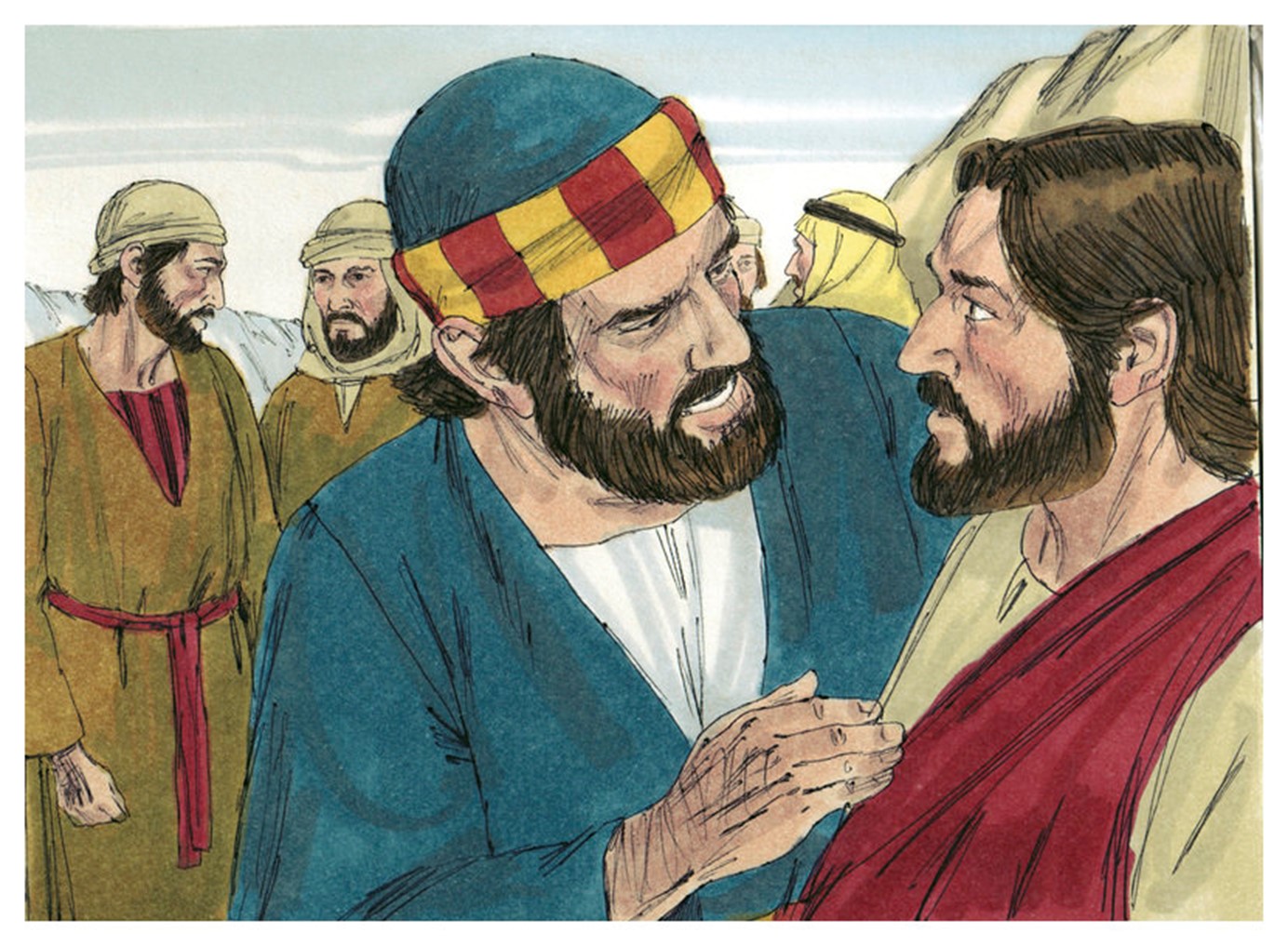
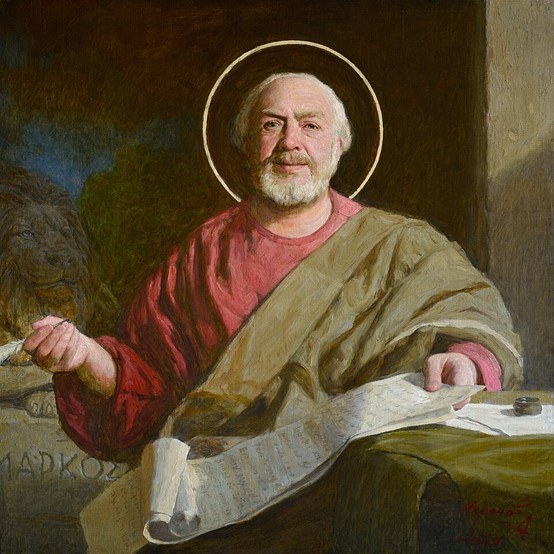
Papias testifies that the Elder, who was either a disciple of the Lord or a disciple of the disciple, taught that Mark heard what Peter taught, and in turn wrote down the Gospel. Peter gave his teachings in chreiai form, which basically means anecdotal form (Bauckham, p.216), corresponding to how the Gospel comprises discrete pericopes and units of speeches of Jesus. Mark “made it his one concern not to omit anything he had heard or to falsify anything.” Thus, Mark reproduced what Peter said accurately, though the narrative may not be in strict journalistic chronology. For example, perhaps we can discern textual evidence in the Gospel that the sequence of certain episodes is arranged thematically rather than chronologically. In short, Mark was an honest person, and he was in a position to ascertain what Peter had taught. Thus, his Gospel is a reliable source of eyewitness accounts.
Distant Shores Media/Sweet Publishing, CC BY-SA 3.0 <https://creativecommons.org/licenses/by-sa/3.0>, via Wikimedia Commons
Thus, Mark’s contemporary fellow disciples loved it and preserved this document, reflecting their trust in Mark’s reproducing accurately Peter’s testimony. The Elder’s testimony regarding Mark, reported by Papias, should not be singular, but rather should reflect the early Church’s common belief. If not, then there would probably be dissension regarding its apostolicity among the second-generation and first-generation disciples. Yet, Papias, who knew disciples from those generations, did not report such a dissension but instead advocated the Elder’s tradition. Thus, there was probably no dissension regarding the apostolicity of the Gospel. Therefore, one can safely believe in Mark’s historicity.
Андрей Николаевич Миронов (A.N. Mironov), CC BY-SA 4.0 <https://creativecommons.org/licenses/by-sa/4.0>, via Wikimedia Commons
Conclusion
Imagine you were a contemporary of Papias, respecting him as a bishop who knew the Apostle John. Now, Papias the Bishop testifies to you that, after careful examination with various disciples of Jesus or disciples of the disciples of Jesus, he found that it has been testified among these first and second generation disciples that Mark wrote the Gospel, following Peter’s words accurately. You would have good reason to trust, then, that the Gospel indeed reproduced what Peter said regarding Jesus. And Peter was an eyewitness to Jesus. So, from the Gospel According to Mark, you would be seeing what Jesus did and taught. Amazing!
Distant Shores Media/Sweet Publishing, CC BY-SA 3.0 <https://creativecommons.org/licenses/by-sa/3.0>, via Wikimedia Commons
Of course, this brief presentation of the evidence alone is far from the whole case for the historicity of the Gospel; much more can be said, such as an argument from modern miracles. But this is solid evidence. Therefore, the Dogmatic Constitution Dei Verbum (1965) taught, “Holy Mother Church has firmly and with absolute constancy held, and continues to hold, that the four Gospels just named, whose historical character the Church unhesitatingly asserts, faithfully hand on what Jesus Christ, while living among men, really did and taught for their eternal salvation until the day He was taken up into heaven (see Acts 1:1). ” (#19).
May we be closer to the Lord day by day!
Hi! I am Brother Marcus, a Malaysian Chinese born in 2000. I studied in an international secondary school in Shanghai, and I majored in Computing Mathematics from the City University of Hong Kong. I joined the Order of Preachers immediately thereafter. Having received God’s love so intimately, I wish to keep receiving His love fully and loving Him back fully, dedicating myself to study and to share the beauty of the truth.
Vocation is a gift. It is a gift from God. Everyone in this world has received a vocation, a call from God. There are a variety of vocations: vocation to married life, vocation to live a celibate life, or vocation to live a single life. There is also a vocation to be, for instance, a teacher, a doctor, a carpenter, a priest, a consecrated person, etc.
In all these vocations God calls us to live a happy life. No one is called to live a sorrowful life, or to live a bad or immoral life…
When we are happy with our lives and we find peace in our journey, we know then that it is God’s will, God’s plan for us.
Sometimes it happens that we do not understand God’s calling for us; at times we do not even like our job or our vocation. Sometimes other people do not understand our vocation, either. In any case, we need to understand that we did not choose to be born into this world, but it was God who created us; that He calls us and gives us different missions in life, all ordered in the end to our happiness: to praise Him and to serve our sisters and brothers.
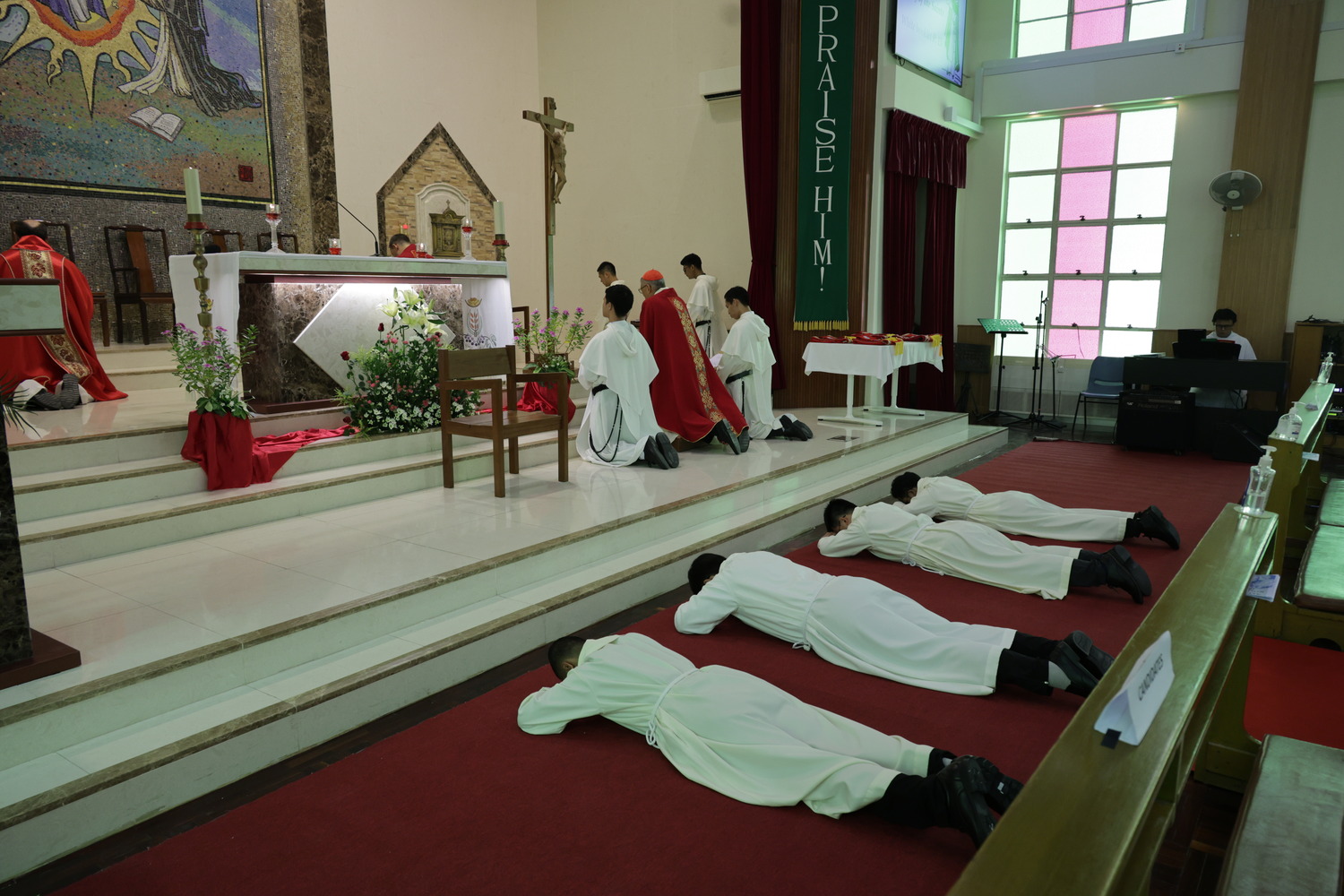
Consecrated Life is one particular vocation, a gift from God. It is a call to offer ourselves totally to Him; to detach ourselves from the world and live for God alone, in the service of the Church and of mankind.
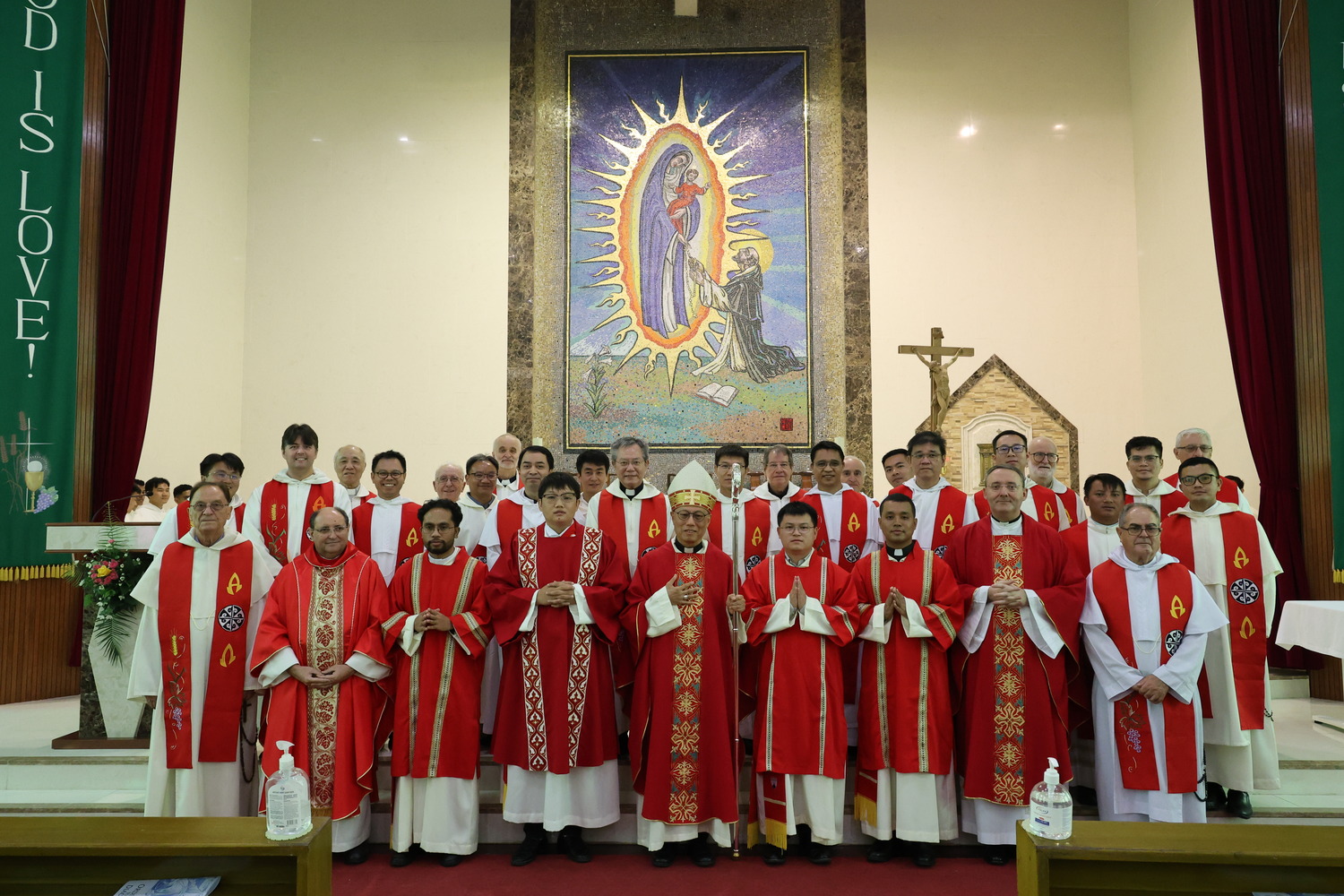
We could say that being totally consecrated to God is a call to figuratively open wide both our arms, lifting up our right hands high while keeping our left hand lower down: with our left hands we receive the supplications, tears, and joys of the world and offer them up to God in heaven; in turn, with our right hand, we receive the blessings, the graces and the healings from God and offer them down to mankind on earth.
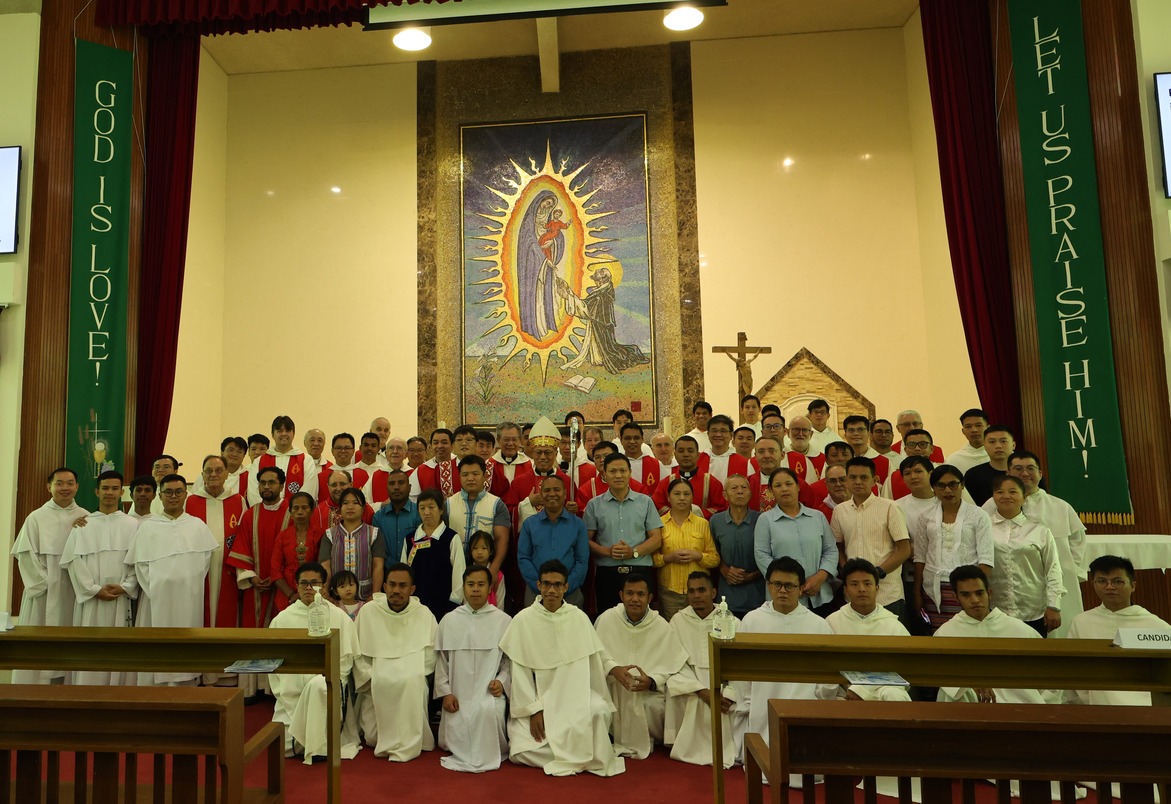
In addition, as Dominican clerical brothers, which is a very special form of consecrated life, endowed with the priestly ministry, we are called to stand by the altar of God and act in the name of Christ the Head of the Church as mediators between God and humanity.
Author: Bro. Rolindo Tilman Moniz O.P